
Why Social Comparison Can Become a Source of Pressure?
Gusti Ayu Tita P
8 September 2026
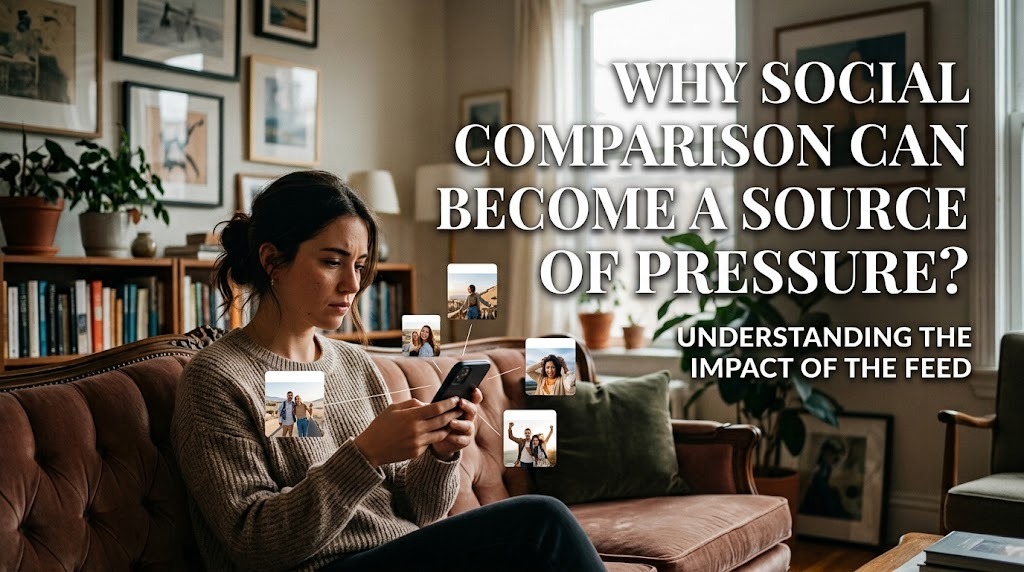
Social comparison is a natural process in which people evaluate themselves by looking at others. It can help individuals understand their abilities, identify areas for improvement, and learn from people with more experience. However, comparison can become a problem when it happens too often or becomes the main way someone measures personal worth. Constant comparison can create pressure to achieve, look, behave, or live according to someone else's standard.
This pressure can appear in education, careers, friendships, relationships, appearance, finances, and everyday lifestyle. Social media has also made comparison easier because people can see other people's achievements almost instantly. When individuals focus only on visible results, they may forget that everyone has different circumstances and opportunities. Understanding why social comparison creates pressure is an important step toward developing healthier self confidence.
SOCIAL COMPARISON IS PART OF HUMAN BEHAVIOR
People naturally compare themselves with others to understand their position in a particular situation. A student may compare study habits with classmates, while an employee may compare career progress with coworkers. Comparison can provide useful information when it is used as a reference rather than a judgment. It can show people what skills they may want to develop or what goals they might consider.
However, comparison becomes unhealthy when people assume that another person's achievements determine their own value. Instead of learning from others, they may focus on proving that they are equally successful or better. This can create continuous pressure to keep up. The purpose of comparison changes from learning to seeking validation.
UPWARD COMPARISON CAN CREATE PRESSURE
Upward comparison occurs when people compare themselves with someone they believe is more successful or capable. Seeing others achieve impressive goals can provide motivation, but it can also create feelings of inadequacy. People may focus on what they lack instead of recognizing what they already have.
For example, a person may see a friend receiving a promotion and immediately feel unsuccessful about their own career. They may forget that career paths develop at different speeds. The comparison becomes especially stressful when the other person's success is treated as a standard that must be reached immediately. Another person's progress does not automatically mean that you are falling behind.
DOWNWARD COMPARISON CAN ALSO BE UNHEALTHY
Downward comparison happens when someone compares themselves with people they perceive as less successful. It may temporarily make someone feel better about their own situation. However, using other people's difficulties to maintain self esteem does not create stable confidence.
This type of comparison can also encourage a competitive mindset. Instead of focusing on personal development, people may become concerned with staying ahead of others. A healthier approach is to evaluate progress based on personal goals and circumstances. Confidence becomes more stable when it does not depend on someone else's position.
SOCIAL MEDIA MAKES COMPARISON EASIER
Social media has significantly increased opportunities for social comparison. Users can see posts about achievements, travel, relationships, appearance, education, careers, and purchases throughout the day. The constant stream of carefully selected content can create unrealistic expectations about everyday life.
Most people do not share every difficulty they experience online. As a result, users may compare their ordinary moments with another person's best moments. This creates an incomplete and potentially misleading comparison. Remembering that online content is selective can reduce unnecessary pressure.
COMPARISON CAN CHANGE HOW PEOPLE DEFINE SUCCESS
Society often provides visible indicators of success. High income, prestigious jobs, academic achievements, attractive appearance, and popular lifestyles may receive significant attention. When these indicators become universal standards, people may feel pressured to pursue goals that do not actually match their values.
Success can mean different things to different people. One person may prioritize financial stability, while another may value meaningful work, family time, creativity, education, or personal freedom. Following another person's definition of success can lead to dissatisfaction. A personal definition of success allows people to develop goals that fit their own lives.
FEAR OF FALLING BEHIND CREATES CONSTANT PRESSURE
Comparison can create the feeling that everyone else is moving faster. People may worry that they are missing opportunities or failing to reach important milestones. The fear of falling behind can encourage constant rushing and make it difficult to appreciate current progress.
This pressure can affect both young people and adults. Someone may feel they need to graduate quickly, find a successful career, buy a home, or reach financial goals simply because others have already done so. However, life does not follow one universal timeline. Different circumstances naturally lead to different forms and speeds of progress.
COMPARISON CAN REDUCE SELF CONFIDENCE
When comparison happens repeatedly, people may focus primarily on their weaknesses. They may begin to believe that they are less intelligent, attractive, capable, or successful than others. This negative self evaluation can gradually weaken self confidence.
The effect becomes stronger when people ignore their own achievements. Even meaningful progress may seem insignificant when attention is always directed toward someone else's results. Keeping track of personal improvements can provide a more balanced perspective. Confidence grows when people recognize their own abilities instead of constantly searching for evidence that they are not good enough.
SOCIAL PRESSURE CAN INFLUENCE PERSONAL DECISIONS
Comparison does not only affect emotions. It can also change practical decisions about education, careers, spending, relationships, and lifestyle. Someone may choose a particular path because people around them appear to be succeeding in it. A decision based mainly on comparison may not reflect personal interests or circumstances.
Before making an important choice, consider whether the goal is personally meaningful. Ask whether the decision supports long-term priorities or simply helps maintain social status. Other people's achievements can provide inspiration without becoming instructions. Independent decision-making protects personal goals from unnecessary social pressure.
HOW TO REDUCE UNHEALTHY SOCIAL COMPARISON?
The first step is becoming aware of when comparison is happening. Notice situations that consistently create feelings of insecurity, jealousy, inadequacy, or pressure. Awareness makes it easier to question whether the comparison is actually useful.
Next, shift attention toward personal progress. Set realistic goals and evaluate improvement over time. Limiting exposure to content that repeatedly triggers negative comparison can also help. Reducing comparison does not mean ignoring other people's achievements; it means using them as information rather than as a measurement of personal worth.
FOCUS ON PERSONAL PROGRESS
Personal progress provides a healthier way to evaluate development. Consider skills that have improved, challenges that have been overcome, and goals that have been completed. Small improvements are still meaningful because they show movement toward a desired direction.
It is also important to accept that progress may not always be visible. Learning, building confidence, recovering from mistakes, and gaining experience can take time. These changes may not receive public recognition, but they can still be valuable. Growth should be measured by meaningful development, not only by visible achievements.
BUILD A HEALTHIER RELATIONSHIP WITH OTHER PEOPLE'S SUCCESS
Other people's achievements do not have to become a threat. Their success can provide ideas, inspiration, or useful lessons. The key is to appreciate someone else's progress without turning it into a negative judgment about yourself.
Instead of asking why someone is ahead, ask what can be learned from their experience. At the same time, remember that their path may involve different resources, opportunities, and challenges. This perspective turns comparison into learning rather than competition. Healthy comparison encourages development without damaging self worth.
CONCLUSION
Social comparison can become a source of pressure when people use other people's achievements as the main standard for evaluating themselves. Upward comparison, social media, fear of falling behind, and unrealistic definitions of success can all contribute to this pressure. When comparison becomes constant, it may reduce self confidence and influence important personal decisions.
A healthier approach is to practice self awareness, personal goal setting, independent thinking, and realistic self evaluation. Other people's success can be a source of inspiration without becoming a measure of personal worth. By focusing on individual progress and accepting different life timelines, people can continue to grow without being controlled by constant comparison.
About the Author
Gusti Ayu Tita P
Author — STEKOM University
An active author focused on academic issues, educational technology, and human resource development in the campus environment.