
Why Social Sciences and Humanities Degrees Remain Relevant in the Digital Era?
Gusti Ayu Tita P
1 Agustus 2026
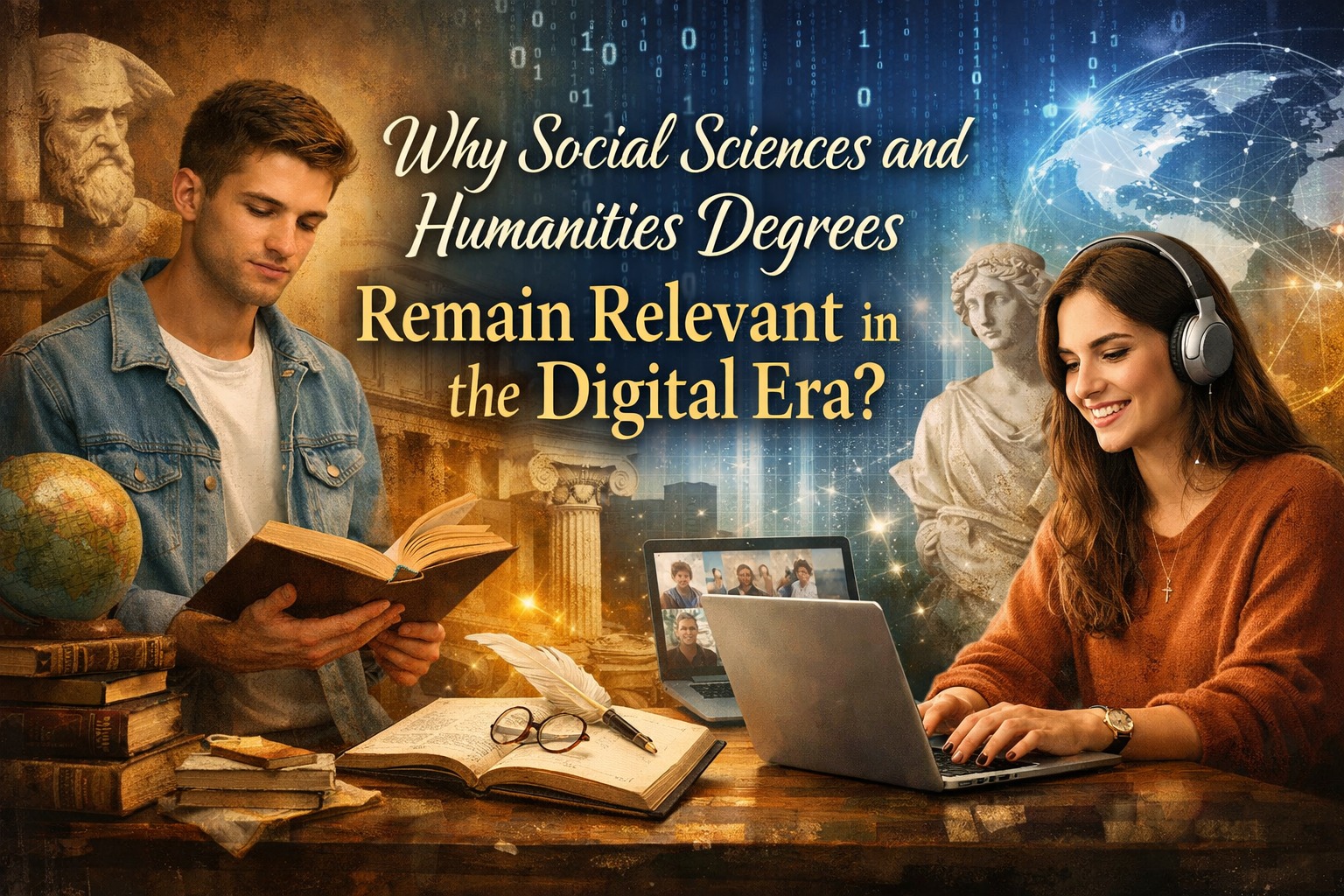
The rapid growth of technology has transformed the way people work, communicate, and learn. Artificial intelligence, automation, big data, and digital platforms are becoming essential parts of modern life. As a result, many people assume that technical fields are the only educational paths that matter in today's world. However, this perception overlooks the significant role of Social Sciences and Humanities degrees in shaping a balanced and sustainable digital society.
While technology drives innovation, human-centered knowledge remains crucial for understanding behavior, culture, ethics, communication, and decision-making. Graduates from Social Sciences and Humanities programs continue to contribute to various industries by providing insights that technology alone cannot offer. This is why Social Sciences and Humanities, digital era education, critical thinking skills, human-centered innovation, and future career opportunities remain highly relevant in today's world.
THE IMPORTANCE OF HUMAN UNDERSTANDING IN A TECHNOLOGY-DRIVEN WORLD
Technology may simplify many tasks, but it cannot fully understand human emotions, cultural values, and social interactions. Social Sciences and Humanities help students develop a deep understanding of how individuals and communities think, behave, and communicate. This knowledge is essential for creating products, services, and policies that genuinely meet human needs.
In the digital era, companies increasingly seek professionals who can interpret social trends, understand consumer behavior, and address ethical concerns. Whether developing an application, managing online communities, or designing public policies, organizations need experts who can connect technology with human experiences. This makes human-centered innovation one of the most valuable assets in the modern workplace.
CRITICAL THINKING AND PROBLEM-SOLVING SKILLS ARE IN HIGH DEMAND
One of the greatest strengths of Social Sciences and Humanities education is the development of critical thinking skills. Students learn how to analyze information, evaluate different perspectives, and make informed decisions based on evidence. These abilities are highly valuable in a world flooded with digital information and misinformation.
Employers today are looking for professionals who can solve complex problems rather than simply follow instructions. Graduates trained in research, analysis, and reasoning can identify challenges, propose effective solutions, and adapt to changing environments. These skills remain relevant regardless of technological advancements or industry changes.
ETHICS AND RESPONSIBLE TECHNOLOGY DEVELOPMENT
As digital technologies become more powerful, ethical considerations are becoming increasingly important. Artificial intelligence, data privacy, cybersecurity, and social media platforms raise questions that cannot be answered solely through technical expertise. Social Sciences and Humanities provide frameworks for examining these issues from ethical, cultural, and societal perspectives.
Professionals with backgrounds in philosophy, sociology, psychology, political science, and communication play an important role in ensuring that technology benefits society. They help organizations evaluate risks, promote fairness, and develop responsible digital practices. This contribution is critical in maintaining public trust in emerging technologies.
STRONG COMMUNICATION SKILLS FOR THE DIGITAL WORKPLACE
Effective communication remains one of the most sought-after skills in every industry. Social Sciences and Humanities programs train students to express ideas clearly, write persuasively, and engage with diverse audiences. These abilities are especially valuable in today's digital environment, where communication often occurs through online platforms.
From content creation and digital marketing to public relations and organizational leadership, communication professionals help bridge the gap between information and understanding. Their ability to convey complex ideas in accessible ways enables organizations to connect with customers, employees, and stakeholders more effectively.
DIVERSE CAREER OPPORTUNITIES IN THE MODERN ECONOMY
Many people mistakenly believe that Social Sciences and Humanities graduates have limited career options. In reality, these fields provide access to a wide range of professions across both traditional and emerging industries. Graduates can work in education, media, government, human resources, research, marketing, international relations, community development, and many other sectors.
The rise of digital platforms has also created new opportunities in areas such as user experience research, digital communication, content strategy, social media management, and policy analysis. Employers increasingly recognize the value of professionals who understand both technology and human behavior, creating strong future career opportunities for graduates in these disciplines.
ADAPTABILITY IN A RAPIDLY CHANGING WORLD
The modern job market continues to evolve as technology advances. Many occupations that exist today may change significantly in the coming years. In such an environment, adaptability becomes more important than specific technical knowledge that may eventually become outdated.
Social Sciences and Humanities encourage lifelong learning, curiosity, and flexibility. Students develop transferable skills that can be applied across industries and professional roles. This adaptability enables graduates to navigate career changes successfully and remain competitive in a dynamic global economy.
CONCLUSION
Despite the rapid growth of technology, Social Sciences and Humanities degrees remain highly relevant in the digital era. Their focus on critical thinking skills, human-centered innovation, ethics, communication, and social understanding complements technological advancement rather than competing with it. Organizations increasingly require professionals who can connect digital tools with human needs and societal values.
As the world becomes more interconnected and technology-driven, the demand for individuals who understand people, culture, and communication will continue to grow. For students seeking meaningful and versatile career paths, Social Sciences and Humanities offer valuable knowledge and enduring opportunities in the modern digital landscape.
About the Author
Gusti Ayu Tita P
Author — STEKOM University
An active author focused on academic issues, educational technology, and human resource development in the campus environment.















