Why Team Collaboration Is Essential for Every Game Developer?
Gusti Ayu Tita P
24 Juli 2026
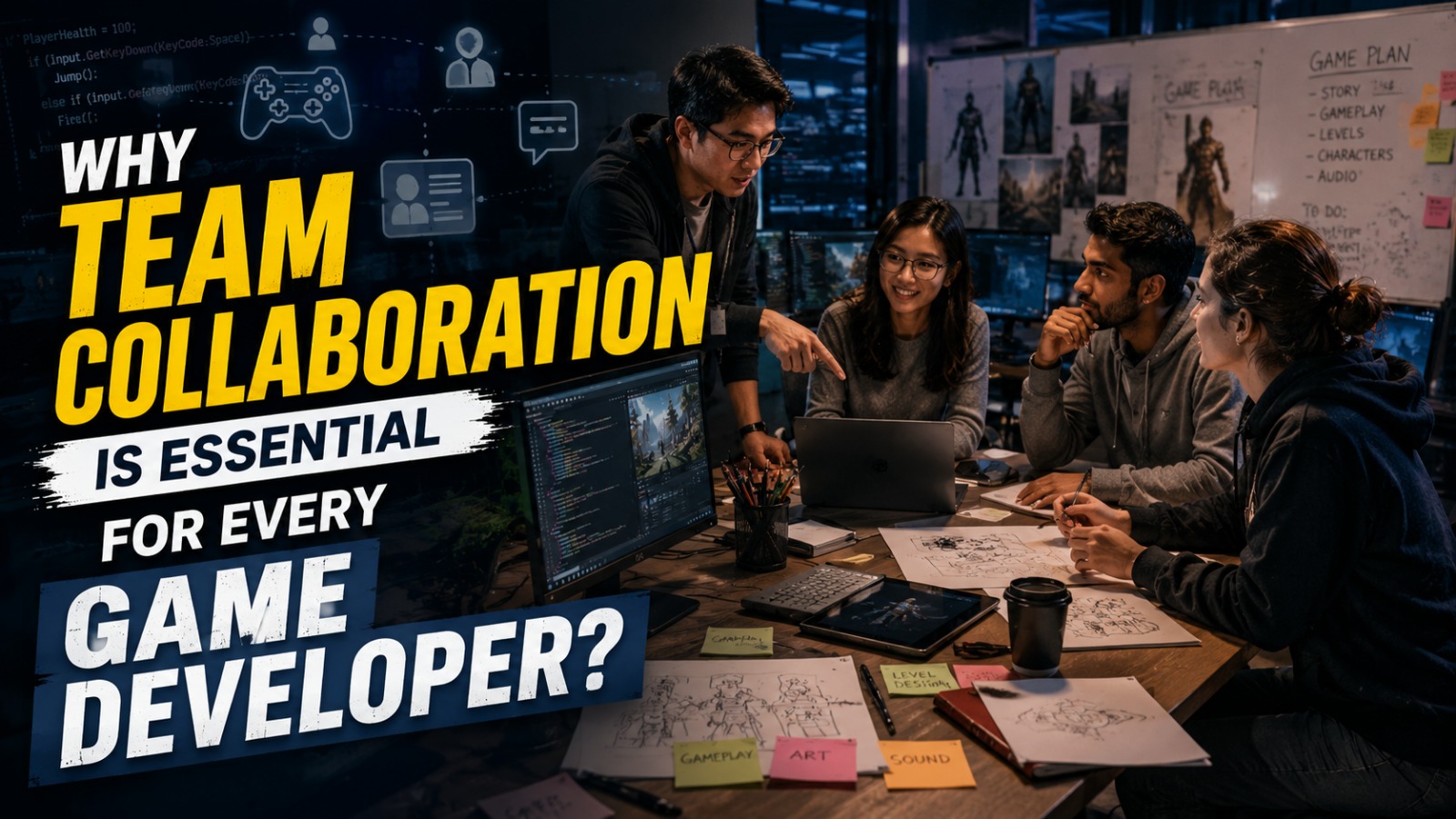
The game development industry is built on creativity, innovation, and technical expertise. While individual talent is valuable, most successful games are created through team collaboration, where professionals from different disciplines work toward a shared goal. A modern game combines programming, visual design, animation, storytelling, sound design, and quality assurance, making teamwork an essential part of the development process. Effective collaboration helps developers solve problems faster, improve productivity, and create higher-quality games. Understanding the importance of teamwork allows every game developer to build stronger projects and achieve long-term career success.
UNDERSTANDING THE IMPORTANCE OF TEAM COLLABORATION
Every successful game is the result of multiple specialists working together. Game developers, artists, designers, animators, writers, audio engineers, and testers all contribute unique skills that shape the final product. Collaboration ensures that each department understands the project goals and works toward delivering a consistent gaming experience. Without proper teamwork, projects often experience delays, misunderstandings, and inconsistent quality.
Working as a team also encourages knowledge sharing between professionals with different expertise. Developers learn new techniques from designers, while artists gain a better understanding of technical limitations. This exchange of ideas creates a stronger development process and leads to better overall results.
IMPROVING COMMUNICATION DURING DEVELOPMENT
Clear communication is one of the most valuable skills for every game development team. Developers need to explain technical challenges, discuss project requirements, and coordinate deadlines with other departments. Regular meetings and project updates help prevent misunderstandings that could slow development. Good communication keeps everyone focused on the same objectives.
Open discussions also allow team members to provide suggestions that improve gameplay and technical implementation. Constructive conversations encourage faster problem-solving and better decision-making throughout the project. Teams that communicate effectively are more likely to complete projects on time and with fewer errors.
COMBINING DIFFERENT SKILLS FOR BETTER RESULTS
A game requires much more than programming knowledge. While game developers build gameplay systems, artists create visual assets, writers develop engaging stories, and sound designers produce immersive audio experiences. Each discipline contributes essential elements that make a game enjoyable and memorable. Collaboration allows these different talents to work together seamlessly.
Combining technical and creative expertise often produces innovative ideas that would be difficult for one individual to achieve alone. Diverse perspectives encourage experimentation and lead to unique gameplay experiences. Strong collaboration transforms individual strengths into outstanding team achievements.
INCREASING PRODUCTIVITY AND EFFICIENCY
Well-organized teamwork significantly improves productivity throughout the development process. Dividing responsibilities allows specialists to focus on their areas of expertise while maintaining steady project progress. Developers can concentrate on coding while artists create graphics and testers identify bugs. This structured workflow reduces unnecessary delays and improves overall efficiency.
Project management tools and version control systems also support effective collaboration by keeping tasks organized and preventing conflicts. Clearly assigned responsibilities reduce confusion and help teams meet important deadlines. Efficient teamwork allows studios to deliver polished games within budget and schedule.
SOLVING PROBLEMS MORE EFFECTIVELY
Every game development project faces technical and creative challenges. Collaborative teams solve problems faster because multiple professionals contribute different ideas and experiences. A programming issue may benefit from insights provided by designers or technical artists who view the challenge from another perspective. Diverse thinking often leads to more creative and practical solutions.
Brainstorming sessions encourage innovation while reducing the risk of overlooking potential problems. Team members can review each other's work and identify mistakes before they become larger issues. This collaborative approach improves both development quality and project stability.
BUILDING A POSITIVE WORK ENVIRONMENT
Strong team collaboration creates a supportive and motivating workplace. Developers who trust and respect each other are more comfortable sharing ideas, asking questions, and accepting constructive feedback. A positive environment reduces workplace stress while encouraging creativity and continuous improvement. Healthy collaboration also strengthens professional relationships within the team.
Recognition of each member's contributions builds confidence and increases motivation. Celebrating project milestones together reinforces team spirit and encourages long-term commitment. Positive workplace culture often contributes directly to better project outcomes and employee satisfaction.
PREPARING FOR GLOBAL CAREER OPPORTUNITIES
Many international game studios prioritize candidates with excellent teamwork skills. Modern development teams frequently collaborate across different countries using remote communication and project management platforms. Developers who can work effectively with multicultural teams have greater access to global career opportunities. Communication, adaptability, and collaboration are now considered essential professional skills.
Remote work continues expanding within the gaming industry, making teamwork even more important than before. Understanding how to collaborate across different time zones and cultures increases employability. Developers who combine technical expertise with strong interpersonal skills remain highly competitive in the global gaming market.
CONTINUOUS LEARNING THROUGH TEAMWORK
Working with experienced professionals provides valuable learning opportunities. Junior developers gain practical knowledge by observing senior programmers, designers, and technical artists during real development projects. Collaborative environments encourage continuous improvement through mentoring, code reviews, and shared problem-solving. Every project becomes an opportunity to develop both technical and professional skills.
Constructive feedback from teammates helps developers improve coding quality, communication abilities, and project management skills. Learning from others accelerates career growth while expanding technical expertise. Teams that value continuous learning often produce more innovative and successful games.
CONCLUSION
Team collaboration is one of the most important factors behind successful game development. Effective communication, shared expertise, organized workflows, and mutual support enable development teams to create engaging, high-quality games more efficiently. As the gaming industry continues expanding globally, developers with strong collaboration skills will enjoy greater career opportunities and long-term professional success. By embracing teamwork alongside technical excellence, every game developer can contribute to creating outstanding gaming experiences.
About the Author
Gusti Ayu Tita P
Author — STEKOM University
An active author focused on academic issues, educational technology, and human resource development in the campus environment.