
Why Teamwork Is Essential in Every Youth Red Cross Activity?
Gusti Ayu Tita P
24 Agustus 2026
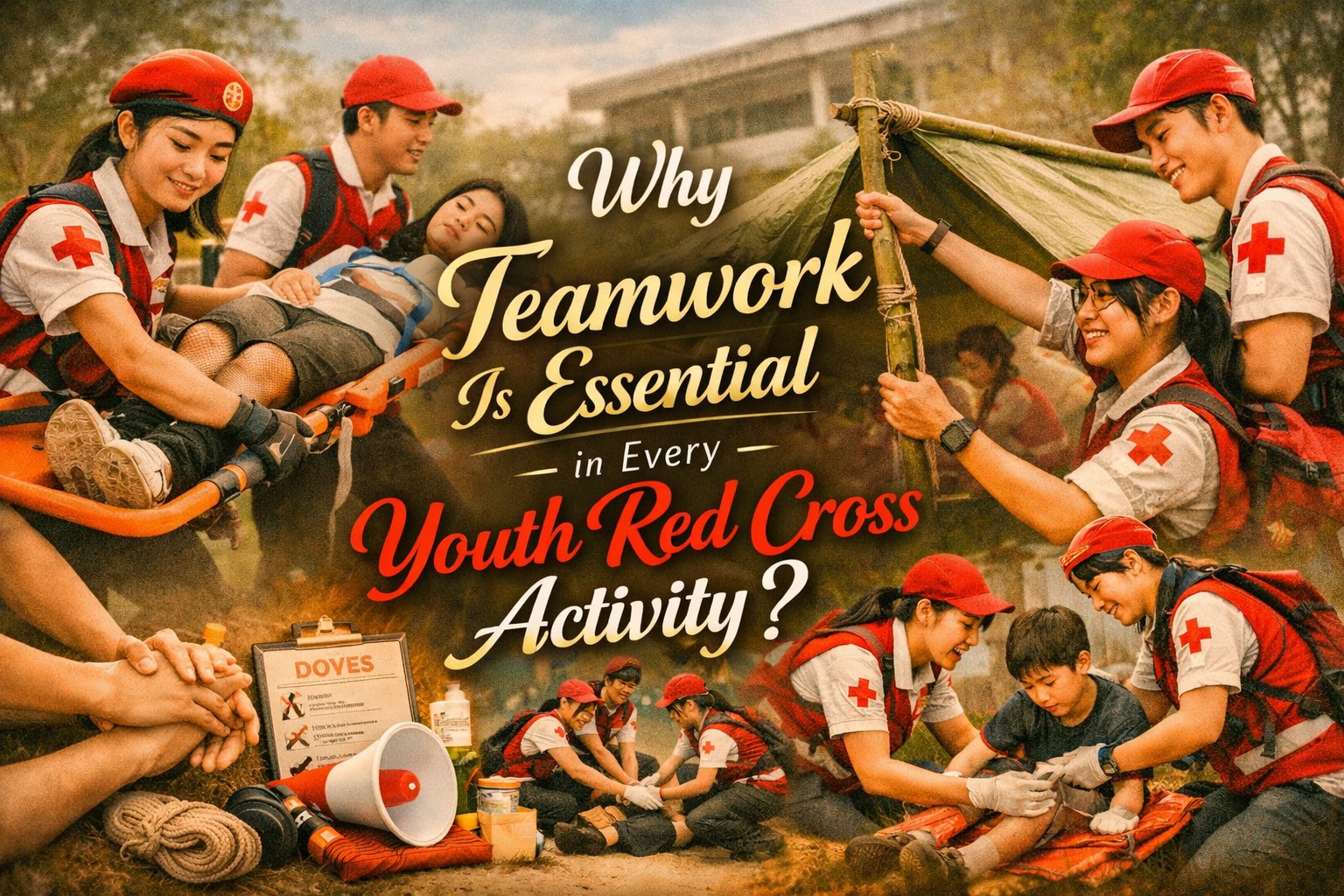
Teamwork is one of the most valuable skills that every member of the Youth Red Cross should develop. Every activity within the organization, from first aid training to community service, requires members to work together toward a common goal. No single person can successfully handle every challenge alone, especially during emergencies where cooperation is critical. By learning how to communicate, support one another, and solve problems together, members become more effective volunteers and responsible individuals. This is why teamwork remains the foundation of every successful Youth Red Cross program.
THE IMPORTANCE OF TEAMWORK IN THE YOUTH RED CROSS
The Youth Red Cross is built on the principles of humanity, cooperation, and service. Members participate in many activities that involve helping others, organizing events, providing health education, and responding to emergency situations. These responsibilities require every member to contribute according to their abilities while respecting the roles of others. Strong teamwork ensures that every task is completed efficiently and safely.
When members trust and communicate with each other, they can overcome challenges more effectively. Instead of focusing on individual success, they learn to prioritize the needs of the team and the people they serve. This creates a positive environment where everyone feels valued and motivated. As a result, both personal growth and organizational success become easier to achieve.
HOW TEAMWORK IMPROVES FIRST AID AND EMERGENCY RESPONSE
During first aid situations, every second is important. A well-coordinated team can divide responsibilities, such as assessing the victim, preparing medical equipment, calling for professional help, and providing immediate assistance. This organized approach reduces confusion and increases the chances of delivering effective care. Members who understand their responsibilities can act quickly without waiting for unnecessary instructions.
Regular first aid training also strengthens cooperation among members. Through practice, they learn how to communicate clearly, make quick decisions, and remain calm under pressure. These experiences help build confidence while improving practical skills. Strong teamwork ultimately leads to faster, safer, and more efficient emergency responses.
BUILDING COMMUNICATION AND TRUST THROUGH TEAMWORK
Effective communication is one of the most important elements of successful teamwork. Youth Red Cross members must share information accurately, listen carefully to one another, and provide constructive feedback during activities. Open communication helps prevent misunderstandings and allows every member to contribute ideas that improve team performance. It also creates an atmosphere of mutual respect and understanding.
Along with communication, trust develops naturally when members consistently support one another. Team members become more confident knowing they can rely on each other during difficult situations. This trust encourages collaboration instead of competition and strengthens relationships within the organization. As teamwork improves, members become more prepared to face both planned activities and unexpected challenges.
TEAMWORK HELPS DEVELOP LEADERSHIP AND RESPONSIBILITY
Every Youth Red Cross activity gives members opportunities to develop leadership skills. Even members who are not official leaders can demonstrate initiative by helping teammates, solving problems, and encouraging positive participation. Leadership in teamwork is not only about giving instructions but also about setting a good example and supporting others. This approach creates a stronger and more united organization.
Working in teams also teaches responsibility because every member has specific duties to complete. When individuals fulfill their responsibilities, the entire team benefits from better coordination and productivity. Members also learn the importance of accountability, discipline, and commitment. These valuable qualities remain useful throughout their education, careers, and everyday lives.
THE ROLE OF TEAMWORK IN COMMUNITY SERVICE PROJECTS
Many community service programs organized by the Youth Red Cross involve health campaigns, environmental activities, blood donation awareness, and disaster preparedness education. These projects require careful planning, task distribution, and cooperation among all participants. Teamwork allows members to organize activities more efficiently while reaching more people within the community. Everyone contributes according to their strengths to achieve shared objectives.
Community service also helps members appreciate the value of helping others without expecting rewards. By working together, they gain practical experience in organizing events, solving real-world problems, and interacting with diverse groups of people. These experiences strengthen both social skills and humanitarian values. As a result, teamwork becomes an essential part of creating positive community impact.
BENEFITS OF STRONG TEAMWORK FOR PERSONAL GROWTH
The benefits of teamwork extend far beyond Youth Red Cross activities. Members become better at problem-solving, communication, adaptability, and conflict resolution. They also develop greater confidence because they know they are supported by a reliable team. These skills are highly valuable in education, future careers, and personal relationships.
Strong teamwork also encourages respect for different opinions and backgrounds. Members learn that diversity strengthens a team by bringing different perspectives and ideas to solve challenges. This mindset promotes tolerance, empathy, and cooperation in everyday life. Ultimately, teamwork shapes Youth Red Cross members into compassionate, responsible, and capable future leaders.
CONCLUSION
Teamwork is the key to the success of every Youth Red Cross activity. It strengthens communication, improves first aid performance, builds leadership, and supports effective community service. Through teamwork, members not only accomplish organizational goals but also develop valuable life skills that benefit them far beyond the organization. By working together with trust, respect, and shared responsibility, Youth Red Cross members become more prepared to serve humanity and make a positive difference in their communities.
About the Author
Gusti Ayu Tita P
Author — STEKOM University
An active author focused on academic issues, educational technology, and human resource development in the campus environment.















