
Why Transparency Matters in Regional Autonomy Policies?
Gusti Ayu Tita P
31 Juli 2026
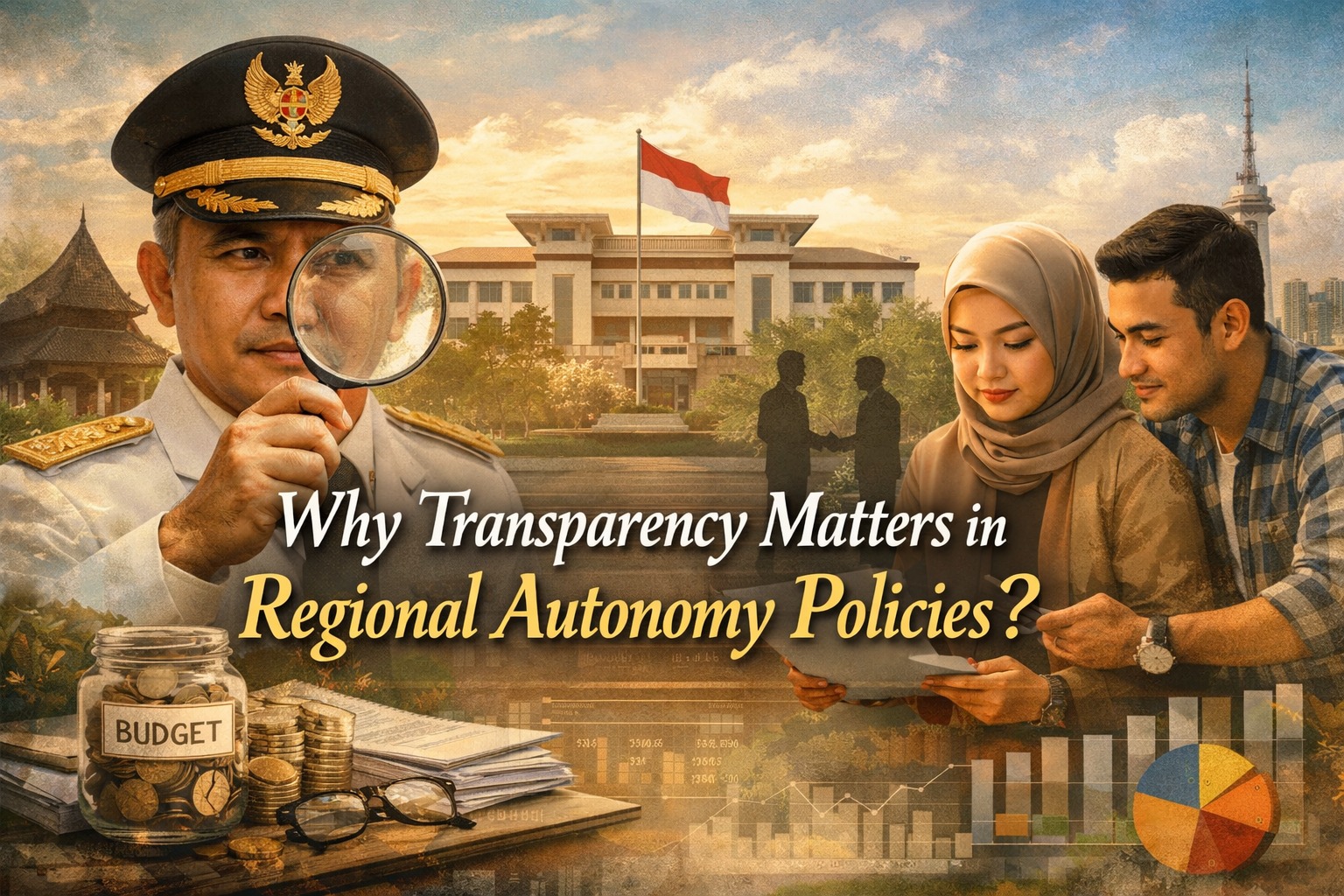
Regional autonomy has become an important approach for improving local governance and encouraging communities to participate in development. However, the success of regional autonomy does not only depend on the authority given to local governments but also on how openly policies are created and implemented. Transparency plays a major role in ensuring that government decisions are understandable, accountable, and beneficial for society.
In regional autonomy systems, local governments have greater responsibility for managing resources, creating programs, and providing public services. Without transparency, these responsibilities can create problems such as reduced public trust, inefficient budgets, and weak community involvement. Therefore, transparency is a key factor in building effective and sustainable regional autonomy.
THE IMPORTANCE OF TRANSPARENCY IN REGIONAL AUTONOMY
Transparency means providing clear, accurate, and accessible information about government policies, decisions, and the use of public resources. In regional autonomy, transparency helps citizens understand how local governments manage their responsibilities. When people can access information easily, they are more likely to trust government institutions and support development programs.
Transparent policies also encourage public participation because citizens have the opportunity to provide opinions, suggestions, and criticism. Local governments that openly communicate their plans can create stronger relationships with communities. This interaction allows policies to become more suitable for local needs and conditions.
Furthermore, transparency helps prevent misuse of authority and improves government accountability. Officials become more careful when making decisions because their actions can be monitored by the public. As a result, transparency creates a healthier relationship between governments and citizens.
HOW TRANSPARENCY IMPROVES LOCAL GOVERNMENT PERFORMANCE
The implementation of transparency can significantly improve the performance of local governments. When information about budgets, development projects, and public services is available, governments can be evaluated more effectively. This evaluation encourages officials to improve their performance and provide better services.
Transparency also supports better decision-making processes. Local governments can collect feedback from communities and use this information to create more effective policies. By understanding public needs, governments can prioritize programs that provide real benefits for society.
In addition, transparent systems help create efficient resource management. Public funds can be monitored properly, reducing the possibility of waste and improving the quality of regional development. This makes regional autonomy more successful in achieving its goals.
THE ROLE OF DIGITAL TECHNOLOGY IN SUPPORTING TRANSPARENCY
Modern technology has become an important tool for increasing policy transparency in regional autonomy. Through official websites, digital platforms, and online public information systems, citizens can access government information more easily. Digital transformation allows communication between governments and communities to become faster and more effective.
Digital platforms also provide opportunities for citizens to monitor government activities. Information about budgets, public programs, and development progress can be shared openly through online services. This approach strengthens public confidence because people can see how decisions are made.
However, technology must be supported by proper management and digital skills. Local governments need to ensure that information provided online is accurate, updated, and easy to understand. With good digital systems, transparency can become a strong foundation for modern regional governance.
TRANSPARENCY AS A FOUNDATION FOR PUBLIC TRUST
Public trust is one of the most important elements in successful regional autonomy policies. When governments operate openly, citizens feel more involved and respected. Transparency shows that government institutions are committed to serving communities fairly and responsibly.
A lack of transparency can create negative perceptions and reduce public confidence. People may question government decisions if they do not receive enough information about policies or development projects. Therefore, openness is necessary to maintain positive relationships between governments and citizens.
By promoting transparency, regional governments can create a culture of responsibility and cooperation. Citizens and governments can work together to solve problems and achieve shared development goals. This cooperation makes regional autonomy more effective and sustainable.
CHALLENGES IN IMPLEMENTING TRANSPARENT POLICIES
Although transparency provides many benefits, implementing it in regional autonomy still faces several challenges. Some local governments may experience limitations in technology, human resources, or information management systems. These challenges can slow down the process of providing open public information.
Another challenge is the lack of awareness among both officials and citizens. Government employees need proper training to manage transparent systems, while citizens need to understand how to use available information. Strong cooperation between governments and communities is required to overcome these difficulties.
To achieve successful transparency, local governments must develop clear regulations, improve digital services, and encourage public involvement. Continuous improvement is needed so transparency becomes a normal part of governance rather than only a formal requirement.
CONCLUSION
Transparency is an essential element that strengthens regional autonomy and improves the relationship between governments and communities. By providing clear information, encouraging participation, and improving accountability, transparency helps create better local governance.
The use of digital technology, responsible leadership, and active citizen involvement can support the implementation of transparent policies. Although challenges remain, continuous efforts to improve openness will help regional governments achieve more effective, trusted, and sustainable development.
A transparent regional autonomy system is not only about sharing information but also about creating a government that listens, responds, and works together with its people.
About the Author
Gusti Ayu Tita P
Author — STEKOM University
An active author focused on academic issues, educational technology, and human resource development in the campus environment.















