Will AI-Based Adaptive Learning Be the Future of Modern Schools?
Gusti Ayu Tita P
28 Januari 2026
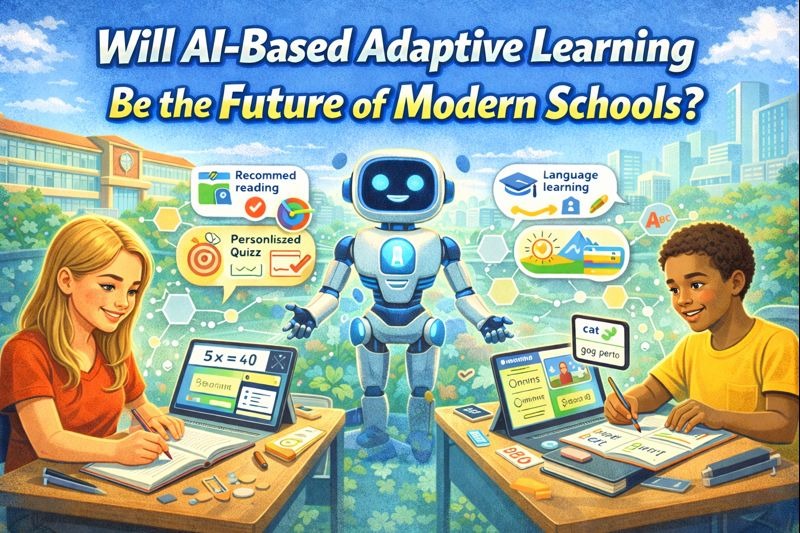
Adaptive Learning with AI: The Future of Modern Education
The world of education is constantly evolving to meet the demands of the times. One innovation gaining significant attention is AI-based adaptive learning. This technology offers solutions to the limitations of traditional learning methods, where every student follows the same curriculum, despite having different abilities and learning styles. However, questions remain: Can AI truly replace traditional teaching methods? To what extent can AI support education in modern schools? This article explores the potential, challenges, and impact of AI-driven adaptive learning in education.
What is AI-Based Adaptive Learning?
Key Point: Adaptive learning is an approach that tailors material, pace, and teaching style to each student’s needs and abilities.
* AI plays a central role by analyzing data quickly and providing personalized recommendations.
* AI systems can monitor student progress in real-time, give instant feedback, and adjust lessons based on student performance.
* Strengths and weaknesses are identified, allowing AI to suggest targeted practice or support where needed.
Why AI-Based Adaptive Learning Matters for Modern Schools
1. Deeper Personalization of Learning
Key Point: Every student learns differently. AI adapts the material to individual learning speeds and comprehension levels.
* For students struggling with subjects like mathematics, AI can offer additional exercises and simplified explanations.
* AI can provide diverse content, such as videos, interactive exercises, and competency-based tests, creating a richer learning experience.
2. More Efficient Time Management
Key Point: AI helps address one of the biggest challenges in traditional education: managing time for various student needs.
* Students can learn independently with 24/7 access to resources while teachers focus on individual guidance and strategic tasks.
* Faster learners can progress to advanced material without waiting for others, while students needing more time get additional practice.
3. Instant and Accurate Feedback
Key Point: Traditional classrooms often require days to receive feedback. AI provides immediate responses.
* Students can correct mistakes and reinforce understanding right after completing tasks.
* Instant feedback accelerates learning and improves mastery of concepts.
Challenges of Implementing AI-Based Adaptive Learning
Key Point: Despite its potential, AI-based learning faces several challenges:
1. Equal Access to Technology
* Not all schools have the infrastructure to support AI systems.
* Students in areas with limited technology access may struggle to use AI learning tools effectively.
2. Teachers’ Role Remains Essential
* AI can personalize content, but teachers are crucial for moral, social, and emotional guidance.
* Teachers help develop non-academic skills like teamwork, social skills, and character development, which AI cannot replace.
3. Data Security and Privacy
* AI systems require collecting and analyzing student data, raising privacy concerns.
* Strict safeguards must protect students’ personal information from misuse or leaks.
The Future of AI-Based Adaptive Learning
Key Point: AI-based adaptive learning has the potential to become the backbone of modern education if implemented responsibly.
* Personalized learning and efficient time management are key advantages.
* Success requires commitment from governments, educational institutions, and technology developers.
* Infrastructure improvements, teacher training, and clear privacy policies are essential for effective implementation.
Conclusion: While AI can play a significant role in the future of education, teachers and human guidance remain irreplaceable. With a collaborative approach between AI technology and human mentorship, adaptive learning can create a more inclusive, relevant, and efficient educational experience for future generations.
About the Author
Gusti Ayu Tita P
Author — STEKOM University
An active author focused on academic issues, educational technology, and human resource development in the campus environment.