
Work Ethics Every Ministry Civil Servant Should Practice
Gusti Ayu Tita P
27 Juli 2026
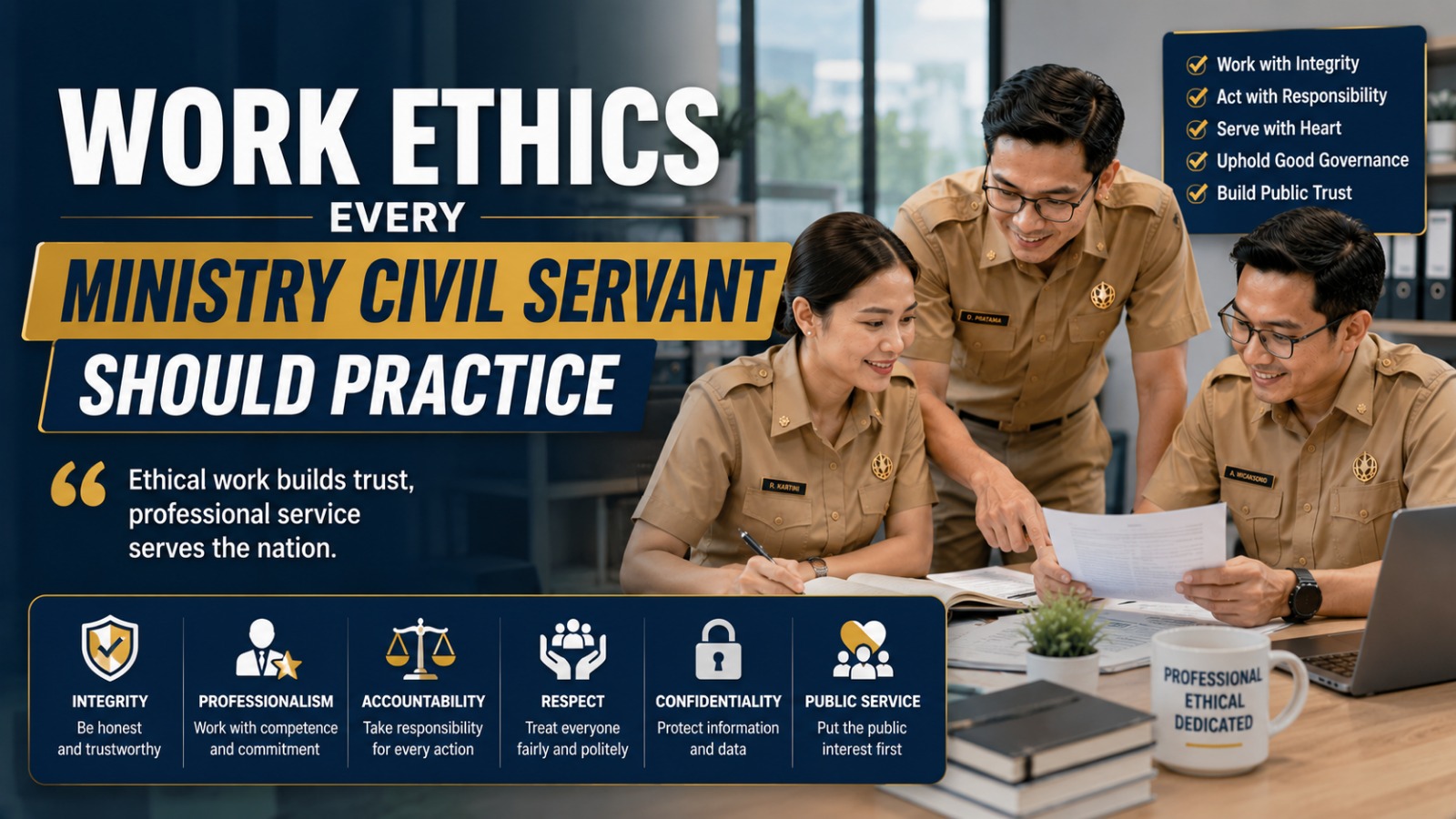
Work ethics are an essential foundation for ministry civil servants who are responsible for supporting government programs and serving the public. Their daily actions can influence the quality of public services, organizational performance, and public trust in government institutions. Therefore, civil servants need to demonstrate professionalism, integrity, responsibility, discipline, and respect in every aspect of their work.
Good work ethics are not limited to following formal rules. They also involve developing positive habits, making responsible decisions, treating others fairly, and putting public interests above personal interests. By practicing strong work ethics consistently, ministry civil servants can create a professional workplace and contribute to better public service delivery.
UNDERSTANDING THE IMPORTANCE OF WORK ETHICS
Work ethics refer to the values and principles that guide how a person behaves and performs responsibilities in the workplace. For ministry civil servants, these values are particularly important because their work is closely connected to government administration and public interests. Ethical behavior helps employees make decisions that are responsible, fair, and consistent with applicable regulations.
Strong work ethics can also strengthen the reputation of government institutions. When civil servants perform their duties honestly and professionally, citizens are more likely to develop confidence in public services. Therefore, ethical conduct should be considered an essential part of professional performance rather than simply a formal requirement.
PRACTICE INTEGRITY IN EVERY RESPONSIBILITY
Integrity is one of the most important ethical values for ministry civil servants. It means being honest, consistent, and trustworthy when carrying out professional responsibilities. Civil servants should perform their duties based on facts, regulations, and public interests rather than personal preferences or private benefits.
Integrity is also demonstrated through small daily actions. Employees should provide accurate information, use government resources responsibly, and avoid conflicts of interest. By consistently practicing integrity, civil servants can help prevent misconduct and strengthen the credibility of their institutions.
SHOW PROFESSIONALISM AT WORK
Professionalism means performing duties with competence, commitment, and appropriate workplace behavior. Ministry civil servants should understand their responsibilities and complete assignments according to established standards. They should also maintain a respectful attitude when communicating with colleagues, supervisors, and members of the public.
Professional employees are willing to improve their knowledge and skills when their responsibilities change. They understand that public service requires continuous development and adaptability. Through professional work ethics, civil servants can improve both individual performance and the overall effectiveness of their organization.
TREAT EVERYONE FAIRLY AND RESPECTFULLY
Respect is essential when working with colleagues and serving the public. Ministry civil servants interact with people from different backgrounds, positions, and circumstances. They should communicate politely, listen carefully, and avoid behavior that could be perceived as discriminatory or disrespectful.
Fair treatment is equally important in public service. Civil servants should apply rules and procedures consistently and avoid giving preferential treatment based on personal relationships or other inappropriate considerations. Practicing fair and respectful service helps create a more inclusive workplace and strengthens public confidence in government institutions.
PROTECT CONFIDENTIAL INFORMATION
Ministry civil servants may have access to sensitive government information, internal documents, and personal data. Handling such information requires a high level of responsibility and caution. Employees should only access or share information when they have proper authorization and a legitimate work-related purpose.
Information security is part of professional ethics in the digital workplace. Civil servants should follow organizational policies regarding data protection, system access, and document management. By protecting confidential information, employees can reduce risks and help maintain public trust in government systems.
AVOID CONFLICTS OF INTEREST
A conflict of interest can occur when personal interests have the potential to influence professional decisions or responsibilities. Ministry civil servants should recognize situations that could affect their objectivity. They need to follow applicable rules and disclose potential conflicts through the appropriate channels when required.
Avoiding conflicts of interest helps ensure that decisions are made based on objective considerations and public interests. Civil servants should not use their positions to gain personal advantages or provide inappropriate benefits to others. Maintaining professional objectivity is essential for protecting the fairness and credibility of government processes.
CONCLUSION
Strong work ethics are essential for every ministry civil servant who wants to contribute positively to government and society. Integrity, professionalism, discipline, accountability, respect, transparency, and responsibility should guide daily decisions and workplace behavior. These values help employees perform their duties effectively while maintaining public confidence.
Ultimately, ethical behavior is not only about avoiding misconduct. It is about consistently doing the right thing, respecting responsibilities, protecting public interests, and continuously improving professional competence. When ministry civil servants practice strong work ethics, they can help create a more reliable, accountable, and citizen-focused government that delivers quality public services.
About the Author
Gusti Ayu Tita P
Author — STEKOM University
An active author focused on academic issues, educational technology, and human resource development in the campus environment.















