
Workforce Transformation Across the Mining Industry
Gusti Ayu Tita P
20 Agustus 2026
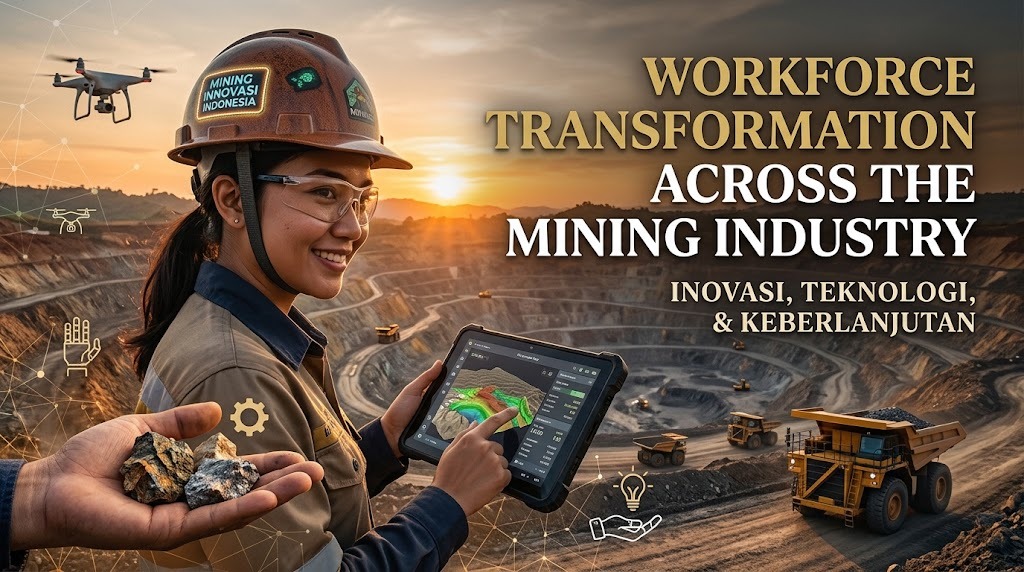
The mining industry is experiencing major changes as technology, environmental expectations, and operational demands continue to develop. Traditional mining jobs that once focused mainly on physical activities are now becoming more connected with digital systems, automation, and advanced equipment. This transformation is changing the skills, roles, and responsibilities required from workers across the industry.
Workforce transformation does not mean replacing humans with technology entirely. Instead, it focuses on combining human expertise with modern tools to create safer, more efficient, and more productive mining operations. Companies need to prepare workers through training, skill development, and adaptation strategies so they can succeed in the future mining environment.
CHANGING SKILLS REQUIREMENTS IN MODERN MINING
The development of technology has changed the skills required in mining operations. Workers are now expected to understand not only traditional mining techniques but also digital systems, automated equipment, data analysis, and modern safety procedures. This combination of technical and digital abilities has become increasingly important in the industry.
Modern mining companies are looking for employees who can adapt to new technologies and solve complex operational challenges. Digital skills are becoming a valuable addition to traditional expertise such as engineering, equipment operation, and geological knowledge. Workers who continue improving their abilities will have better opportunities in a rapidly changing industry.
AUTOMATION CHANGING THE ROLE OF MINING WORKERS
Automation technology is one of the biggest factors influencing workforce transformation in mining. Automated vehicles, remote-controlled equipment, and smart systems can perform certain tasks with greater consistency and precision. These technologies can also reduce worker exposure to areas with higher safety risks.
However, automation does not eliminate the need for human involvement. Workers are still needed to operate, monitor, maintain, and improve automated systems. As job roles change, employees may move from manual operational tasks toward positions that require technical knowledge, system management, and decision-making abilities.
THE IMPORTANCE OF TRAINING AND UPSKILLING
Continuous learning is essential for workers facing technological changes in the mining sector. Companies need to provide workforce training programs that help employees understand new equipment, software systems, safety technologies, and operational methods. Training allows workers to remain productive while adapting to changing job requirements.
Upskilling and reskilling programs can also create new career opportunities within the industry. Workers who previously performed traditional mining tasks can develop additional abilities in areas such as automation control, digital monitoring, and equipment maintenance. This approach helps companies maintain experienced employees while preparing them for future challenges.
DIGITAL TECHNOLOGY SUPPORTING HUMAN PERFORMANCE
Digital technology is not only changing equipment but also improving how workers perform their responsibilities. Data platforms, mobile applications, and monitoring systems can provide employees with faster access to important operational information. These tools can help workers make better decisions and respond more effectively to changing conditions.
Data driven operations allow teams to understand equipment performance, production progress, and safety conditions more accurately. Instead of relying only on manual observations, workers can use real time information to support daily activities. The combination of human experience and digital information can improve overall mining performance.
IMPROVING SAFETY THROUGH TECHNOLOGY
Safety remains one of the most important priorities in mining workforce transformation. Advanced technologies such as monitoring devices, communication systems, and automated equipment can help reduce workplace risks. These tools support workers by providing warnings, tracking conditions, and improving emergency responses.
Despite technological improvements, human awareness and safety culture remain essential. Workers must understand safety procedures and use technology correctly to achieve the best results. Mining safety depends on both advanced systems and responsible behavior from everyone involved in operations.
BUILDING A FUTURE READY MINING WORKFORCE
Preparing a future-ready workforce requires cooperation between mining companies, educational institutions, governments, and training organizations. Education programs need to include skills that match modern industry requirements, such as digital technology, automation, environmental management, and data analysis.
Companies also need to create opportunities for employees to develop professionally. Career development programs, certification, mentoring, and practical training can help workers build confidence in using new technologies. A capable workforce will allow the mining industry to continue evolving while maintaining productivity and safety.
PROMOTING DIVERSITY AND INCLUSION IN MINING
Workforce transformation also creates opportunities to build a more diverse mining industry. Companies are increasingly recognizing the importance of involving people with different backgrounds, skills, and perspectives. Workplace diversity can support innovation and improve problem-solving within mining organizations.
Creating an inclusive workplace requires fair opportunities, supportive policies, and professional development access for all employees. A diverse workforce can help companies respond to complex challenges and develop better solutions. As mining becomes more technology-driven, different perspectives can become an important advantage.
THE FUTURE OF MINING WORKFORCE TRANSFORMATION
The future of the mining industry will depend heavily on how effectively companies prepare their workforce for change. Technology will continue to influence job roles, but human knowledge, experience, and decision-making will remain essential. The most successful mining operations will be those that combine innovation with skilled and adaptable employees.
Workforce transformation is a long-term process that requires investment in people, technology, and organizational development. By improving skills, encouraging continuous learning, and adopting responsible technology practices, the mining industry can create a safer, more efficient, and more sustainable future.
About the Author
Gusti Ayu Tita P
Author — STEKOM University
An active author focused on academic issues, educational technology, and human resource development in the campus environment.















