10 Effective Tips to Improve Learning Motivation for Students and College Students
Gusti Ayu Tita P
23 Juli 2026
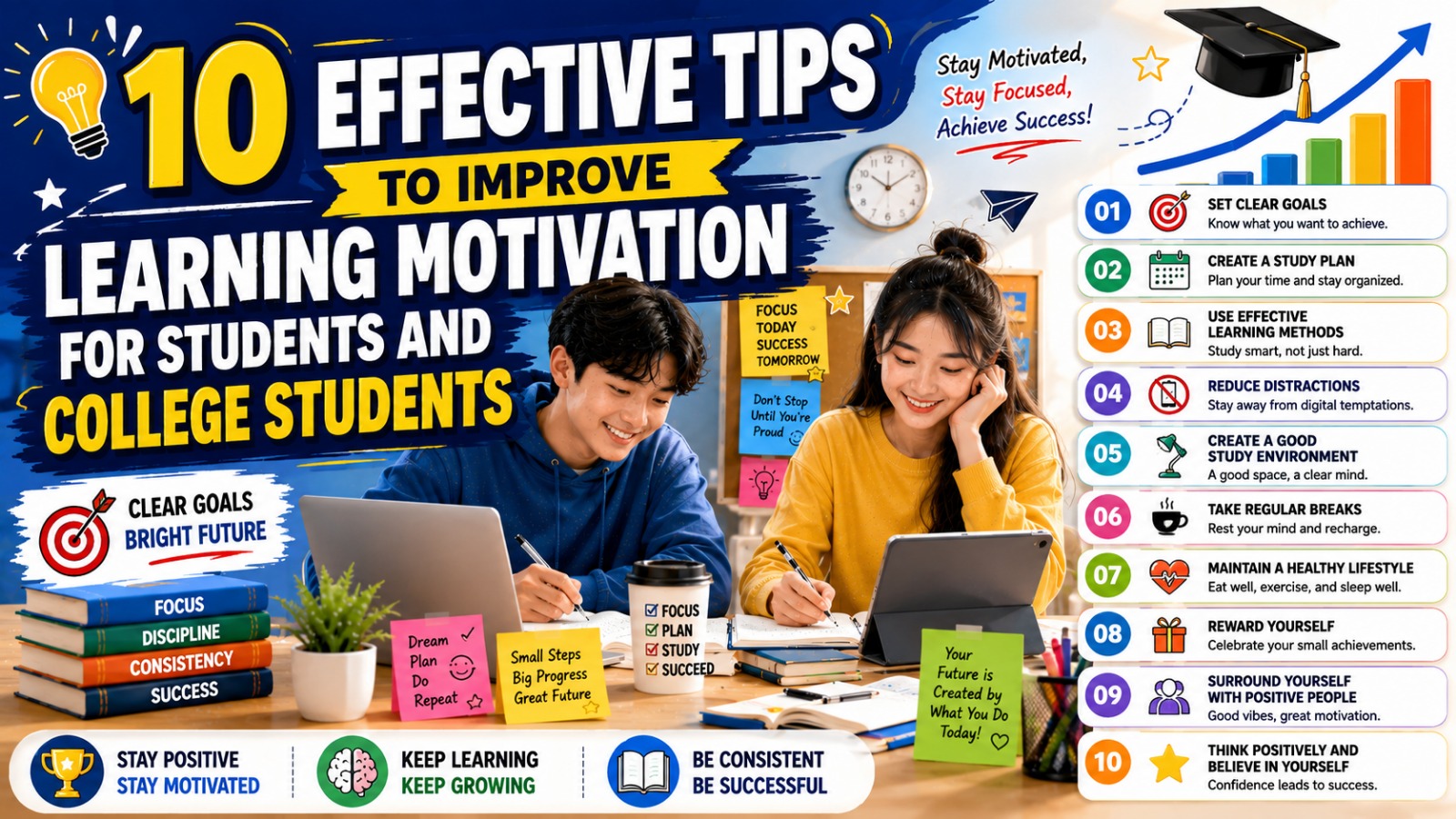
Learning motivation is one of the most important factors that determines academic success. Students and college students with strong motivation are generally more enthusiastic about studying, more disciplined in completing assignments, and better prepared to face academic challenges. On the other hand, low motivation often leads to procrastination, poor concentration, and declining academic performance.
Fortunately, learning motivation is not something fixed. It can be developed through positive habits, effective study strategies, and a supportive environment. Below are 10 effective tips that can help students and college students improve their motivation and achieve better learning outcomes.
SET CLEAR LEARNING GOALS
Having clear learning goals gives direction and purpose to every study session. Instead of studying without a plan, determine what you want to accomplish each day, week, or month. Your goals can include improving grades, mastering a specific subject, or preparing for an important examination.
Clear goals also make it easier to measure progress and maintain enthusiasm. Break large goals into smaller milestones so they feel more achievable. Every completed milestone builds confidence and encourages you to continue learning consistently.
CREATE A CONSISTENT STUDY SCHEDULE
A consistent study schedule helps develop discipline and prevents last-minute cramming. Allocate specific times each day for studying, reviewing lessons, and completing assignments. Consistency trains your brain to become more focused during study hours.
Avoid studying only when exams are approaching. Regular study sessions improve long-term memory and reduce stress. Even studying for 30 to 60 minutes daily can produce better results than studying for many hours in one sitting.
FIND A COMFORTABLE STUDY ENVIRONMENT
Your study environment has a significant impact on concentration and motivation. Choose a quiet, clean, and well-lit place with minimal distractions. A comfortable chair and organized desk can also improve productivity.
Keep unnecessary gadgets away unless they are required for learning. Listening to soft instrumental music may help some people stay focused, but others may prefer complete silence. Experiment to discover the environment that works best for you.
USE ACTIVE LEARNING METHODS
Instead of simply reading textbooks, apply active learning techniques to understand the material more effectively. Summarize important concepts, create mind maps, answer practice questions, or teach the material to someone else.
Active learning encourages deeper understanding rather than memorization. It also keeps study sessions more engaging and reduces boredom. Students who actively participate in their learning process often retain information longer.
TAKE REGULAR BREAKS
Studying continuously for several hours can reduce concentration and increase fatigue. Taking short breaks allows your brain to recharge and improves overall productivity. A common method is studying for 25–50 minutes followed by a 5–10 minute break.
During breaks, stretch your body, drink water, or take a short walk. Avoid spending the entire break scrolling through social media because it may distract you and make it harder to resume studying.
STAY HEALTHY BOTH PHYSICALLY AND MENTALLY
A healthy body and mind greatly influence learning motivation. Get enough sleep every night, eat balanced meals, and exercise regularly to maintain energy and concentration. Poor health often reduces the ability to focus during lessons.
Mental well-being is equally important. Manage stress through relaxation, hobbies, or talking with trusted friends and family members. Maintaining emotional balance helps students remain motivated even during challenging academic periods.
REWARD YOURSELF FOR ACHIEVEMENTS
Giving yourself small rewards after completing study goals can increase motivation. Rewards do not have to be expensive. Watching your favorite show, enjoying a snack, or taking extra leisure time can be effective incentives.
Positive reinforcement creates enjoyable learning experiences. Over time, your brain begins associating studying with achievement and satisfaction, making it easier to stay motivated.
LEARN WITH FRIENDS
Studying with classmates or friends can make learning more enjoyable and interactive. Group discussions allow everyone to exchange ideas, solve problems together, and gain different perspectives on difficult topics.
However, choose study partners who are serious about learning. A productive study group encourages accountability and helps everyone stay focused on academic goals instead of becoming distracted.
DEVELOP A POSITIVE MINDSET
Your mindset plays a major role in maintaining learning motivation. Believe that abilities can improve through practice and effort rather than assuming intelligence is fixed. Every mistake is an opportunity to learn something new.
Avoid comparing yourself excessively with others. Focus on your own progress and celebrate personal improvements, no matter how small. A positive mindset builds resilience and confidence throughout your educational journey.
REDUCE DISTRACTIONS DURING STUDY TIME
Modern technology offers many learning resources, but it also creates countless distractions. Turn off unnecessary notifications and limit social media use while studying. Maintaining focus helps you complete tasks more efficiently.
Consider using productivity techniques such as the Pomodoro Method or website blockers if distractions become difficult to control. Better concentration leads to higher-quality learning and improved academic performance.
CONCLUSION
Improving learning motivation requires consistent effort, positive habits, and realistic goals. Students and college students who create effective study routines, maintain healthy lifestyles, and use active learning methods are more likely to achieve academic success.
Remember that motivation naturally rises and falls over time. The key is to continue building good habits even when motivation feels low. With patience, discipline, and the right strategies, anyone can become a more motivated and successful learner.
Tentang Penulis
Gusti Ayu Tita P
Penulis — Universitas STEKOM
Penulis aktif yang berfokus pada isu-isu akademik, teknologi pendidikan, dan pengembangan sumber daya manusia di lingkungan kampus.