A Beginner Guide to Using a Bus Terminal
Gusti Ayu Tita P
10 Agustus 2026
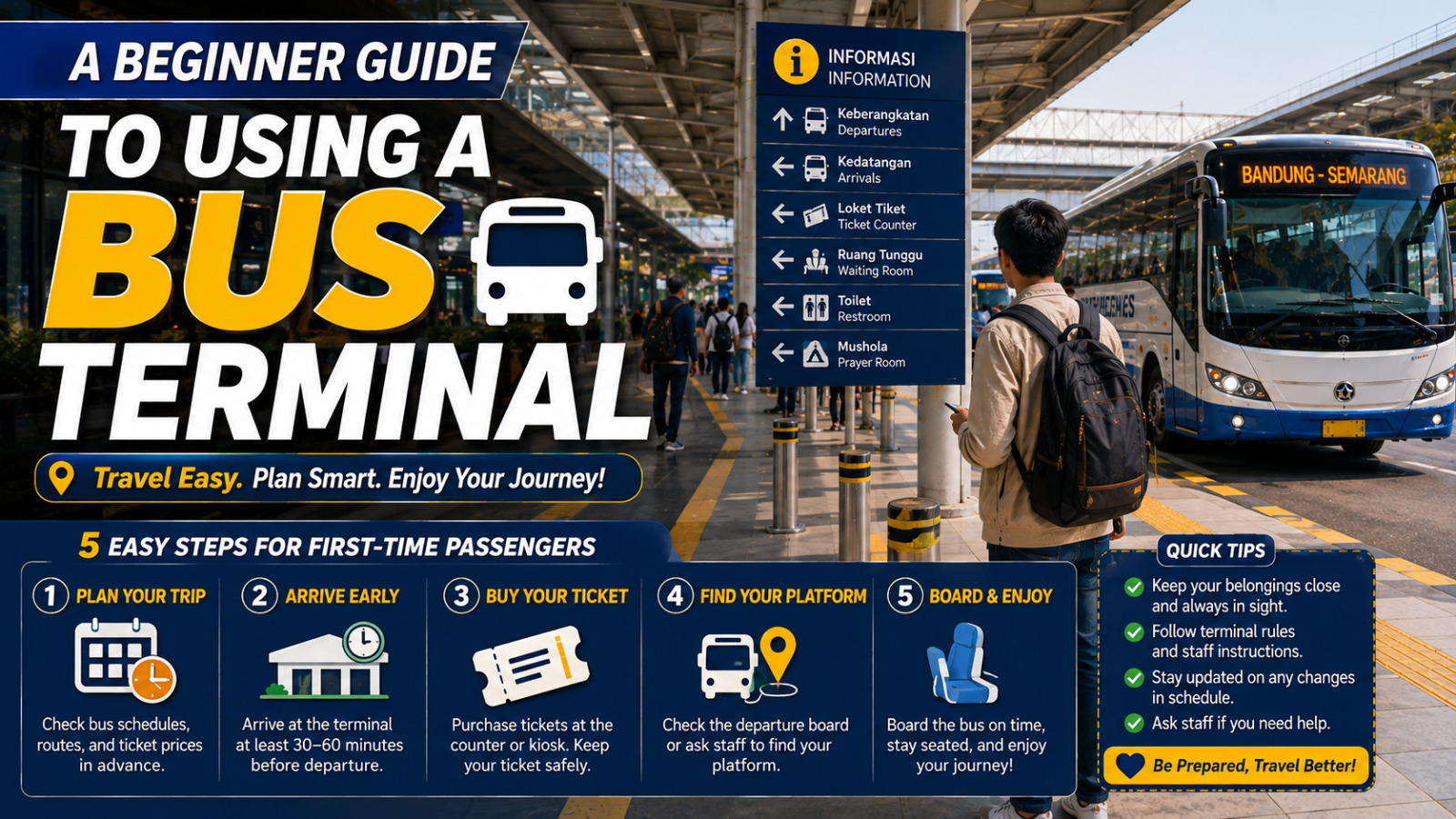
Using a bus terminal for the first time can feel confusing because of the many platforms, routes, signs, and passenger services. However, the process becomes easier when travelers understand what to do from arrival until boarding. Proper preparation and attention to information can help beginners use a bus terminal safely and comfortably.
PREPARE YOUR TRAVEL NEEDS
Before going to the terminal, prepare your ticket, identification, money, and personal belongings. Check the destination and departure time carefully to make sure all travel details are correct. If you use a digital ticket, make sure the booking confirmation can be accessed when needed.
Beginners should also check the terminal location and transportation options before leaving. Consider traffic conditions and the time needed to reach the terminal. Arriving with enough time can reduce stress and give you an opportunity to find the correct departure area.
FIND DEPARTURE INFORMATION
After arriving at the terminal, look for the information board or passenger service center. These facilities can provide details about bus schedules, destinations, platforms, and departure areas. If you cannot find the information you need, ask official terminal staff for assistance.
Make sure the information matches your ticket and travel destination. Avoid following uncertain directions from strangers when official information is available. Terminal staff or official bus operator representatives are better sources for confirming important travel details.
FIND THE CORRECT PLATFORM
After confirming your departure information, follow the signs to the correct bus platform or departure area. Pay attention to platform numbers, destination signs, and other directions provided by the terminal. Large terminals may require additional time to reach the correct platform.
Continue checking departure boards and announcements while waiting. Platforms or schedules may change because of operational conditions. If you notice information that differs from your ticket, ask terminal staff before boarding.
PROTECT YOUR BELONGINGS
Always keep your luggage and valuable belongings under control while inside the terminal. Phones, wallets, identification documents, and tickets should be stored securely. Never leave important belongings unattended, even when moving away from your seat for a short time.
Beginners should also pay attention to terminal safety rules. Stay in designated passenger areas and avoid standing too close to moving buses. If you need assistance or feel unsure about a situation, contact official terminal staff.
BOARD THE BUS CAREFULLY
When a bus arrives, confirm that it is the correct vehicle by checking the destination, operator, and ticket information. Do not board simply because the bus appears to be traveling in the same direction. Follow instructions from terminal staff or the bus crew during the boarding process.
After boarding, store your luggage according to the operator's rules and keep important belongings within your control. Before the bus leaves, make sure you have all essential items with you. Following each step calmly can make the terminal experience much easier for first-time passengers.
CONCLUSION
Using a bus terminal for the first time becomes easier when passengers understand the basic process. Preparing travel needs, finding reliable information, locating the correct platform, protecting belongings, and boarding carefully are important steps for beginners. Passengers should not hesitate to ask official staff for help when they are unsure about something. With proper preparation and attention, a first bus terminal experience can be safe, organized, and comfortable.
Tentang Penulis
Gusti Ayu Tita P
Penulis — Universitas STEKOM
Penulis aktif yang berfokus pada isu-isu akademik, teknologi pendidikan, dan pengembangan sumber daya manusia di lingkungan kampus.