A Day in the Life of an Informatics Engineering Student
Gusti Ayu Tita P
11 Juli 2026
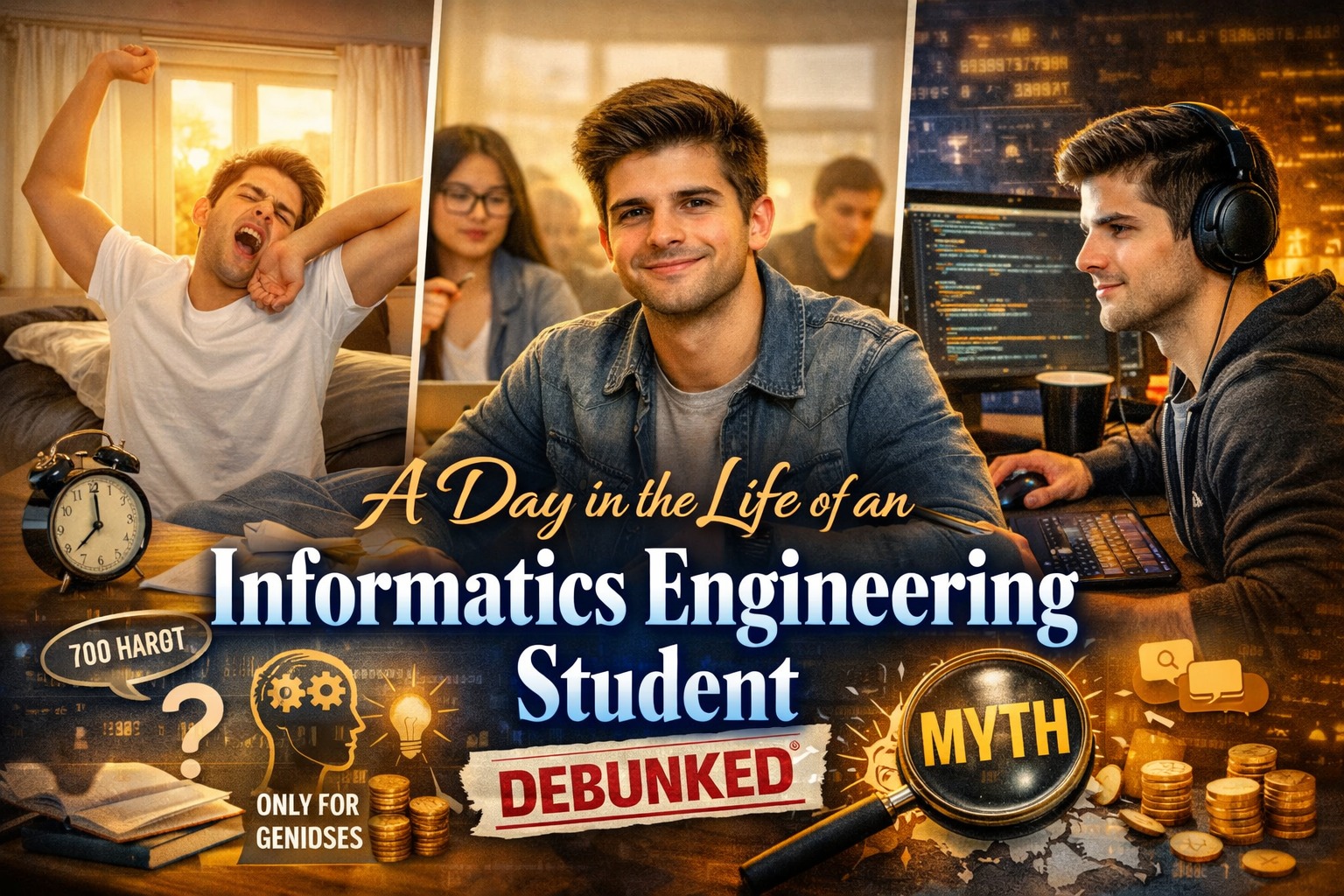
Studying Informatics Engineering is an exciting journey filled with technology, innovation, and problem-solving activities. Every day, students learn how to develop software, analyze data, and understand modern computer systems that power today's digital world. The experience is not only about attending classes but also about building practical skills that prepare students for future careers. Through various academic and project-based activities, they gain valuable knowledge that is highly demanded in the technology industry. This article explores a typical day in the life of an Informatics Engineering student and highlights what makes this field both challenging and rewarding.
STARTING THE DAY WITH CLASSES AND TECHNOLOGY
A typical day often begins with attending lectures related to computer science, programming, databases, or network systems. Students participate in discussions, take notes, and learn theoretical concepts that form the foundation of modern technology. Lecturers frequently introduce real-world examples to help students understand how technology is applied in different industries.
Beyond theory, students are encouraged to develop analytical thinking and problem-solving abilities. These skills are essential because Informatics Engineering involves finding efficient solutions to complex technical challenges. Regular classroom activities help students build a strong academic foundation while staying updated with technological developments.
WORKING ON PROGRAMMING ASSIGNMENTS
One of the most important parts of an Informatics Engineering student's day is completing programming assignments. These tasks often require students to write, test, and improve code using various programming languages. Assignments can range from creating simple applications to developing more advanced software systems.
Programming projects teach students how to think logically and systematically. They also learn how to identify errors, troubleshoot problems, and optimize application performance. Consistent practice strengthens coding abilities and prepares students for future professional responsibilities in the technology sector.
PARTICIPATING IN LABORATORY SESSIONS
Laboratory sessions provide hands-on experience that complements classroom learning. During these sessions, students work directly with software tools, computer systems, and development platforms. This practical environment allows them to apply theoretical knowledge in real situations.
Lab activities often include database management, software development, cybersecurity exercises, and system analysis. By engaging in practical work, students gain deeper insights into how technology functions behind the scenes. These experiences are crucial for developing industry-ready technical skills.
COLLABORATING ON TEAM PROJECTS
Many Informatics Engineering courses involve group projects that require teamwork and communication. Students collaborate to design applications, solve technical problems, and complete project milestones within specific deadlines. Working in teams helps them understand professional software development processes.
These projects also improve leadership, communication, and project management skills. Students learn how to share responsibilities, exchange ideas, and integrate different components into a complete solution. Such experiences closely resemble real-world technology workplace environments.
LEARNING ABOUT EMERGING TECHNOLOGIES
In addition to regular coursework, students often spend time exploring artificial intelligence, cloud computing, data science, and cybersecurity. These rapidly growing fields are transforming industries worldwide and creating new career opportunities. Staying informed about emerging technologies is essential for future success.
Many students read articles, watch tutorials, participate in webinars, or join technology communities. Continuous learning allows them to remain competitive and adapt to industry changes. This habit of self-improvement is one of the defining characteristics of successful Informatics Engineering students.
BALANCING STUDY, ORGANIZATIONS, AND PERSONAL LIFE
Although academic responsibilities can be demanding, students also participate in campus organizations, technology clubs, and social activities. These experiences help them build professional networks and develop soft skills that are valuable in the workplace. Extracurricular involvement often enhances personal growth and confidence.
Maintaining a balance between studies and personal life is equally important. Effective time management helps students handle assignments, projects, and social commitments without becoming overwhelmed. A healthy balance contributes to both academic achievement and overall well-being.
PREPARING FOR A FUTURE CAREER IN TECHNOLOGY
Every day as an Informatics Engineering student contributes to long-term career development. Through lectures, coding exercises, laboratory work, and collaborative projects, students continuously strengthen their technical expertise. These experiences prepare them for various roles in the digital economy.
Graduates often pursue careers as software developers, data analysts, system engineers, cybersecurity specialists, and technology consultants. With strong technical knowledge and practical experience, they are well-positioned to succeed in the evolving world of information technology. This makes Informatics Engineering one of the most promising fields for students interested in innovation and digital transformation.
CONCLUSION
A day in the life of an Informatics Engineering student is filled with learning, problem-solving, and technological exploration. From attending classes and completing coding assignments to participating in laboratory sessions and team projects, every activity helps build valuable professional skills. The combination of theory, practical experience, and continuous learning creates a strong foundation for future success. As technology continues to shape the modern world, Informatics Engineering students play an important role in driving innovation. Their daily efforts prepare them to become the next generation of technology professionals.
Tentang Penulis
Gusti Ayu Tita P
Penulis — Universitas STEKOM
Penulis aktif yang berfokus pada isu-isu akademik, teknologi pendidikan, dan pengembangan sumber daya manusia di lingkungan kampus.