A Generation with Integrity Starts with Character Education
Gusti Ayu Tita P
19 Juli 2026
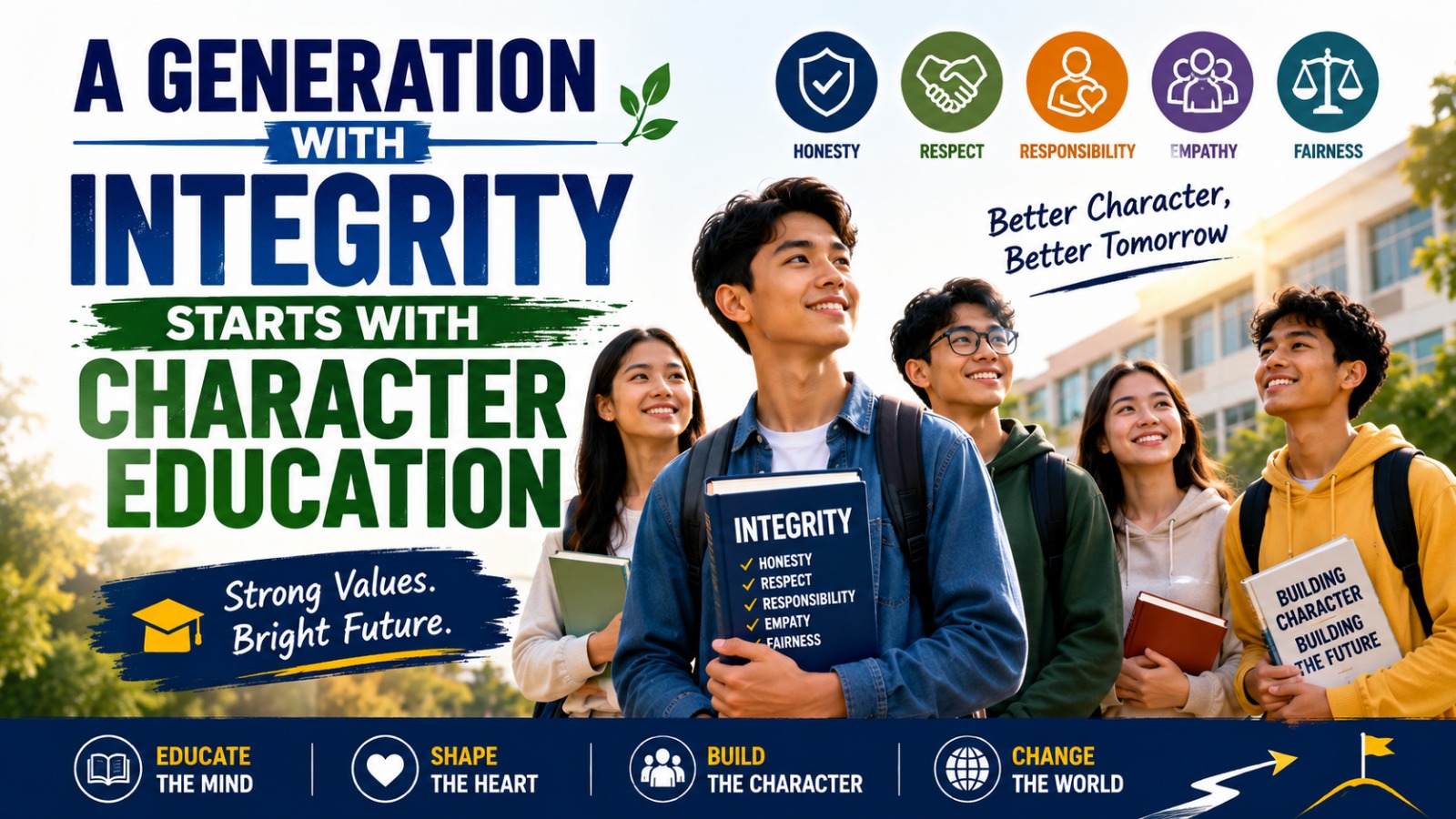
In today’s rapidly changing world, society needs more than academic success and technical skills. It needs a generation with integrity—young people who are honest, responsible, respectful, and committed to doing what is right. The foundation of these values begins with character education.
Character education helps children and teenagers develop moral principles, emotional intelligence, and positive habits. When taught consistently at home, in school, and in the community, it creates future leaders who can be trusted. A generation with integrity starts with character education because values shape actions, and actions shape society.
WHAT IS CHARACTER EDUCATION?
Character education is the process of teaching ethical values and life principles that guide behavior. It includes honesty, discipline, empathy, fairness, perseverance, and responsibility.
Unlike traditional academic subjects, character education focuses on how young people treat others, solve problems, and make decisions. It prepares them not only for careers, but also for life.
WHY INTEGRITY MATTERS FOR THE FUTURE
Integrity means acting honestly and consistently, even when no one is watching. It is one of the most valuable qualities in personal and professional life.
Young generations with integrity are more likely to:
- Build trust in relationships
- Make ethical decisions
- Respect laws and rules
- Accept responsibility for mistakes
- Become reliable leaders
Without integrity, talent alone cannot create lasting success.
HOW CHARACTER EDUCATION BUILDS INTEGRITY
Character education gives young people daily opportunities to practice strong values.
TEACHES HONESTY
- Students learn the importance of truthfulness in schoolwork, friendships, and personal choices. DEVELOPS RESPONSIBILITY
- By completing tasks and accepting consequences, children understand accountability. ENCOURAGES SELF-DISCIPLINE
Discipline helps young people control impulses and stay committed to goals.
BUILDS EMPATHY
Understanding others creates fairness, kindness, and respectful behavior.
STRENGTHENS COURAGE
- Integrity often requires courage to stand for what is right, even under pressure.
THE ROLE OF FAMILIES AND SCHOOLS
Families are the first place where children observe values in action. Parents who model honesty, respect, and consistency teach integrity through everyday behavior.
Schools reinforce these lessons by promoting fairness, teamwork, leadership, and responsibility. When parents and educators work together, children receive stronger moral guidance.
CHALLENGES IN THE MODERN ERA
Young people today face many temptations, including cheating, online dishonesty, peer pressure, and the desire for instant success. Social media can sometimes reward image over substance.
This is why character education is more important than ever. It teaches youth to value truth, effort, and ethical choices over short-term gain.
PRACTICAL WAYS TO PROMOTE INTEGRITY
Parents, teachers, and communities can build integrity through simple actions:
- Reward honest behavior
- Discuss moral dilemmas openly
- Set clear expectations
- Encourage accountability
- Praise effort over shortcuts
- Provide positive role models
- Consistent habits create lasting character.
CONCLUSION
A generation with integrity starts with character education because values learned early shape future behavior. By teaching honesty, responsibility, empathy, and discipline, society can raise young people who lead with trust and purpose. In a world full of challenges, character education remains the strongest path to building a better future.
Tentang Penulis
Gusti Ayu Tita P
Penulis — Universitas STEKOM
Penulis aktif yang berfokus pada isu-isu akademik, teknologi pendidikan, dan pengembangan sumber daya manusia di lingkungan kampus.