A Practical Guide To Traveling Long Distance With Children During Homecoming
Gusti Ayu Tita P
10 Agustus 2026
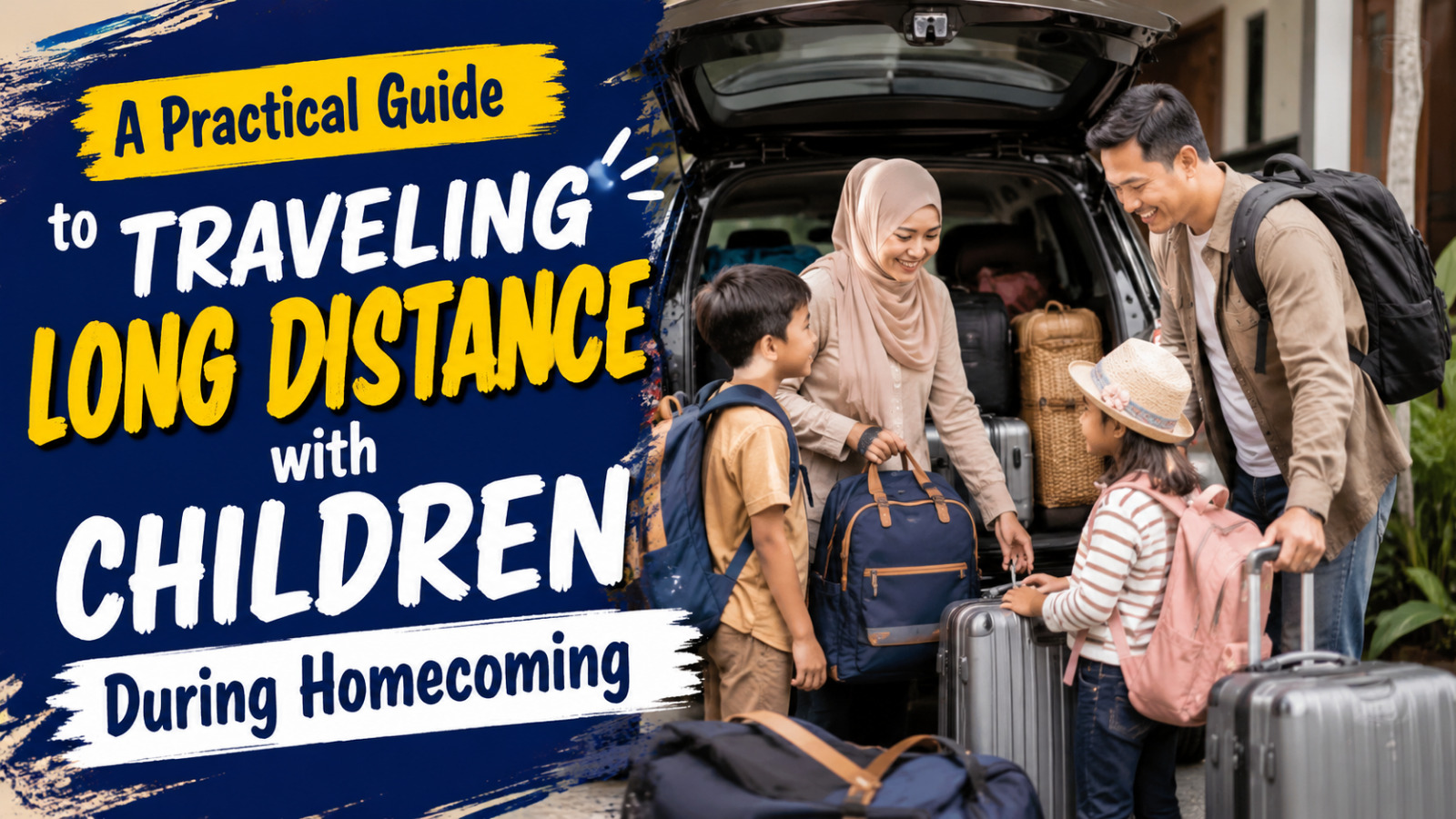
Traveling Children during a homecoming journey requires careful preparation because long-distance trips can be tiring and challenging for young passengers. Children may become bored, hungry, sleepy, or uncomfortable after spending several hours inside a vehicle. Parents need to prepare both physical necessities and activities before departure. Good preparation can reduce stress for children and parents throughout the journey. It also helps families respond more calmly when unexpected situations occur.
The needs of children can be different depending on their age. Babies may require diapers, milk, feeding supplies, and frequent stops, while older children may need entertainment and comfortable seating. Parents should consider the length of the journey when preparing their luggage. Essential items should be kept within easy reach rather than stored at the bottom of the luggage. Proper Travel Preparation makes the journey more organized and comfortable.
PREPARE CHILDREN BEFORE THE JOURNEY
Parents should explain the journey to children before leaving. Simple information about the destination, travel time, rest stops, and activities can help children understand what will happen. Younger children may feel more comfortable when they know where they are going and why the journey takes a long time. Parents can also involve children in preparing small personal bags.
Children should be encouraged to use the restroom before departure. Parents should also prepare comfortable clothing and appropriate footwear. If a child has special routines, parents should try to maintain them as much as possible during the journey. A calm beginning can make the rest of the Family Journey easier.
PRIORITIZE CHILD SAFETY
Child Safety should always be the highest priority during a long-distance trip. Children should use an appropriate child restraint or seat belt based on their age, size, and the vehicle's safety requirements. They should not be allowed to stand, move between seats, or sit in unsafe positions while the vehicle is moving. Parents should also make sure that safety restraints are properly fitted before departure.
Children should never be left unattended inside a parked vehicle. Temperatures inside a vehicle can rise quickly, even when the outside weather does not appear extremely hot. During stops, parents should keep children close and supervise them carefully. Crowded rest areas, terminals, and stations require additional attention because children can easily become separated from their families.
PACK ESSENTIAL SUPPLIES
Packing the right supplies can make Long Distance travel much easier. Parents should prepare drinking water, snacks, clothing, tissues, hygiene products, medicine when needed, and other essential items. Babies may require additional supplies such as diapers, feeding equipment, and spare clothes. Important items should be placed in a separate bag that can be accessed quickly.
Parents should avoid bringing excessive luggage that makes the vehicle uncomfortable. A simple checklist can help ensure that important items are not forgotten. Documents, tickets, identification, and emergency contacts should also be easy to access. Good organization reduces unnecessary stress during the journey.
BRING HEALTHY FOOD AND DRINKS
Children can become hungry or thirsty during a long journey. Parents should prepare sufficient food and drinks based on the travel duration. Suitable snacks can include foods that are easy to handle and less likely to create a mess inside the vehicle.
Food should be stored safely and appropriately for the journey. Parents should also consider allergies and dietary requirements when preparing snacks. Drinking water should be readily available. Proper food planning can help children remain comfortable without requiring frequent stops only to buy basic supplies.
PLAN REGULAR REST STOPS
Regular breaks are important during Long Distance Travel with children. Sitting in one position for many hours can make children uncomfortable and restless. Rest stops allow children to stretch, use the restroom, eat, drink, and relax.
Parents should choose safe and appropriate locations for breaks. The number and duration of stops may depend on the children's age and needs. A flexible schedule is better than forcing children to follow a strict timetable. Rest breaks also give drivers an opportunity to recover from fatigue.
PROVIDE ENTERTAINMENT
Long journeys can become boring for children, particularly when traffic is slow. Parents can prepare books, coloring activities, simple games, music, or age-appropriate digital entertainment. Familiar toys or comfort items can also help younger children remain relaxed.
Digital devices can be useful, but they should not become the only form of entertainment. Parents can encourage children to look outside, talk about the journey, or play simple travel games. Preparing several activities allows parents to change activities when children lose interest. Good entertainment can make the Family Journey feel shorter.
MANAGE MOTION DISCOMFORT
Some children may experience discomfort or motion sickness during long journeys. Parents should observe signs such as nausea, dizziness, sweating, or unusual tiredness. Fresh air and regular breaks may help some children feel more comfortable.
Parents should prepare any appropriate medication only according to professional advice and the child's needs. Food choices can also affect comfort during travel. If symptoms become severe or unusual, parents should seek appropriate medical assistance rather than simply continuing the journey.
KEEP CHILDREN COMFORTABLE
Comfort can have a major effect on children's behavior during a long journey. The vehicle should have a suitable temperature and adequate ventilation. Children should have enough space to sit safely without excessive luggage around them.
Parents can also bring pillows, blankets, or familiar items when appropriate. However, these items should never interfere with seat belts or child restraint systems. Travel Comfort should always be balanced with safety. A comfortable child is generally easier to manage during a long journey.
PREPARE FOR UNEXPECTED DELAYS
Homecoming traffic can change quickly, so families should prepare for unexpected delays. A journey that normally takes several hours may become much longer because of congestion, accidents, weather, or road restrictions. Parents should therefore carry extra water, snacks, necessary supplies, and entertainment.
A flexible mindset is also important. Children may become frustrated when the journey takes longer than expected. Parents should remain calm and explain the situation in a simple way. Being prepared for delays can prevent small problems from becoming major sources of stress.
CONCLUSION
A successful Family Journey during homecoming requires careful preparation, patience, and attention to safety. Parents should prepare children before departure, use appropriate safety restraints, pack essential supplies, plan regular rest stops, and provide suitable entertainment. Food, drinks, comfort items, and emergency supplies should also be prepared according to the length of the journey.
The most important principle is that Child Safety should never be sacrificed to save time. Parents should remain flexible and respond to children's needs throughout the trip. With proper Travel Preparation, responsible driving, and regular breaks, long-distance homecoming travel can become safer, more comfortable, and more enjoyable for the entire family.
Tentang Penulis
Gusti Ayu Tita P
Penulis — Universitas STEKOM
Penulis aktif yang berfokus pada isu-isu akademik, teknologi pendidikan, dan pengembangan sumber daya manusia di lingkungan kampus.