
Academic Competitions as a Benchmark of Student Competence
Gusti Ayu Tita P
27 Februari 2026
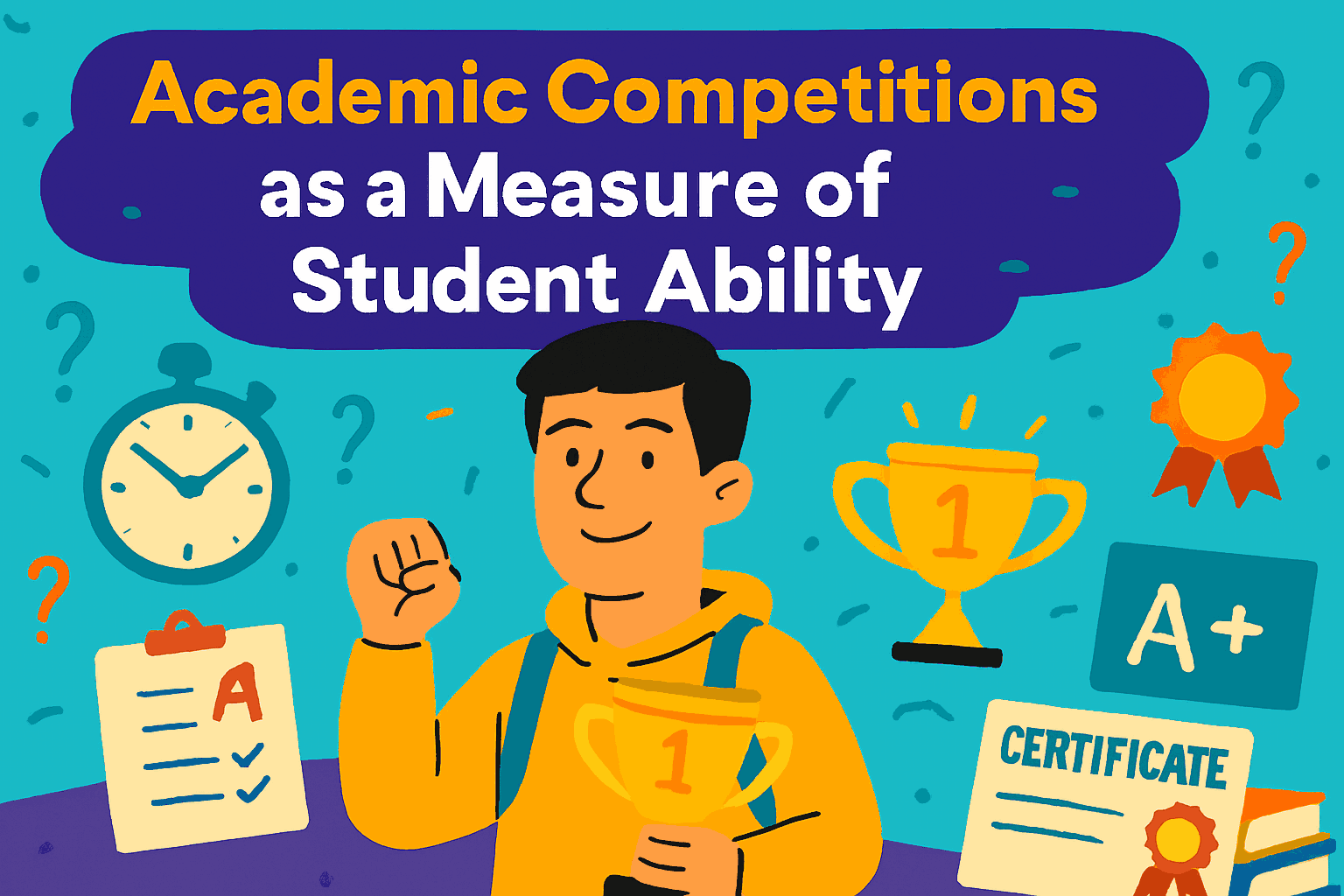
Academic competitions are often associated with awards, recognition, and academic achievement. At the university level, students can participate in research contests, debates, business case competitions, scientific writing, innovation challenges, and other academic events. These activities provide opportunities for students to demonstrate their knowledge and abilities outside regular classroom assessments. Because of this, academic competitions can be considered one possible benchmark of student competence, although they should not be the only measure.
Competence is broader than simply obtaining high grades or winning awards. A competent student should be able to apply knowledge, analyze problems, communicate ideas, collaborate with others, and adapt to new situations. Academic competitions can provide an environment for practicing many of these skills. However, the results should be interpreted carefully because student competence is multidimensional.
DEVELOPING CRITICAL THINKING
Critical thinking is often an important component of academic competitions. Participants may need to evaluate evidence, identify problems, compare different perspectives, and develop logical conclusions. These activities require students to move beyond memorizing information. Critical thinking demonstrates the ability to use knowledge effectively.
This skill is also valuable outside competitions. Students use critical thinking when evaluating academic sources, conducting research, making decisions, and solving complex problems. In professional environments, employees also need to distinguish reliable information from weak assumptions. Academic competitions can therefore provide useful practice in analytical thinking and evidence based decision making.
MEASURING PROBLEM SOLVING ABILITIES
Many competitions challenge students with problems that require practical solutions. Participants may need to analyze a case, develop an innovation, or propose strategies for a particular situation. They must consider available information and limitations before selecting an approach. This process can reveal their problem solving abilities.
Competition settings may also encourage students to revise their strategies when their initial ideas are not effective. Learning to evaluate mistakes and improve solutions is an important part of competence. It demonstrates that students can respond to challenges rather than simply follow familiar procedures. This makes problem solving a valuable competency that competitions can help assess.
EVALUATING CREATIVITY AND INNOVATION
Some academic competitions place strong emphasis on original ideas and innovative solutions. Students may be asked to create products, develop research proposals, or design strategies for social and economic problems. These activities can reveal how students approach unfamiliar challenges. Creativity and innovation are particularly valuable in fields that require continuous improvement.
Innovation also requires more than having an unusual idea. Students need to determine whether their ideas are useful, realistic, and relevant to the problem. This requires a combination of creativity, analysis, and practical thinking. Competitions can therefore provide opportunities to evaluate creative problem solving.
LIMITATIONS OF ACADEMIC COMPETITIONS AS A BENCHMARK
Academic competitions have limitations as a measurement tool. First, they usually assess specific skills within a particular subject or competition format. A student may perform exceptionally well in one area but have different strengths in another. Therefore, competition results cannot represent every dimension of student competence.
Second, participation opportunities may differ between students and universities. Some students may have access to experienced mentors, funding, or well-established competition programs, while others may not. This can influence outcomes independently of individual ability. For this reason, competitions should be combined with other forms of assessment and experience.
COMBINING COMPETITIONS WITH OTHER MEASURES
A more complete evaluation of student competence can include academic grades, research projects, internships, organizational activities, community service, portfolios, and practical assignments. Each method provides different information about a student's abilities. Combining several indicators can create a more balanced picture. Multiple assessment methods are more reliable than relying on one achievement.
Universities can also encourage students to reflect on their experiences. Students can identify which competencies they developed through competitions and how those skills can be applied elsewhere. This makes competition participation more meaningful. It also helps students understand their strengths and areas for improvement.
HOW UNIVERSITIES CAN USE COMPETITIONS EFFECTIVELY
Universities can maximize the educational value of competitions by choosing events that align with learning objectives. Students should receive appropriate preparation, mentoring, and feedback. Competition organizers should also use clear and fair assessment criteria. These steps can make competitions more effective as learning and competency development tools.
Universities should also avoid creating an environment where awards are treated as the only evidence of success. Students should be encouraged to value preparation, collaboration, creativity, and reflection. This approach makes competitions more inclusive and educational. Ultimately, the goal should be to develop capable students rather than simply produce more competition winners.
ACADEMIC COMPETITIONS AS ONE PART OF STUDENT COMPETENCE
Academic competitions can provide valuable evidence of student competence because they require participants to apply knowledge under challenging conditions. They can reveal abilities in critical thinking, problem solving, creativity, communication, teamwork, and resilience. These competencies are relevant to both academic development and future careers.
However, competition results should never be treated as the only benchmark. Student competence develops through multiple experiences and cannot be fully represented by trophies or rankings. A balanced approach recognizes academic competitions as one useful indicator within a broader system of student assessment.
CONCLUSION
Academic competitions can serve as a meaningful benchmark of student competence when they are evaluated appropriately. They provide opportunities for students to demonstrate knowledge and develop critical thinking, creativity, problem solving, communication, teamwork, leadership, and resilience. These experiences can complement classroom learning and help students prepare for future challenges.
Nevertheless, winning a competition does not automatically mean that a student is competent in every area. Student competence is multidimensional, and it should be evaluated through various academic and practical experiences. When competitions are combined with research, internships, community engagement, organizational activities, and reflective learning, they can provide a more complete path toward student development.
Tentang Penulis
Gusti Ayu Tita P
Penulis — Universitas STEKOM
Penulis aktif yang berfokus pada isu-isu akademik, teknologi pendidikan, dan pengembangan sumber daya manusia di lingkungan kampus.















