
Achievement or Presentation Why Personal Image Often Carries More Weight Than Capability
Gusti Ayu Tita P
2 Maret 2026
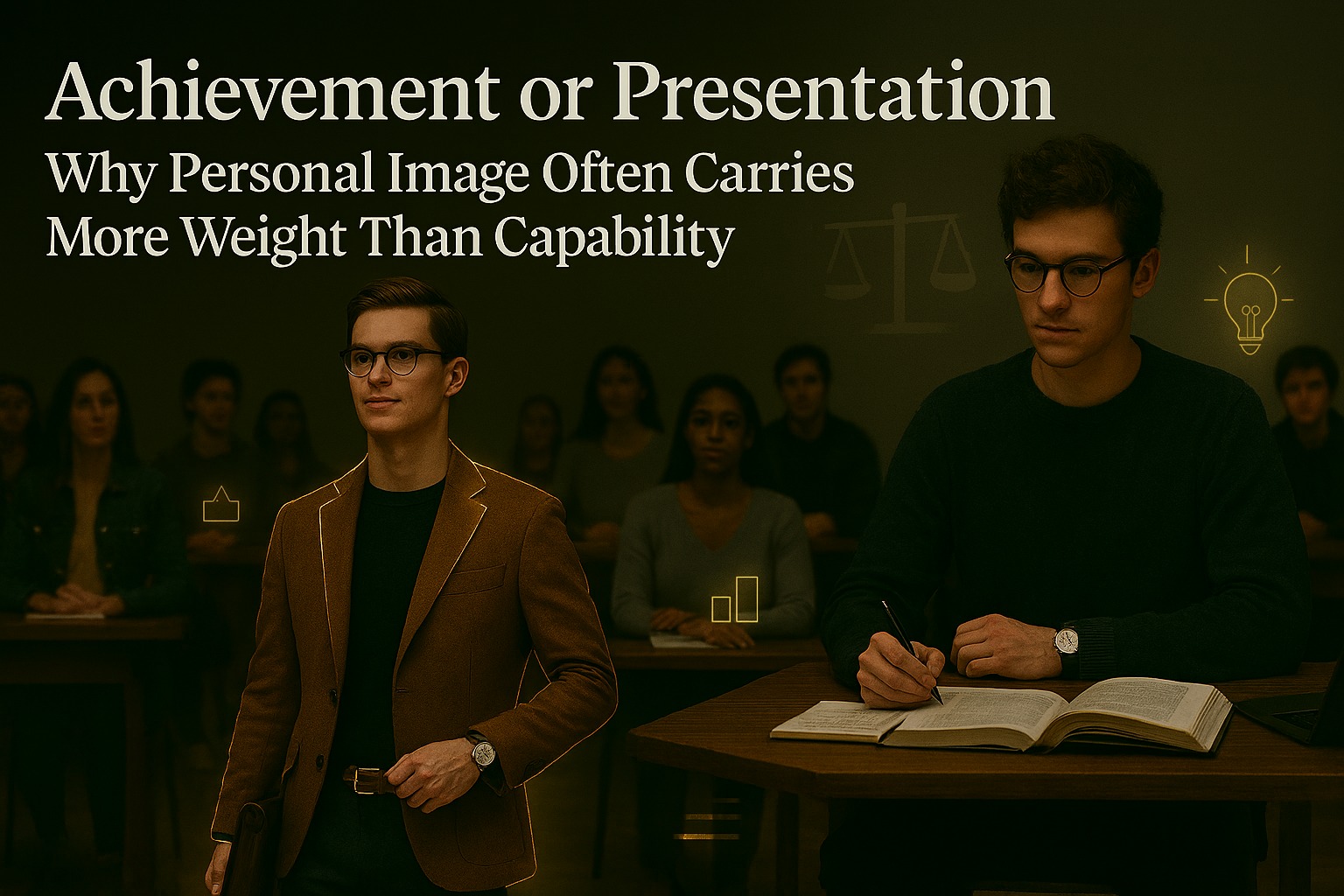
In academic institutions and professional environments alike, a subtle tension exists between achievement and presentation. While competence, knowledge, and skill are widely acknowledged as essential for success, personal image often carries unexpected weight in shaping how individuals are perceived. In many cases, how someone presents themselves can influence opportunities more quickly than what they are actually capable of doing.
This article explores why personal image frequently overshadows capability, how this dynamic develops, and what it means for students and young professionals navigating competitive environments.
THE POWER OF FIRST IMPRESSIONS
First impressions form within seconds. Before a person speaks at length or demonstrates their expertise, observers unconsciously evaluate posture, attire, confidence, tone of voice, and body language. These elements create an immediate narrative about competence.
Psychologically, humans rely on visual and behavioral cues to make quick judgments. In classrooms, interviews, and meetings, individuals who appear organized, articulate, and polished are often assumed to be capable even before they prove it. Meanwhile, those who are equally skilled but less expressive may struggle to gain the same level of recognition.
This gap between perception and reality explains why presentation sometimes carries more influence than achievement.
WHY PERSONAL IMAGE BECOMES A SOCIAL SHORTCUT
In fast-paced environments, people use shortcuts to assess others. Personal image functions as one of those shortcuts. Professional clothing may signal discipline. Confident speech may signal intelligence. A well-curated social media presence may signal ambition.
These assumptions are not always accurate, but they are powerful. Institutions and peer groups often reward individuals who align with expected standards of professionalism and success.
Over time, these repeated patterns reinforce the idea that appearance and presentation are as important if not more important than actual capability.
THE ROLE OF SOCIAL MEDIA IN AMPLIFYING IMAGE
Digital platforms have intensified the emphasis on personal branding. Students and professionals curate their achievements, internships, awards, and lifestyles into visually appealing narratives. Online presence becomes part of personal image.
This constant exposure creates comparison. Individuals feel pressure to appear accomplished, confident, and productive at all times. As a result, presentation becomes strategic. Some may focus more on looking successful than on developing deeper expertise.
The risk is that image management can consume energy that should be invested in building real skills.
THE HIDDEN COST OF PRIORITIZING PRESENTATION
When presentation outweighs achievement, several consequences emerge:
Surface-Level Validation – Recognition may be based on visibility rather than substance.
Increased Anxiety – Individuals may feel pressure to maintain an image that does not fully reflect reality.
Overlooked Talent – Quiet or introverted individuals may be underestimated despite strong capabilities.
Imbalanced Development – Effort may shift toward appearance instead of skill improvement.
Over time, this imbalance can weaken institutional integrity and personal growth.
BALANCING IMAGE AND CAPABILITY
It is important to clarify that presentation is not inherently negative. Communication skills, professionalism, and confidence are valuable assets. They help individuals express ideas effectively and build networks.
However, presentation should support capability not replace it. A strong personal image built on genuine competence creates sustainable credibility. Without substance, even the most polished presentation eventually loses impact.
Educational institutions and workplaces can promote healthier standards by evaluating performance through measurable contributions, collaboration, and critical thinking rather than surface impressions alone.
BUILDING AUTHENTIC CREDIBILITY
For students and young professionals, the goal should be balance:
Develop deep knowledge and practical skills.
Practice clear and respectful communication.
Build a professional image that reflects real values and abilities.
Avoid comparing progress solely through external appearances.
Authentic credibility grows when presentation and achievement align. When individuals invest in true competence while presenting themselves confidently, they create a powerful and sustainable reputation.
CONCLUSION
The debate between achievement and presentation reveals an important truth: personal image often shapes perception faster than capability can be demonstrated. In competitive environments, presentation becomes a strategic advantage. However, long-term success depends on substance.
True excellence emerges when personal image reflects genuine ability. In the end, presentation may open the door but capability determines how far someone can go.
Tentang Penulis
Gusti Ayu Tita P
Penulis — Universitas STEKOM
Penulis aktif yang berfokus pada isu-isu akademik, teknologi pendidikan, dan pengembangan sumber daya manusia di lingkungan kampus.















