
IS DIGITAL LITERACY ALONE SUFFICIENT TO CREATE ETHICAL TECHNOLOGY BEHAVIOR?
Gusti Ayu Tita P
20 November 2025
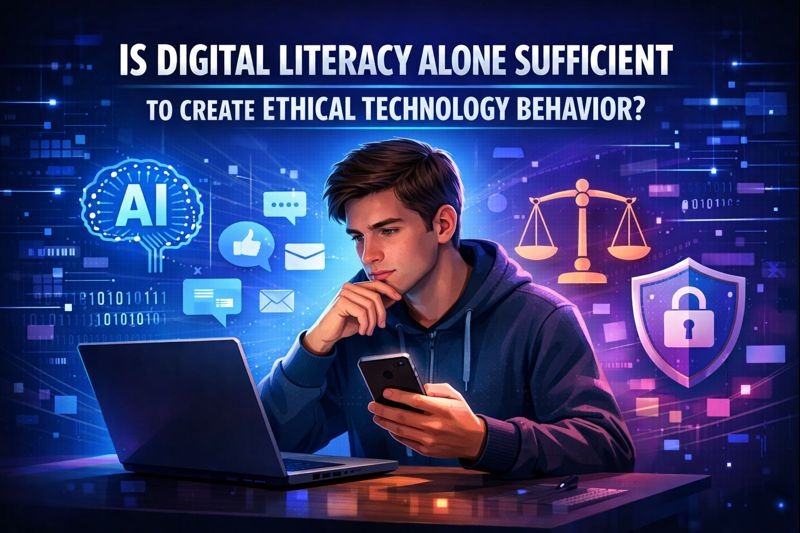
The rapid development of digital technology has made it easier for people to access information, communicate, and perform daily activities. However, this progress also presents new challenges, particularly regarding ethical technology use. Many believe that digital literacy is the primary key to ethical digital behavior. But is digital literacy alone enough?
WHAT IS DIGITAL LITERACY?
Digital literacy is the ability to access, understand, evaluate, and use digital information wisely. It includes technical skills, critical thinking, and awareness of digital security and privacy.
Key components of digital literacy include:
- Ability to use digital devices
- Understanding digital information and content
- Data security and privacy awareness
- Digital ethics and responsibility
- Online communication and collaboration skills
WHY IS DIGITAL ETHICS IMPORTANT?
Digital ethics refers to moral rules and social responsibility in online interactions. Without digital ethics, online spaces may be filled with misinformation, hate speech, cyberbullying, and data theft.
Digital ethics help users to:
- Respect others’ privacy
- Communicate respectfully
- Avoid spreading false information
- Use technology safely and responsibly
IS DIGITAL LITERACY ALONE ENOUGH?
The answer is: not necessarily.
Although digital literacy improves understanding, ethical behavior requires more than technical knowledge.
a. Digital Literacy Does Not Guarantee Moral Attitudes
Someone may understand technology but still spread misinformation or engage in cyberbullying due to a lack of ethical awareness.
b. Environmental and Cultural Factors Matter
User behavior is influenced by social environments, cultural norms, and online community dynamics.
c. Moral Values Must Be Developed Early
Ethics is not merely a skill but a habit. Digital literacy must be accompanied by strong moral education.
d. Emotions and Impulses Can Override Knowledge
Even knowledgeable users may act impulsively due to emotions on social media.
COMBINING DIGITAL LITERACY AND ETHICAL EDUCATION
To create truly ethical digital behavior, synergy is needed between:
- Technical knowledge
- Information evaluation skills
- Moral and ethical education
- Positive behavioral habits
CHALLENGES IN CREATING ETHICAL DIGITAL BEHAVIOR
Common obstacles include:
- Lack of digital ethics education in schools
- Uncontrolled emotional reactions on social media
- Toxic digital environments
- Insufficient regulation and supervision
- Resistance to feedback or criticism
STRATEGIES FOR BUILDING ETHICAL TECHNOLOGY BEHAVIOR
1. Integrating digital ethics into school curricula
2. Increasing awareness of digital security risks
3. Encouraging healthy discussions on social media
4. Promoting ethical role models within families and communities
5. Launching public campaigns on internet ethics
CONCLUSION
Digital literacy is essential but not sufficient to create ethical technology behavior. A combination of technical knowledge, moral education, positive behavioral habits, and supportive digital environments is required. By strengthening all these aspects, society can become more intelligent, responsible, and ethical technology users.
**Keywords:**
Tentang Penulis
Gusti Ayu Tita P
Penulis — Universitas STEKOM
Penulis aktif yang berfokus pada isu-isu akademik, teknologi pendidikan, dan pengembangan sumber daya manusia di lingkungan kampus.