
Are Digital Soft Skills More Important Than Technical Hard Skills?
Gusti Ayu Tita P
24 Februari 2026
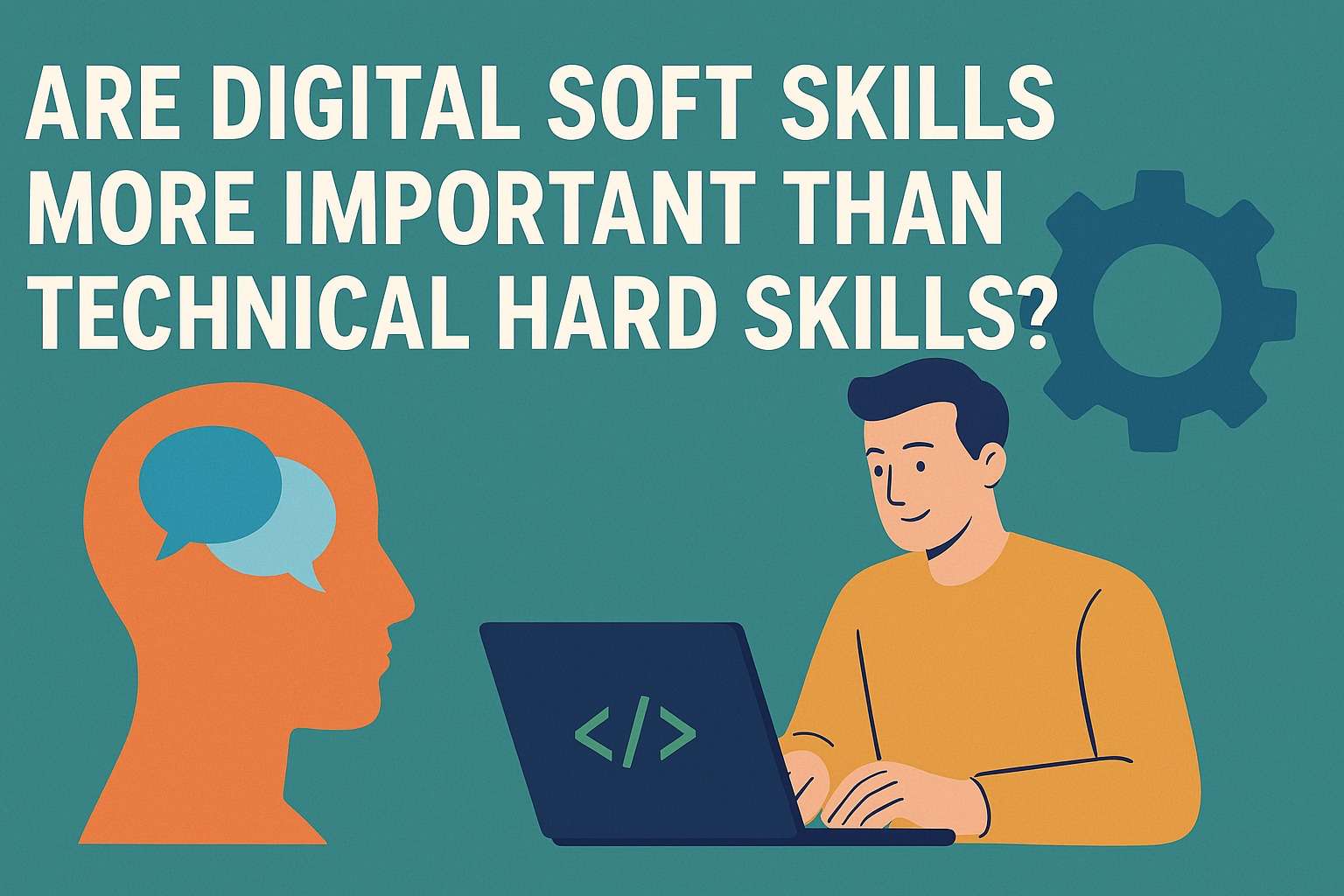
In an increasingly digital and connected workplace, a debate has emerged more frequently: are digital soft skills more important than technical hard skills? Although many agree that technical skills remain necessary, the role of soft skills—especially in a digital context—is becoming increasingly vital. This article discusses how these two types of skills complement each other and how important soft skills are in the modern workplace.
UNDERSTANDING DIGITAL SOFT SKILLS AND TECHNICAL HARD SKILLS
Before going deeper, it is important to understand the difference between soft skills and hard skills.
Technical hard skills are specific, measurable abilities usually related to technical expertise required in certain jobs. Examples include the ability to operate specialized software, mastery of programming languages, managing big data, or using technological tools.
On the other hand, digital soft skills refer to interpersonal and communication abilities that enable individuals to interact and work effectively in a digital environment. Examples include online collaboration, virtual communication, digital creativity, and the ability to adapt to technological changes.
THE IMPORTANCE OF TECHNICAL HARD SKILLS IN THE DIGITAL ERA
1. Technical Competencies Required Across Industries
In many sectors such as information technology, digital marketing, and data analysis, hard skills are essential for daily tasks. For example, a web developer must master programming languages such as JavaScript or Python, while a data scientist must understand analytical tools such as R or SQL. Without these technical skills, it is difficult to complete tasks that require deep understanding of systems and software.
2. Increasing Demand for Specialized Skills
As technology continues to evolve, many industries require more advanced and specialized technical skills. Artificial intelligence (AI), cloud computing, and blockchain are examples of technologies that demand specific expertise. Therefore, even though soft skills are important, hard skills remain a fundamental requirement in the modern workplace.
THE ROLE OF DIGITAL SOFT SKILLS IN THE WORKPLACE
1. Improving Collaboration in Digital Teams
In a digital work environment, many tasks are performed in virtual teams across different locations. Skills such as online collaboration, remote communication, and time management are essential for maintaining team effectiveness. Professionals who communicate well through email, video conferencing, or collaboration platforms such as Slack and Trello will be more effective in coordinating with colleagues from diverse backgrounds and time zones.
2. Ability to Adapt to New Technologies
Rapid technological advancement requires professionals to continuously learn and adapt. Digital adaptability becomes a key soft skill to thrive amid technological changes. Workers who adapt quickly will be better prepared to handle changes such as AI integration into workflows or the adoption of new systems within organizations.
3. Creativity and Innovation in Problem Solving
In a highly competitive digital world, creativity is highly valued. Digital creativity enables individuals to generate new ideas, develop innovative solutions, and create more engaging experiences for users or customers. Creativity applies not only to design or marketing but also to product and service development processes.
COLLABORATION BETWEEN SOFT SKILLS AND HARD SKILLS
1. Why Both Complement Each Other
In a dynamic work environment, soft skills and hard skills complement each other and should not be viewed separately. Hard skills provide the technical expertise needed to complete tasks, while soft skills ensure individuals can work effectively in teams, adapt to change, and communicate clearly. Without hard skills, tasks may not be completed properly; without soft skills, collaboration and communication may suffer.
2. Emphasis on Holistic Learning
Most modern companies seek candidates who not only master technical abilities but also possess strong interpersonal skills. Therefore, individuals should continuously develop both skill types—technical and interpersonal—to prepare for workplace challenges.
CONCLUSION
Ultimately, both digital soft skills and technical hard skills are equally important in the modern workplace. Hard skills provide the foundation for technical and specialized work, while soft skills help individuals adapt to changing environments and collaborate effectively with teams. For those who want to remain relevant and competitive in the future job market, mastering both skill sets is the key to success.
Tentang Penulis
Gusti Ayu Tita P
Penulis — Universitas STEKOM
Penulis aktif yang berfokus pada isu-isu akademik, teknologi pendidikan, dan pengembangan sumber daya manusia di lingkungan kampus.



