Are Employers Moving Beyond the Bachelor’s Degree Requirement
Gusti Ayu Tita P
26 Februari 2026
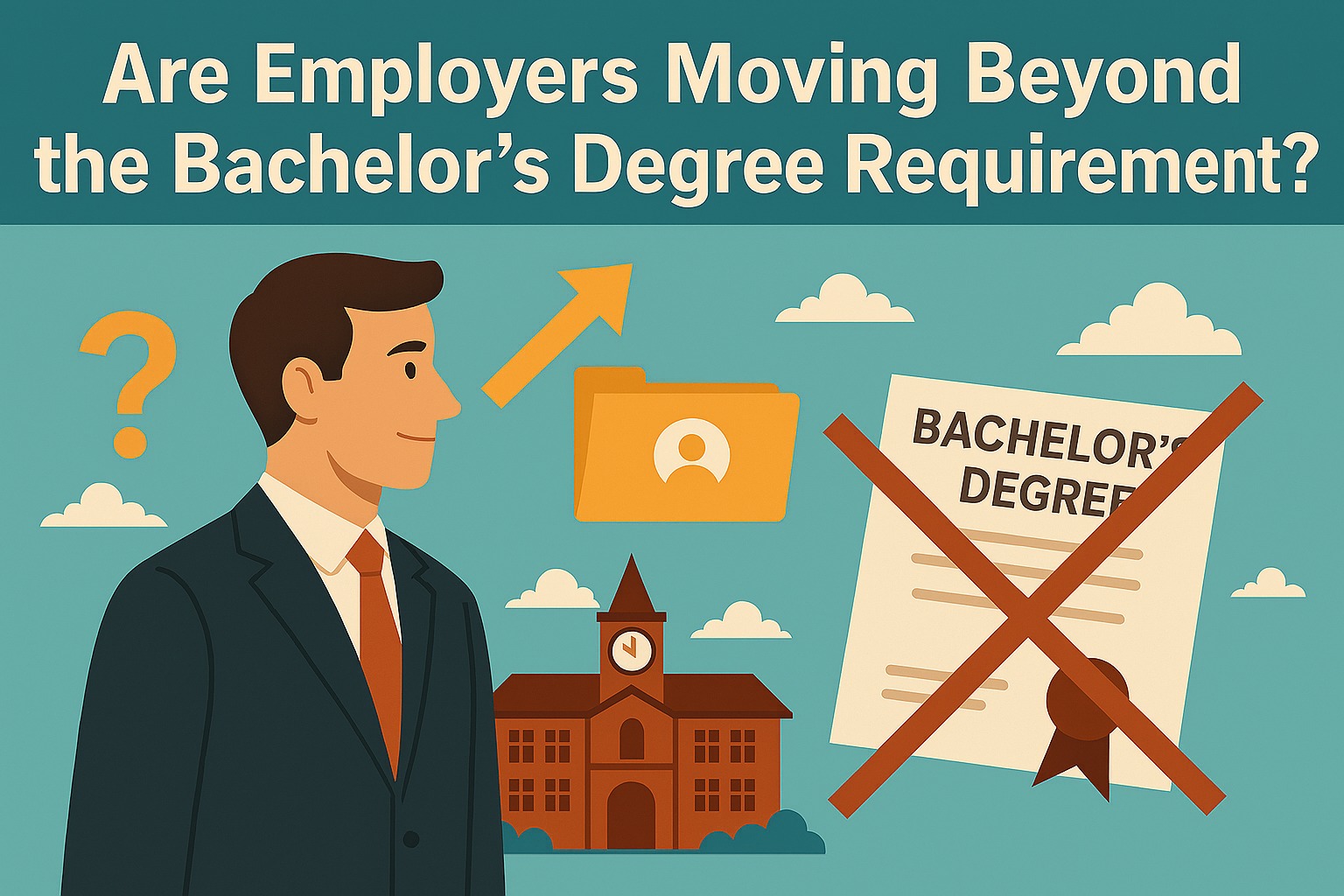
For decades, a bachelor’s degree has been a standard requirement in job postings across industries. It served as a benchmark for knowledge, discipline, and professional readiness. However, as the global workforce evolves and industries embrace rapid innovation, a critical question emerges: are employers moving beyond the bachelor’s degree requirement?
The rise of skills-based hiring, digital transformation, and alternative education pathways has reshaped recruitment strategies. Many companies are reconsidering whether a formal degree is the most accurate measure of a candidate’s potential.
THE SHIFT TOWARD SKILLS-BASED HIRING
One of the most significant trends in modern recruitment is the emphasis on skills rather than credentials. Employers increasingly prioritize what candidates can demonstrate in real-world scenarios. Technical tests, portfolio reviews, and project-based assessments are becoming common evaluation tools.
In technology, creative industries, and digital marketing, practical ability often outweighs academic background. Companies seek individuals who can adapt quickly, solve problems efficiently, and contribute immediately.
This shift suggests that competency and performance may be more predictive of success than formal qualifications alone.
WHY SOME EMPLOYERS ARE DROPPING DEGREE REQUIREMENTS
Several factors contribute to the reconsideration of degree requirements. First, talent shortages in competitive industries push companies to expand their candidate pools. Removing strict educational criteria allows access to skilled individuals from diverse backgrounds.
Second, alternative education models—such as coding bootcamps, online certifications, and vocational programs—provide job-ready skills in shorter timeframes. Employers recognize that expertise can be acquired through non-traditional routes.
Finally, diversity and inclusion initiatives encourage companies to evaluate candidates based on potential and ability rather than solely on academic credentials.
INDUSTRIES WHERE DEGREES REMAIN ESSENTIAL
Despite these changes, not all sectors are moving away from degree requirements. Regulated professions such as medicine, law, engineering, and education still require accredited academic qualifications.
In these fields, formal education ensures standardized training, ethical preparation, and technical competence. For many corporate and government roles, a bachelor’s degree remains a baseline qualification in recruitment policies.
Therefore, while flexibility is increasing, the importance of a degree often depends on the nature of the profession.
THE GROWING IMPORTANCE OF EXPERIENCE AND SOFT SKILLS
Beyond technical abilities, employers value soft skills such as communication, teamwork, leadership, and adaptability. These attributes significantly influence workplace performance and long-term growth.
Internships, freelance projects, volunteer work, and professional certifications can enhance a candidate’s profile regardless of educational background. Continuous learning and upskilling are now essential in maintaining relevance in a rapidly changing job market.
Employers are not necessarily dismissing degrees; rather, they are broadening their evaluation criteria.
CONCLUSION
So, are employers moving beyond the bachelor’s degree requirement? In many industries, the answer is yes—but selectively. Companies are increasingly focusing on skills, experience, and measurable performance. However, degrees remain vital in regulated and specialized professions.
Ultimately, career success today depends on a balanced combination of education, practical expertise, and adaptability. As hiring practices evolve, professionals who continuously develop their skills and demonstrate real value will stand out—whether or not they hold a traditional degree.
Tentang Penulis
Gusti Ayu Tita P
Penulis — Universitas STEKOM
Penulis aktif yang berfokus pada isu-isu akademik, teknologi pendidikan, dan pengembangan sumber daya manusia di lingkungan kampus.