
Are University Students Ready to Compete in an Increasingly Competitive Job Market?
Gusti Ayu Tita P
10 Maret 2026
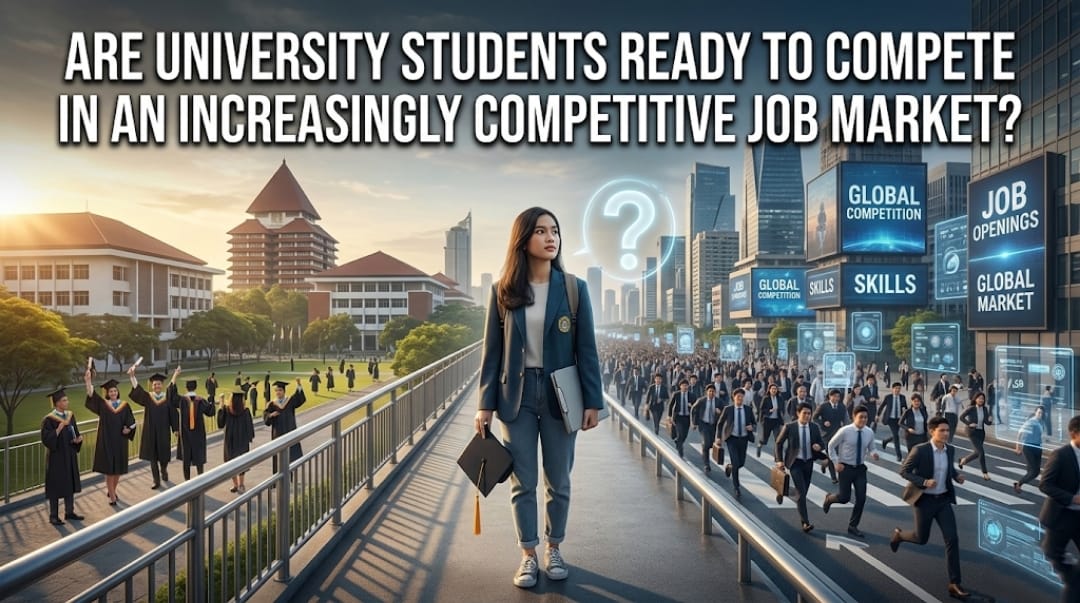
The modern job market has become more competitive than ever. Advances in technology, globalization, and changing industry demands have created a workforce environment where employers seek candidates with diverse abilities and strong professional potential. For university students approaching graduation, this raises an important question: are they truly ready to compete in such a demanding job market?
While academic qualifications remain important, employers today often look beyond degrees when evaluating potential employees. Skills, experience, and mindset all contribute to a graduate’s readiness to enter the professional world.
CHANGING EXPECTATIONS IN THE JOB MARKET
In the past, earning a university degree was often enough to secure a stable career path. Today, however, employers frequently expect candidates to demonstrate a wider range of abilities.
Companies look for individuals who can adapt to changing work environments, collaborate effectively with teams, and solve complex problems. As industries evolve, the expectations placed on new graduates continue to expand.
This shift means that academic knowledge alone may not fully prepare students for the realities of the workplace.
THE IMPORTANCE OF PRACTICAL SKILLS
Practical skills have become increasingly valuable in modern recruitment processes. Employers often prefer candidates who have already developed certain competencies that can be applied immediately in professional settings.
Skills such as communication, teamwork, critical thinking, and time management are essential in many industries. Students who actively develop these abilities during their university years often gain an advantage in competitive hiring processes.
Practical skills help bridge the gap between theoretical knowledge and real workplace demands.
GAINING EXPERIENCE BEFORE GRADUATION
Experience is another factor that influences employability. Many employers favor candidates who have some level of professional exposure before entering the workforce.
Internships, volunteer activities, part-time work, and participation in student organizations can provide valuable insights into how professional environments operate. These experiences help students develop confidence and learn how to apply their academic knowledge in practical situations.
Students who engage in such activities often feel more prepared when they begin searching for full-time employment.
THE ROLE OF ADAPTABILITY AND CONTINUOUS LEARNING
The rapid pace of technological change has transformed many industries. As a result, adaptability has become a key characteristic for long-term career success.
Students who are open to learning new skills and updating their knowledge are better equipped to navigate evolving job requirements. Continuous learning allows individuals to remain relevant and competitive throughout their professional lives.
Developing this mindset during university years can significantly improve career readiness.
BUILDING A STRONG PROFESSIONAL PROFILE
To compete effectively in the job market, students benefit from building a well-rounded professional profile. This includes combining academic knowledge with practical experience and transferable skills.
Networking with professionals, attending career workshops, and creating a strong portfolio are strategies that help students present themselves more effectively to employers.
A balanced profile demonstrates both competence and potential, which are qualities many organizations value.
CONCLUSION
The increasingly competitive job market requires more than academic qualifications alone. While university education provides essential knowledge, additional skills, experiences, and adaptable thinking are necessary to meet modern workplace expectations.
University students who actively develop practical abilities, seek real-world experience, and maintain a commitment to continuous learning are generally better prepared to compete for career opportunities.
Tentang Penulis
Gusti Ayu Tita P
Penulis — Universitas STEKOM
Penulis aktif yang berfokus pada isu-isu akademik, teknologi pendidikan, dan pengembangan sumber daya manusia di lingkungan kampus.















