ASN Career Journey From CPNS To Becoming A Government Officer
Gusti Ayu Tita P
10 Agustus 2026
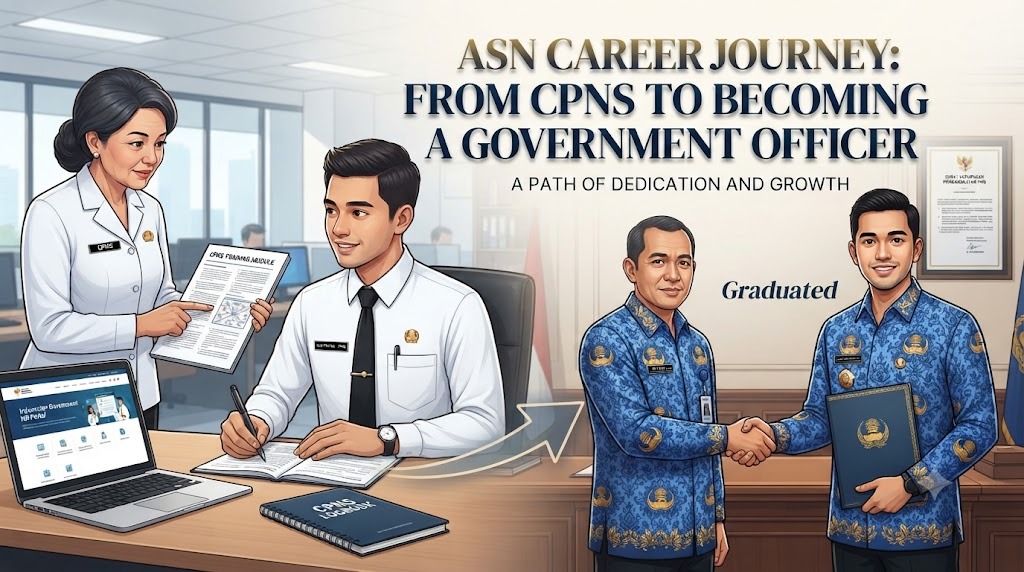
Becoming an Aparatur Sipil Negara or ASN is a career goal for many people who want to contribute to public services and government programs. In Indonesia, ASN consists of Civil Servants or PNS and Government Employees with Work Agreements or PPPK. For people entering the PNS pathway, the journey generally begins with the CPNS or Calon Pegawai Negeri Sipil stage after successfully completing the required selection process. This stage is not the final destination but an important period for developing professional competence and understanding public service responsibilities. (Peraturan BPK)
The journey from CPNS to PNS involves administrative requirements, a probation period, training, evaluation, and the fulfillment of applicable conditions. A successful career also requires more than obtaining official status. Integrity, professionalism, competence, discipline, and commitment to public service are important qualities for government employees. Therefore, new employees should see the beginning of their ASN career as an opportunity to learn and contribute.
UNDERSTANDING THE CPNS ENTRY STAGE
The CPNS stage begins after an applicant successfully completes the relevant PNS selection process and fulfills the requirements for appointment. The appointment process involves administrative procedures, including the determination of the employee identification number or NIP and the issuance of the CPNS appointment decision. After appointment, the CPNS begins carrying out duties according to the position and placement determined by the institution. (BKN Denpasar)
This stage is an important transition from applicant to government employee. CPNS employees need to understand their duties, organizational structure, workplace rules, and public service responsibilities. They should also begin developing the professional attitudes expected from ASN employees. The CPNS period should be treated as a learning and preparation stage, not simply as a waiting period before becoming a PNS.
COMPLETING THE CPNS PROBATION PERIOD
One of the important stages in the PNS career journey is the CPNS probation period. BKN explains that CPNS employees are generally required to undergo a one year probation period beginning from their appointment as CPNS. The probation period includes pre-service development through integrated education and training that combines classroom and non-classroom learning. (BKN Denpasar)
The purpose of this period is to prepare employees to perform their duties as professional public servants. CPNS employees have the opportunity to develop knowledge, skills, attitudes, and understanding of public service values. They also need to demonstrate that they can carry out their responsibilities appropriately. Successful completion of the required development process is an important part of the transition toward PNS status.
DEVELOPING COMPETENCE AND PROFESSIONAL SKILLS
Competence is a key element throughout the ASN career journey. New employees need to understand the technical knowledge required by their positions while also developing communication, teamwork, problem solving, and organizational skills. The ability to learn quickly is particularly important because new employees may encounter unfamiliar procedures and responsibilities. Continuous learning can help them become more effective in their roles.
Competence development should not stop after the probation period. Government organizations continue to face changes in technology, regulations, public expectations, and administrative systems. ASN employees therefore need to keep improving their professional abilities throughout their careers. The current ASN framework emphasizes competence development and professional growth as important elements of ASN management. (Peraturan BPK)
BUILDING INTEGRITY AND PROFESSIONALISM
A government career requires strong professional values because ASN employees work directly or indirectly in serving the public. Integrity means carrying out responsibilities honestly and avoiding actions that can damage public trust. Professionalism involves completing duties responsibly, following applicable rules, and maintaining appropriate standards of conduct. These values should be developed from the beginning of the CPNS period.
BKN has also emphasized integrity, professionalism, and commitment as important foundations for new CPNS employees. These qualities help employees make responsible decisions and maintain public confidence. (Badan Kepegawaian Negara (BKN RI)) A strong professional reputation can support long term career development and help employees become trusted members of their organizations.
TRANSITIONING FROM CPNS TO PNS
After completing the required probation and development process, CPNS employees can proceed toward appointment as PNS when the applicable requirements are fulfilled. BKN's guidance identifies successful completion of the required training and health requirements among the conditions for appointment. The administrative process is handled through the relevant government personnel system and institution. (BKN Denpasar)
The transition to PNS represents an important professional milestone. However, obtaining PNS status should not be viewed as the end of career development. In a 2026 announcement, BKN highlighted that completing the probation period and becoming a PNS is a beginning of greater responsibility to contribute to society, the nation, and the state. (Badan Kepegawaian Negara (BKN RI))
UNDERSTANDING RESPONSIBILITIES AS A PNS
Once appointed as a PNS, an employee becomes part of the permanent PNS workforce within the ASN system, subject to the applicable laws and regulations. PNS employees are expected to perform their duties professionally and support government administration and public services. Their responsibilities can vary depending on their position, institution, field, and level of responsibility. Public service and organizational contribution remain central to their work.
PNS employees should also understand that career development depends on more than length of service. Qualifications, competence, performance, and organizational needs are important considerations within the ASN management framework. Employees who want to grow professionally should therefore continue developing their abilities and maintaining good performance. (Peraturan BPK)
DEVELOPING A LONG TERM ASN CAREER
After becoming a PNS, employees can begin planning their longer term career direction. Some may aim for functional positions that allow them to develop specialized expertise, while others may pursue managerial responsibilities as their experience and competencies grow. The appropriate path depends on individual abilities, career goals, position requirements, and organizational opportunities. A clear career plan can help employees identify the skills and experience they need.
Long term development should include continuous education, training, professional experience, and performance improvement. Employees should regularly evaluate their strengths and weaknesses and identify areas that need development. They can also seek feedback from supervisors and colleagues to improve their work. A proactive approach to career planning can help employees prepare for future responsibilities instead of waiting for opportunities to appear.
ADAPTING TO DIGITAL GOVERNMENT
Technology has become an increasingly important part of government administration and public services. The current ASN framework includes digitalization of ASN management as part of the transformation of government personnel management. (Peraturan BPK) This means ASN employees need to become familiar with digital systems and adapt to technology based changes in their workplaces.
Digital competence may include the ability to use workplace applications, manage information, understand data, communicate digitally, and follow information security practices. Employees should also remain willing to learn new systems as government services continue to evolve. Digital adaptability can improve efficiency and help employees remain relevant in a changing work environment.
MAINTAINING PERFORMANCE AND CAREER GROWTH
Professional growth requires consistent performance after becoming a PNS. Employees should understand their responsibilities, complete tasks effectively, and contribute to organizational objectives. Performance, accountability, discipline, and service quality can influence how an employee is viewed professionally. Regular evaluation can also help identify opportunities for improvement.
Career development should be approached as a continuous process. Employees who maintain strong performance while improving their competence can become better prepared for additional responsibilities. They should also keep track of relevant training, achievements, projects, and professional experiences. Consistent performance combined with continuous learning can provide a strong foundation for a sustainable ASN career.
CONCLUSION
The ASN career journey from CPNS to becoming a PNS is a gradual process that requires preparation, learning, responsibility, and professional development. The CPNS stage provides an important period for adapting to government work, completing required development programs, and demonstrating professional competence. After meeting the applicable requirements and becoming a PNS, employees take on greater responsibilities as public servants. However, PNS status is not the final goal because career development continues through competence improvement, strong performance, integrity, digital adaptability, and continuous learning. By building these qualities from the beginning, ASN employees can develop sustainable careers while making meaningful contributions to public services and government institutions.
Tentang Penulis
Gusti Ayu Tita P
Penulis — Universitas STEKOM
Penulis aktif yang berfokus pada isu-isu akademik, teknologi pendidikan, dan pengembangan sumber daya manusia di lingkungan kampus.