Behind Academic Discussions Lies a Competition of Symbols That No One Admits
Gusti Ayu Tita P
2 Maret 2026
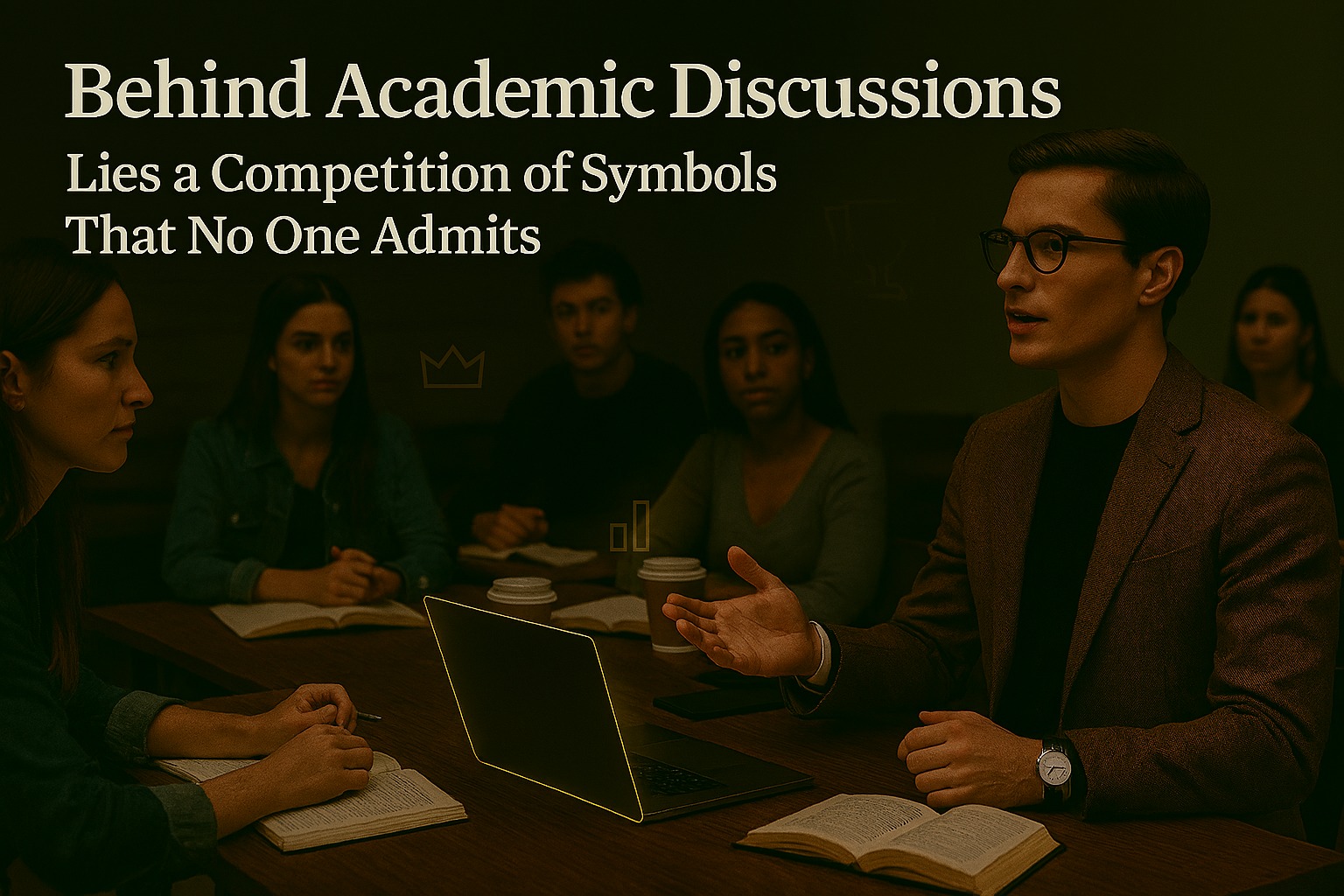
Academic discussions are often portrayed as spaces of pure intellectual exchange. In classrooms, seminars, and conferences, ideas are expected to stand on their own merit. However, behind these thoughtful conversations lies a quieter reality: a competition of symbols that few openly acknowledge.
From speaking styles and word choices to laptops on desks and confident gestures, subtle markers shape how participants are perceived. This hidden symbolic competition influences who is considered intelligent, credible, or superior sometimes more than the ideas themselves.
THE ILLUSION OF PURE INTELLECTUAL DEBATE
In theory, academic discussions are built on logic, evidence, and critical thinking. Students and scholars gather to analyze concepts, challenge arguments, and refine perspectives. The goal is clarity and intellectual growth.
Yet in practice, perception often enters the room before arguments do. Participants quickly form impressions about who appears knowledgeable or authoritative. These impressions can shape how seriously someone’s ideas are taken, regardless of their actual depth.
This gap between ideal and reality reveals how symbols quietly operate within academic culture.
SYMBOLS THAT SIGNAL INTELLIGENCE
Several subtle elements function as signals during discussions:
Complex Vocabulary, Using sophisticated terminology may create an impression of expertise, even when the argument lacks clarity.
Confident Tone, A steady voice and assertive posture can make statements seem more convincing.
Professional Appearance, Formal attire or polished style may suggest discipline and credibility.
Technological Devices, High-end laptops or tablets may imply preparedness or privilege.
Individually, these elements are neutral. Together, they create symbolic capital social value derived from appearance and presentation rather than substance alone.
WHY NO ONE ADMITS THE COMPETITION
The competition of symbols remains largely unspoken because it contradicts academic ideals. Universities promote equality of thought and merit-based recognition. Admitting that presentation influences evaluation challenges this principle.
Students may also hesitate to acknowledge symbolic competition because participating in it feels strategic. Many consciously refine their speaking style, fashion, or digital presence to gain validation. Since everyone is aware at least subconsciously silence becomes convenient.
This unspoken agreement allows the symbolic hierarchy to continue operating beneath the surface.
THE IMPACT ON STUDENT CONFIDENCE AND PARTICIPATION
Symbolic competition can affect classroom dynamics in significant ways:
Students who feel their accent or communication style is less prestigious may hesitate to speak.
Individuals without access to fashionable clothing or modern gadgets may feel excluded.
Introverted students may be overlooked despite strong analytical abilities.
Over time, this environment can create unequal participation. Voices that align with dominant symbols are amplified, while others remain unheard.
SOCIAL MEDIA AND THE EXTENSION OF SYMBOLIC PERFORMANCE
The competition does not end when class is over. Social media extends academic identity into public view. Achievements, conference attendance, book collections, and intellectual quotes are curated online.
This digital performance strengthens symbolic comparison. Academic identity becomes intertwined with personal branding. The line between genuine intellectual curiosity and image management becomes increasingly blurred.
As a result, symbolic competition grows stronger and more visible.
REFOCUSING ON SUBSTANCE OVER SYMBOLS
Recognizing the presence of symbolic competition is the first step toward change. Academic spaces can become healthier by:
Encouraging clear and accessible language rather than unnecessarily complex vocabulary.
Valuing thoughtful contributions regardless of speaking style.
Promoting inclusive participation strategies.
Assessing ideas based on evidence and reasoning rather than delivery alone.
When institutions and individuals consciously prioritize substance, the influence of symbols begins to diminish.
CONCLUSION
Behind academic discussions lies a competition of symbols that no one openly admits. While universities aim to uphold merit and intellectual rigor, subtle markers such as language, appearance, and confidence shape perception in powerful ways.
True academic excellence should not depend on symbolic performance. It should rest on curiosity, integrity, and critical thinking. By shifting attention from presentation to substance, academic communities can foster more equitable and authentic dialogue.
Tentang Penulis
Gusti Ayu Tita P
Penulis — Universitas STEKOM
Penulis aktif yang berfokus pada isu-isu akademik, teknologi pendidikan, dan pengembangan sumber daya manusia di lingkungan kampus.