
Behind the KKN Program, Between Idealism and Reality
Gusti Ayu Tita P
27 Februari 2026
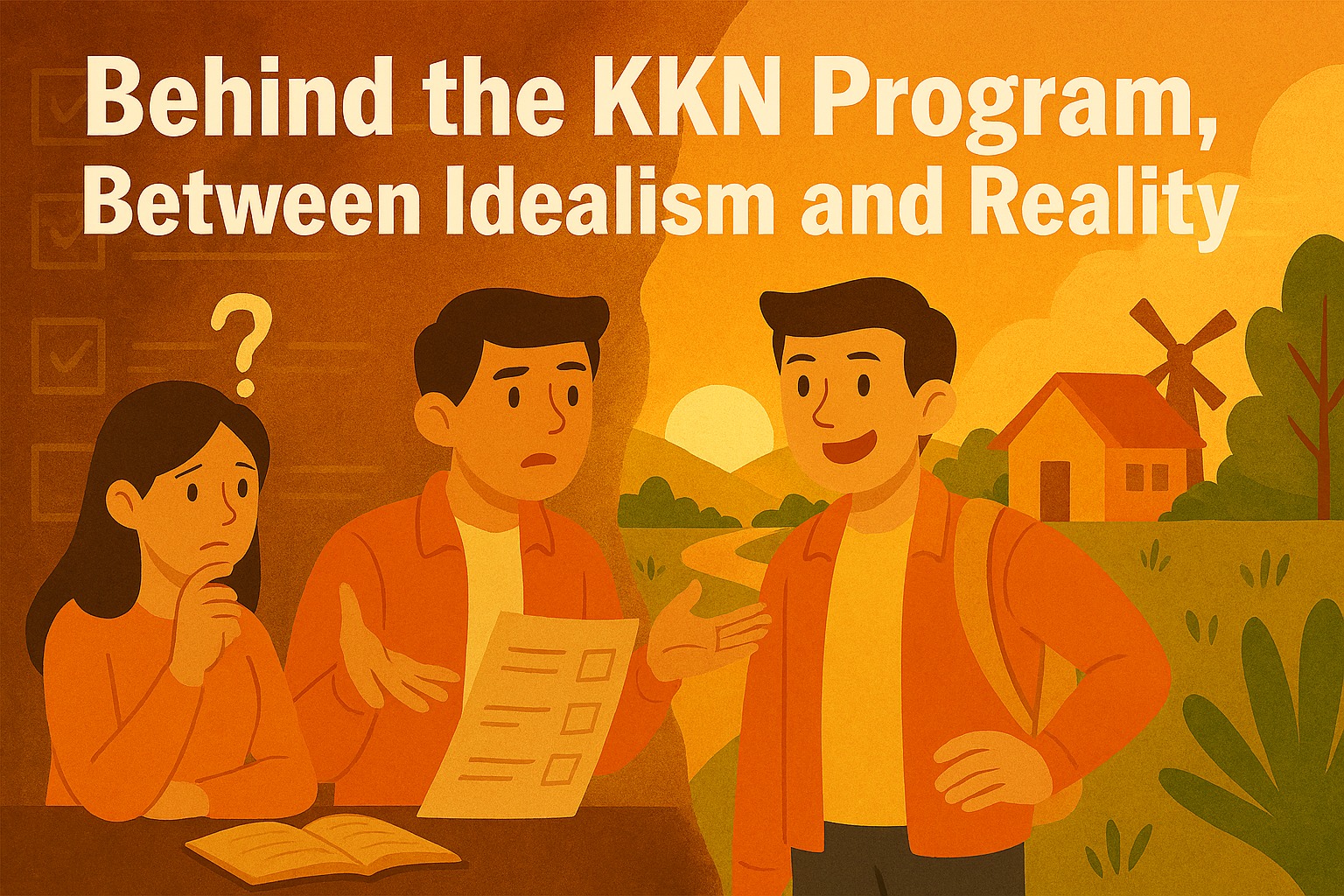
The KKN program, known as Kuliah Kerja Nyata, is often portrayed as a noble academic mission where students dedicate their knowledge and energy to empowering communities. Universities present it as a bridge between theory and practice, while students frequently approach it with enthusiasm and high expectations. However, behind the inspiring narratives lies a complex reality. The KKN experience unfolds between idealism and practical challenges, creating a dynamic space where values are tested and perspectives are reshaped. Understanding what truly happens behind the KKN program requires looking beyond ceremonial send-offs and final reports. It demands an honest exploration of student motivations, community expectations, institutional frameworks, and the unpredictable realities encountered in the field.
THE IDEALISM THAT DRIVES KKN
At its core, KKN is built on idealistic foundations. It promotes community service, social contribution, and student empowerment. The program envisions students as agents of change who apply academic knowledge to solve real-world problems. This idealism is powerful because it instills a sense of purpose. Students often begin their journey believing they will make significant, visible improvements in the communities they serve.
Many participants prepare innovative programs, educational workshops, or small-scale development initiatives. They imagine strong community engagement, measurable impact, and meaningful collaboration. The academic environment reinforces these ideals by emphasizing social responsibility and civic engagement.
Idealism, in this sense, becomes the emotional fuel of KKN. It encourages creativity, teamwork, and dedication. Without this vision, the program would lose much of its transformative potential. However, idealism alone cannot fully capture the complexity of community dynamics.
ENCOUNTERING FIELD REALITIES
Once students arrive in their assigned locations, reality begins to unfold in unexpected ways. Communities have established routines, local leadership structures, cultural norms, and priorities that may not align with student expectations. Programs designed on campus sometimes require significant adjustments.
Resource limitations can restrict implementation. Communication barriers may arise due to differences in language, culture, or perspective. In some cases, community members may show limited enthusiasm for proposed activities, especially if similar initiatives have been introduced repeatedly in the past.
Students may also confront internal challenges within their teams. Differences in work ethic, leadership styles, and personal commitment can create tension. Managing these dynamics becomes part of the learning process.
This encounter with reality does not diminish the value of KKN. Instead, it exposes students to authentic social complexity. It teaches that meaningful change rarely occurs instantly and that sustainable development requires patience and trust-building.
THE GAP BETWEEN EXPECTATION AND IMPACT
One of the most sensitive aspects behind the KKN program is the gap between expectation and measurable impact. Students often hope to leave a lasting legacy within a short period. However, community transformation is typically gradual and influenced by numerous factors beyond a single program’s scope.
This gap can lead to frustration. Some participants question whether their efforts truly matter. Yet this reflection is itself an important lesson. It shifts the focus from short-term achievement to long-term understanding.
Rather than seeing success only through visible outcomes, students begin to value process-based achievements: improved communication, stronger collaboration, and increased awareness. They learn that sometimes the most meaningful impact lies in mutual learning rather than immediate change.
LEARNING TO BALANCE IDEALISM WITH REALISM
The true strength of KKN lies in teaching students how to balance idealism with realism. Idealism motivates action, while realism guides strategy. When these two forces interact constructively, students develop practical wisdom.
They learn to design flexible programs that adapt to local contexts. They understand the importance of listening before acting. They recognize that communities are not passive recipients of assistance but active partners with valuable knowledge and experience.
This balance also shapes character development. Students cultivate humility, resilience, and emotional intelligence. They become more aware of social structures and more cautious about imposing external solutions.
INSTITUTIONAL EXPECTATIONS AND STUDENT PRESSURE
Behind the scenes, institutional expectations add another layer of complexity. Universities often require structured documentation, reports, and measurable indicators of success. While accountability is important, it can sometimes create pressure to present idealized outcomes.
Students may feel the need to highlight achievements while minimizing obstacles. This tension between honest reflection and performance-based evaluation further illustrates the delicate position between idealism and reality.
Acknowledging this tension is crucial. Transparent evaluation processes can help ensure that KKN remains a meaningful educational experience rather than merely a formal requirement.
A SPACE FOR AUTHENTIC GROWTH
Ultimately, the KKN program exists within the space between aspiration and limitation. Its greatest value does not lie in flawless execution but in authentic engagement. When students embrace both the inspiring vision and the practical constraints, they gain a deeper understanding of community service and social development.
Behind the KKN program, the real story is not about perfection. It is about negotiation, adaptation, and learning. Idealism provides direction, while reality provides lessons. Together, they create an experience that shapes not only professional skills but also personal maturity.
In this balance, KKN becomes more than a university obligation. It transforms into a reflective journey where students discover that meaningful contribution requires both passion and pragmatism.
Tentang Penulis
Gusti Ayu Tita P
Penulis — Universitas STEKOM
Penulis aktif yang berfokus pada isu-isu akademik, teknologi pendidikan, dan pengembangan sumber daya manusia di lingkungan kampus.















