Benefits of Combining Travel and Education During Holidays
Gusti Ayu Tita P
1 September 2026
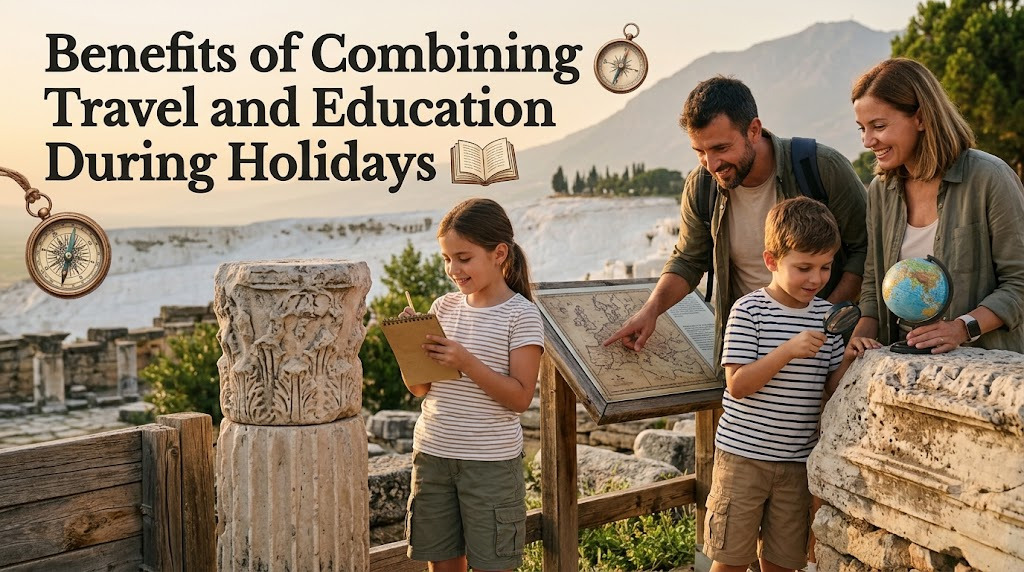
Holidays can be more meaningful when travel is combined with educational activities. Instead of spending the entire trip only for entertainment, families can use travel as an opportunity to learn, explore, and discover new experiences. Children can gain knowledge about history, culture, science, nature, and everyday life while visiting different places. This approach can make learning feel more natural and enjoyable.
EXPANDING KNOWLEDGE THROUGH TRAVEL
Travel allows children to discover information that may not be fully experienced in a classroom. Visiting museums, historical landmarks, science centers, and natural areas can introduce them to real objects, environments, and cultural experiences. Seeing something directly can make certain concepts easier to understand. Children can also connect what they learn at school with situations they encounter during the trip.
Parents can support this process by discussing interesting things they see together. Simple questions can encourage children to observe and think more carefully about their surroundings. There is no need to turn the trip into a formal lesson. Learning through travel can make knowledge more practical and memorable.
DEVELOPING CURIOSITY
New destinations often provide children with unfamiliar sights, sounds, people, and activities. These experiences can encourage them to ask questions about how things work, why certain traditions exist, or what makes a place special. Curiosity can motivate children to seek information and understand their surroundings. This makes travel a natural opportunity to develop an interest in learning.
Parents should welcome children's questions and encourage them to find answers. When an answer is unknown, families can look for reliable information together. This process teaches children that learning involves exploration and investigation. Travel can turn simple curiosity into an opportunity for deeper learning.
UNDERSTANDING CULTURE AND DIVERSITY
Travel exposes children to different communities, traditions, languages, foods, and forms of art. Visiting cultural sites, traditional communities, local markets, and heritage attractions can help children understand how people live in different environments. These experiences can encourage respect for differences and cultural diversity. They also provide opportunities to learn about traditions that may not be part of children's everyday lives.
Parents should remind children to behave respectfully when visiting unfamiliar cultural environments. They should avoid making negative judgments about customs they do not understand. Asking polite questions can help children learn more about local traditions. Cultural experiences can develop appreciation, respect, and broader perspectives.
BUILDING PRACTICAL AND SOCIAL SKILLS
Travel provides many opportunities for children to practice skills that are useful in everyday life. Depending on their age, children can learn communication, cooperation, organization, decision-making, and responsibility during a family trip. They may help organize personal belongings, follow a schedule, or communicate politely with others. These experiences can support personal development outside academic learning.
Parents can provide small responsibilities that match the child's abilities. Children should still receive guidance and supervision, especially in unfamiliar environments. The goal is to help them practice useful skills gradually. Practical experiences during travel can strengthen confidence and independence.
CREATING MEANINGFUL FAMILY MEMORIES
Combining travel and education can create positive memories for the entire family. Discovering a new place, trying an activity together, or learning an interesting fact can become a meaningful shared experience. These memories may encourage children to become more interested in learning about the world. Family discussions during and after the trip can make the experience even more valuable.
However, families should maintain a healthy balance between educational activities and relaxation. Children need enough time to rest, play, and enjoy the destination freely. A schedule that is too busy can reduce the enjoyment of the holiday. A balanced trip can provide learning opportunities while preserving the fun of a family vacation.
CONCLUSION
Combining travel and education during holidays offers several benefits, including expanding knowledge, developing curiosity, understanding cultural diversity, building practical skills, and creating meaningful family memories. Children can learn through direct experiences while enjoying time away from their normal routines. Parents should choose activities that match children's ages and interests without making the holiday feel like school. With the right balance, travel can become an enjoyable and valuable learning experience.
Tentang Penulis
Gusti Ayu Tita P
Penulis — Universitas STEKOM
Penulis aktif yang berfokus pada isu-isu akademik, teknologi pendidikan, dan pengembangan sumber daya manusia di lingkungan kampus.