Benefits of Nuclear Power Plants for National Energy Needs
Gusti Ayu Tita P
1 September 2026
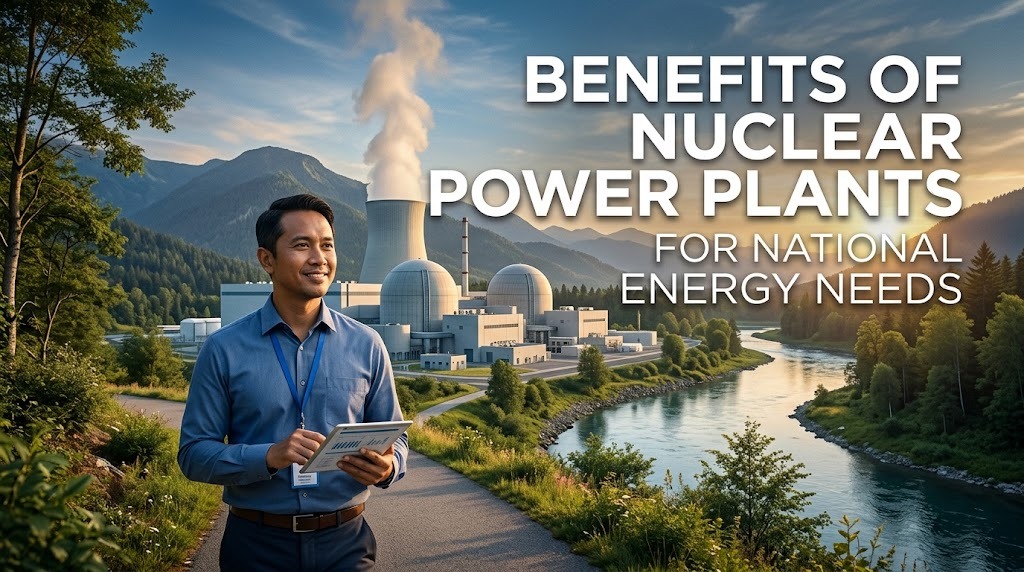
Nuclear power plants are increasingly considered as an important option for meeting growing electricity demand. As populations grow and industries become more dependent on electricity, countries need reliable energy sources that can operate consistently. Nuclear power plants generate electricity through nuclear fission, which produces heat used to create steam and drive turbines. This technology can provide large amounts of electricity while producing very low direct carbon emissions during operation.
For countries seeking a more diverse and reliable energy system, nuclear power can offer several potential benefits. It can support electricity security, complement renewable energy sources, and reduce dependence on fossil fuels. However, nuclear power also requires strict safety standards, careful planning, strong regulation, and responsible waste management.
PROVIDING RELIABLE ELECTRICITY
One of the main benefits of nuclear power plants is their ability to produce electricity consistently. Nuclear reactors can operate for long periods and are not directly dependent on weather conditions. This makes nuclear power useful for supplying a stable part of a national electricity system. Reliable generation can become especially important as electricity demand continues to increase.
Nuclear power can also complement variable renewable sources such as solar and wind. Solar generation changes with sunlight, while wind generation depends on weather conditions. A diverse electricity system can combine different technologies to maintain reliable supply. The exact role of nuclear power depends on each country's energy needs and grid structure.
SUPPORTING ENERGY DIVERSIFICATION
Energy diversification reduces excessive dependence on a single fuel or technology. Nuclear power can become another source within a country's electricity mix alongside natural gas, hydropower, solar, wind, geothermal energy, and other technologies. A diversified system can be more resilient when fuel prices, supply chains, or market conditions change. This can contribute to long term energy security.
Nuclear power does not necessarily need to replace existing energy sources. Instead, it can serve a specific role based on electricity demand, grid requirements, available resources, and national energy policies. Combining different technologies allows countries to use the strengths of each energy source.
PRODUCING LOW CARBON ELECTRICITY
Nuclear power plants generate electricity through fission rather than burning coal, oil, or natural gas. As a result, they do not produce direct carbon dioxide emissions from fuel combustion during electricity generation. This makes nuclear energy a low carbon electricity source. It can therefore contribute to efforts to reduce emissions from the power sector.
However, nuclear energy is not completely free of environmental impacts. Mining and processing uranium, constructing power plants, transporting materials, and managing facilities require resources and energy. A complete assessment should therefore consider emissions and environmental impacts across the entire life cycle of nuclear power.
MEETING LARGE ELECTRICITY DEMAND
Modern societies require increasing amounts of electricity for manufacturing, transportation, buildings, digital services, and other activities. Nuclear power plants can produce large amounts of electricity from a relatively small quantity of fuel. This high energy density can make nuclear power an option for countries with growing electricity demand.
Large generating capacity can also support industries that require a dependable electricity supply. However, nuclear projects must be carefully matched with electricity demand and grid capacity. Transmission infrastructure, financing, construction schedules, and long term operation must all be considered before developing a nuclear project.
STRENGTHENING ENERGY SECURITY
Energy security involves having reliable access to sufficient and affordable energy. Nuclear fuel has a very high energy density, meaning relatively small amounts of fuel can produce large quantities of energy. Nuclear power plants can also store fuel inventories for extended periods, which can provide a different supply profile from power plants that depend on continuous fuel deliveries.
Energy security still requires a strong and diversified nuclear fuel supply chain. Countries need appropriate policies for fuel procurement, technology, infrastructure, regulation, and skilled personnel. These factors are essential for ensuring that nuclear power contributes effectively to national energy security.
SUPPORTING ECONOMIC DEVELOPMENT
Reliable electricity is important for economic activity. Manufacturing facilities, hospitals, transportation systems, businesses, and digital infrastructure all depend on stable power supplies. Nuclear power can contribute to electricity availability over the long term when projects are properly planned and operated. The construction and operation of nuclear facilities can also create demand for skilled workers and supporting industries.
However, nuclear power projects require significant investment. Construction can take many years, and projects must meet strict technical and safety requirements. Governments and investors therefore need to carefully evaluate financing structures, project risks, electricity demand, and long term costs before making major investment decisions.
DEVELOPING SKILLED HUMAN RESOURCES
Nuclear power requires highly trained professionals from many disciplines. Engineers, scientists, technicians, safety specialists, operators, regulators, and emergency response personnel all have important responsibilities. Developing a nuclear industry can therefore encourage investment in science, engineering, education, research, and professional training. These capabilities can also support other advanced technology sectors.
Human resources must be developed alongside physical infrastructure. Workers need appropriate education, practical training, certification, and continuous professional development. A strong safety culture is particularly important because nuclear facilities require careful attention to procedures and risk management.
USING LAND EFFICIENTLY
Nuclear power plants can generate large amounts of electricity from a relatively concentrated site. This high power density can be an advantage when land availability is an important consideration. Compared with some energy technologies that require extensive areas for generation and associated infrastructure, nuclear facilities can produce substantial electricity within a defined site.
Land efficiency does not mean that location can be chosen without detailed assessment. Nuclear facilities require careful site evaluation based on geology, seismic conditions, cooling requirements, environmental factors, emergency planning, and access to infrastructure. Social and community considerations are also important parts of responsible site selection.
REQUIRING STRONG SAFETY MANAGEMENT
The benefits of nuclear power must be considered together with its safety responsibilities. Nuclear facilities use multiple layers of protection to prevent accidents and limit their potential consequences. These layers can include reactor control systems, cooling systems, physical barriers, monitoring equipment, emergency systems, and detailed operating procedures. Independent regulation and continuous oversight are also essential.
Safety depends not only on technology but also on people and institutions. Operators need proper training, facilities require regular maintenance, and regulators must have sufficient authority and expertise. Emergency preparedness and responsible radioactive waste management are also important parts of the overall nuclear safety system.
COMPLEMENTING RENEWABLE ENERGY
Nuclear power can complement renewable energy as part of a broader low carbon electricity system. Solar, wind, hydropower, geothermal, nuclear, and other technologies have different operating characteristics. Combining them can help create a more diverse electricity supply. The most suitable mix depends on local resources, electricity demand, grid conditions, costs, and national policies.
The goal should therefore be to build an energy system that balances reliability, affordability, sustainability, and safety. Nuclear power can contribute to this balance when it is developed under appropriate conditions. At the same time, renewable energy development, grid modernization, energy efficiency, and energy storage can remain important parts of the overall strategy.
CONCLUSION
Nuclear power plants can provide several benefits for national energy needs. They can generate reliable electricity, diversify the energy mix, provide low carbon power, support growing electricity demand, and contribute to long term energy security. Nuclear development can also create opportunities for skilled employment, technological development, research, and industrial growth.
However, nuclear power requires careful planning and strong safety management. Financing, site selection, regulation, skilled personnel, radioactive waste management, emergency preparedness, and public confidence must all be considered. When these factors are addressed responsibly, nuclear power can become one component of a diverse and reliable national energy system.
Tentang Penulis
Gusti Ayu Tita P
Penulis — Universitas STEKOM
Penulis aktif yang berfokus pada isu-isu akademik, teknologi pendidikan, dan pengembangan sumber daya manusia di lingkungan kampus.