Best Career Paths for Vocational School Graduates in the Modern Job Market
Gusti Ayu Tita P
31 Juli 2026
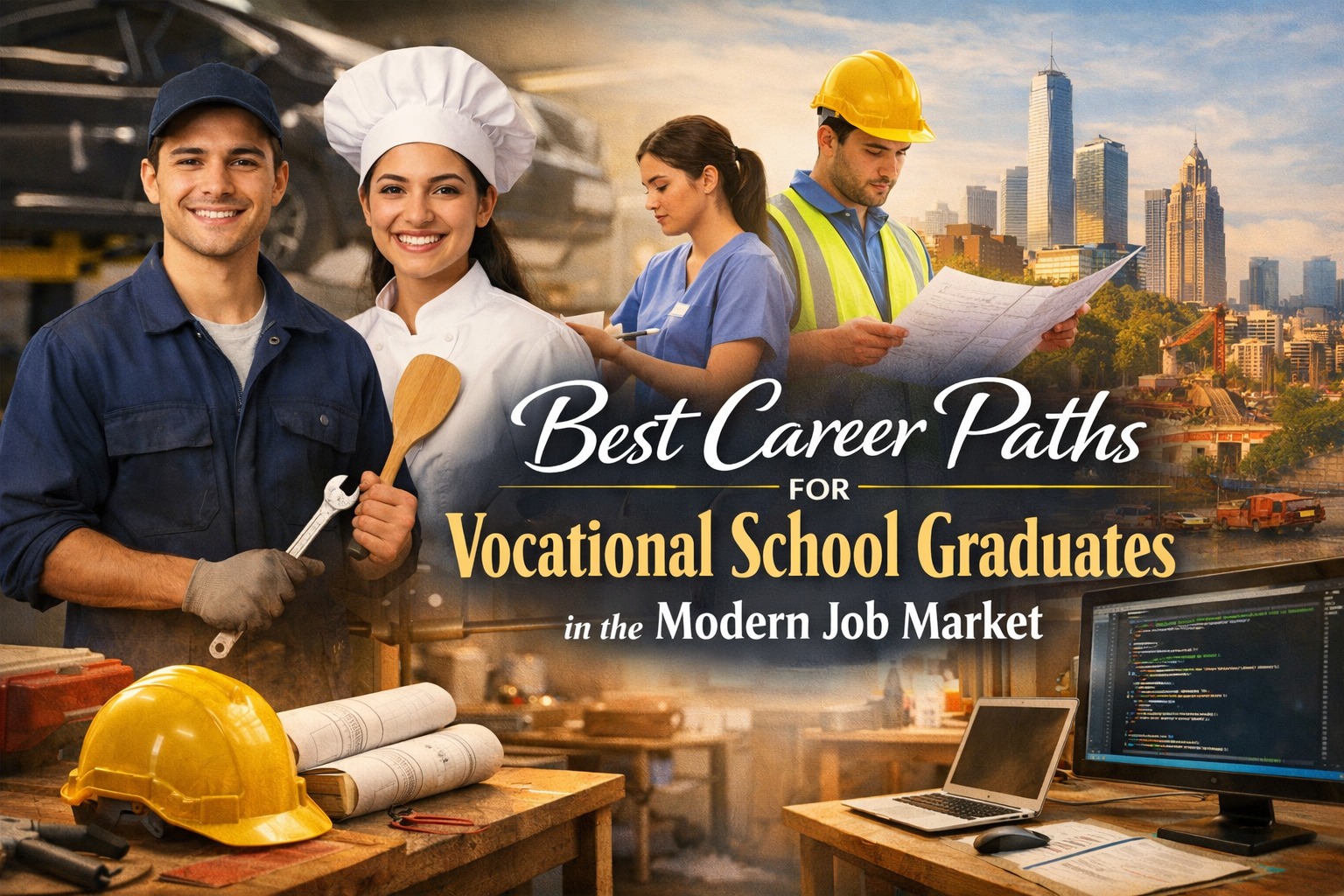
The modern job market offers many exciting opportunities for vocational school graduates. Unlike traditional academic education, vocational schools focus strongly on practical training, technical knowledge, and industry-related skills. This educational background can help graduates enter the workforce with useful abilities that employers need.
As technology and industries continue to develop, the demand for skilled workers is growing in many sectors. Graduates who continue improving their abilities, gaining experience, and adapting to new technology can build successful and stable careers. Understanding the best career paths can help vocational graduates make smarter decisions about their professional future.
INFORMATION TECHNOLOGY AND DIGITAL CAREERS
The information technology sector offers some of the most promising career opportunities for vocational school graduates. Students with backgrounds in computer technology, software, networking, or digital systems can pursue careers as IT support specialists, web developers, network technicians, or junior programmers. These positions are needed by businesses across many industries.
Technology careers also provide opportunities for continuous growth. Graduates can improve their skills in cybersecurity, cloud computing, data management, and software development through additional training and certifications. With experience and consistent learning, entry-level workers can advance to more specialized and higher-level positions.
ENGINEERING AND INDUSTRIAL CAREERS
Engineering and industrial sectors continue to need workers with strong technical abilities. Vocational graduates can find opportunities in mechanical engineering support, electrical maintenance, industrial production, machine operation, and technical services. Their practical training can help them understand equipment and workplace procedures more effectively.
These careers are especially suitable for graduates who enjoy working with machines, systems, and technical processes. By developing additional knowledge about automation, robotics, industrial technology, and modern manufacturing, vocational workers can improve their career prospects and remain competitive in an evolving industry.
AUTOMOTIVE AND TRANSPORTATION CAREERS
The automotive industry remains a popular career path for vocational school graduates. Graduates with automotive training can work as automotive technicians, vehicle maintenance specialists, service advisors, or diagnostic technicians. The growth of electric and hybrid vehicles is also creating new opportunities for workers with updated technical knowledge.
Success in this field requires continuous learning because vehicle technology continues to change. Professionals who understand electric vehicles, electronic systems, computerized diagnostics, and modern automotive technology may have more opportunities in the future. Experienced technicians can also open their own workshops or automotive businesses.
BUSINESS AND DIGITAL MARKETING CAREERS
Vocational graduates with business, marketing, or office administration backgrounds can pursue careers in the growing digital economy. Potential positions include digital marketing assistant, social media specialist, sales representative, administrative staff, and e-commerce specialist. Many businesses need employees who understand both business operations and digital platforms.
Digital marketing skills can create additional career opportunities. Graduates who learn about content creation, search engine optimization, social media marketing, online advertising, and e-commerce can work for companies or offer freelance services. This career path can also lead to entrepreneurship and online business development.
DESIGN AND CREATIVE INDUSTRIES
Creative industries offer excellent opportunities for graduates with skills in graphic design, multimedia, animation, photography, or visual communication. They can work as graphic designers, video editors, content creators, illustrators, or multimedia specialists. Businesses increasingly need creative professionals to produce attractive digital content.
A strong portfolio is especially important in this industry. Employers and clients often evaluate a person's work based on their skills, creativity, design quality, and previous projects. By mastering modern design software and understanding digital trends, vocational graduates can compete for both local and international opportunities.
HEALTHCARE AND MEDICAL SUPPORT CAREERS
Vocational school graduates with healthcare-related training can pursue careers in various medical support roles. Depending on their qualifications and local regulations, they may work as healthcare assistants, pharmacy assistants, laboratory technicians, or other healthcare support professionals. These roles contribute to the effective operation of healthcare facilities.
The healthcare sector continues to require skilled and responsible workers. Graduates can improve their career opportunities by gaining professional certifications, practical experience, and additional specialized training. A strong commitment to accuracy, empathy, and professional responsibility is essential in this field.
HOSPITALITY AND TOURISM CAREERS
The hospitality and tourism industry provides diverse career opportunities for vocational graduates. Those with training in hospitality, culinary arts, or tourism can work in hotels, restaurants, travel companies, resorts, event management, and food service businesses. These careers are suitable for people who enjoy working with customers and creating positive experiences.
Strong communication and customer service skills are important for long-term success. Graduates who understand hospitality technology, foreign languages, digital booking systems, and service management can improve their professional value. With experience, they may progress to supervisory or management positions.
CONSTRUCTION AND TECHNICAL SERVICES
Construction and technical services remain important sectors that require practical skills. Vocational graduates can work in building construction, electrical installation, plumbing, welding, architecture support, or equipment maintenance. These careers often provide opportunities to develop highly specialized expertise.
Experienced professionals in technical services can also build independent businesses. By gaining industry experience and understanding safety standards, project management, customer service, and business operations, vocational graduates can become contractors or skilled service providers. Practical expertise can therefore lead to both employment and entrepreneurship.
LOGISTICS AND SUPPLY CHAIN CAREERS
The rapid growth of e-commerce has increased the importance of logistics and supply chain operations. Vocational graduates can work as warehouse staff, logistics coordinators, inventory officers, delivery operations staff, or supply chain assistants. Companies need skilled employees to manage the movement of products efficiently.
Technology is also changing the logistics industry. Knowledge of inventory software, digital tracking systems, data management, and warehouse technology can give graduates a competitive advantage. With experience, professionals can advance into logistics supervision and supply chain management roles.
ENTREPRENEURSHIP AND FREELANCE WORK
Vocational education can provide a strong foundation for entrepreneurship. Graduates can use their practical skills to start businesses in areas such as automotive services, culinary products, graphic design, technology services, beauty, construction, or digital marketing. Entrepreneurship allows individuals to create their own income opportunities.
Freelance work is another attractive option in the modern job market. Skilled professionals can offer services to clients through online platforms and professional networks. Success requires high-quality work, good communication, reliability, effective marketing, and continuous skill development.
CONCLUSION
Vocational school graduates have access to many promising career paths in the modern job market. Opportunities exist in technology, engineering, automotive services, digital marketing, creative industries, healthcare, hospitality, construction, logistics, and entrepreneurship.
The best career path depends on each graduate's interests, skills, education, and long-term goals. By combining practical knowledge with digital skills, professional certifications, communication abilities, and continuous learning, vocational graduates can build successful careers and remain competitive in a changing world of work.
Tentang Penulis
Gusti Ayu Tita P
Penulis — Universitas STEKOM
Penulis aktif yang berfokus pada isu-isu akademik, teknologi pendidikan, dan pengembangan sumber daya manusia di lingkungan kampus.