Between Ambition and Anxiety, Does SNBT Become Practice for Facing the Future or a Mentally Exhausting Test?
Gusti Ayu Tita P
9 Juni 2026
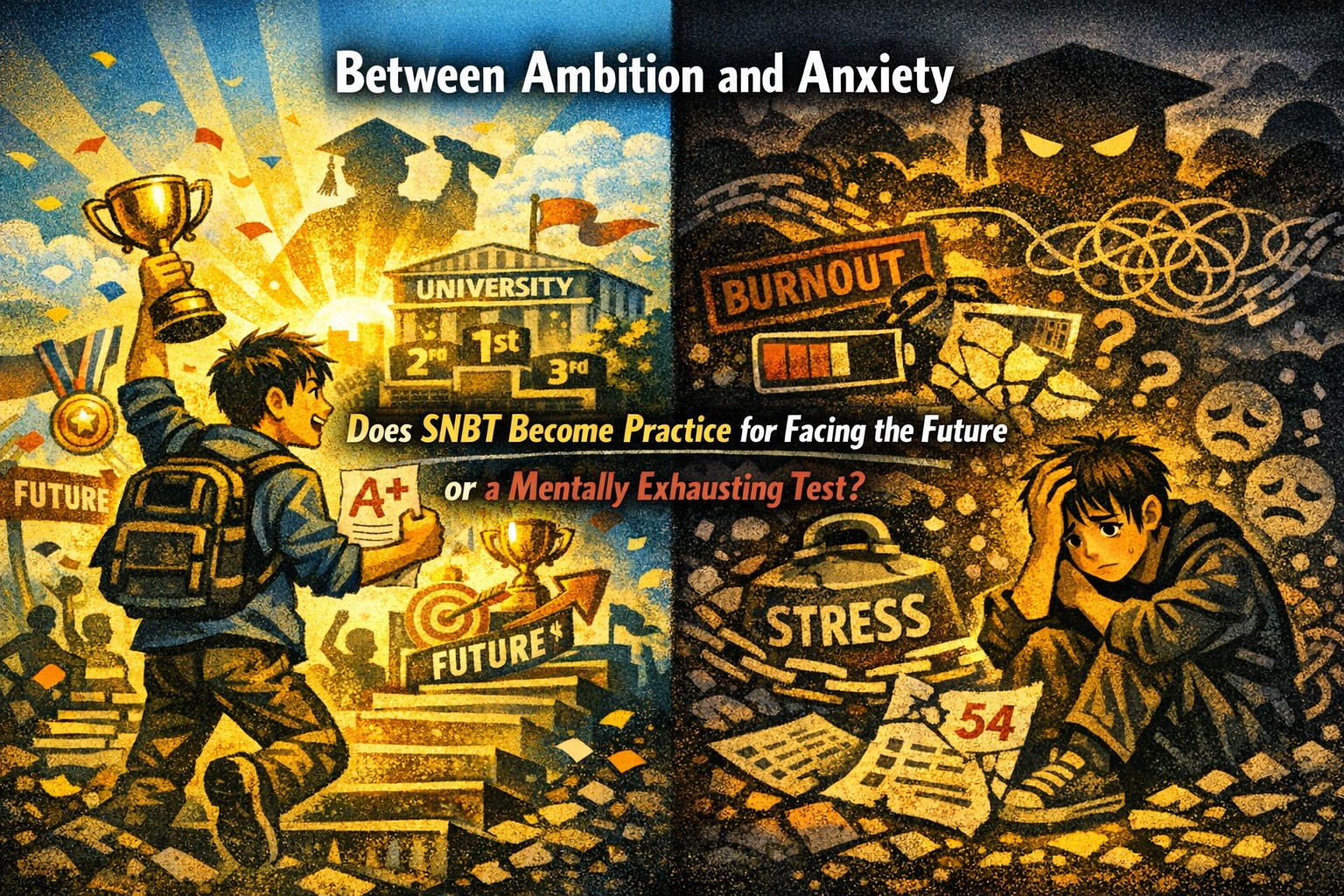
For many students in Indonesia, the journey toward higher education is one of the most emotional and demanding phases of life. It is a period filled with dreams, expectations, and difficult choices. At the center of this journey stands SNBT (Seleksi Nasional Berdasarkan Tes), a national entrance examination that opens the door to public universities and future opportunities. For students, SNBT is not simply an academic assessment. It often becomes a symbol of hope, family pride, and personal identity.
Students prepare for SNBT for months, and sometimes even years. They join tutoring classes, solve endless tryout questions, sacrifice free time, and build daily routines around academic targets. Parents invest money and emotional support, teachers push students toward achievement, and society places strong value on acceptance into prestigious campuses. As a result, the exam becomes much bigger than a classroom test.
This reality creates a serious question. Between ambition and anxiety, does SNBT truly become practice for facing the future, or does it become a mentally exhausting test that slowly drains students emotionally? The answer is complex because both sides exist at the same time.
For some students, SNBT teaches discipline, resilience, and responsibility. It helps them build focus and confidence while preparing for university life. For others, however, it creates anxiety, comparison, burnout, and the painful feeling that one score determines their entire future.
Education should prepare students to grow, not only to compete. That is why the emotional impact of SNBT deserves as much attention as its academic function.
SNBT AS A SYMBOL OF FUTURE OPPORTUNITY
SNBT is often seen as the main bridge between high school and university life. For many students, entering a public university means access to better academic opportunities, stronger career prospects, and social recognition.
Because of this, students see the exam as more than a requirement. It represents dreams that have been built for years. A student who wants to become a doctor, teacher, engineer, or psychologist often sees SNBT as the first real step toward that goal.
This perspective creates strong motivation. Students feel that their hard work has clear meaning because every study session is connected to a larger future.
When students understand why they are learning, they often become more serious and committed. In this way, SNBT can become a positive symbol of purpose and ambition.
THE DISCIPLINE BUILT THROUGH PREPARATION
Preparing for SNBT requires consistency. Success cannot be achieved through last-minute effort because the competition is too intense. Students must build discipline over time.
They learn how to manage study schedules, balance school responsibilities, and reduce distractions such as excessive social media or unproductive habits. These routines help students develop stronger self-control.
Discipline also grows through repetition. Practice questions, tryouts, and self-evaluation teach students that improvement comes from process, not instant results.
This lesson is valuable beyond the exam itself. University life and future careers also require long-term discipline, making SNBT preparation an important training ground.
LEARNING TO HANDLE FAILURE EARLY
Failure is a common part of SNBT preparation. Students often experience disappointing tryout scores, difficult subjects, and moments when progress feels slow.
These experiences teach emotional endurance. Students learn that failure does not always mean defeat—it can also be information for improvement.
Learning how to recover after mistakes is one of the most important life skills. It helps students become more resilient and less afraid of future challenges.
When failure is understood as part of growth, SNBT becomes a lesson in persistence rather than a source of shame.
WHEN COMPETITION BECOMES TOO INTENSE
Competition can motivate students, but excessive competition creates emotional pressure. Because university seats are limited, students often feel that every mistake could destroy their future.
They begin comparing scores constantly and worrying about rankings more than actual understanding. The focus shifts from learning to survival.
This environment makes studying emotionally exhausting. Students may feel that they are never doing enough because someone else always seems to be doing better.
Competition should inspire growth, but when it creates constant fear, it begins to damage mental health.
FAMILY EXPECTATIONS AND EMOTIONAL WEIGHT
Parents often want the best for their children, but expectations can become heavy emotional burdens. Statements like “you must pass” or “this university is your only goal” can create deep anxiety.
Students may begin to feel that failure means disappointing their family, not just themselves. This pressure changes the meaning of studying.
Instead of learning for personal growth, they study to avoid guilt and rejection. Emotional pressure becomes stronger than academic motivation.
Supportive families help students feel safe, while excessive demands can quietly increase fear.
THE ROLE OF SOCIAL MEDIA IN ACADEMIC PRESSURE
Social media has changed the way students experience competition. Every day, they see friends sharing high tryout scores, study routines, and university acceptance stories.
Even when students are progressing well, seeing others appear more successful can trigger insecurity. They begin to believe they are falling behind.
This comparison culture creates unnecessary panic. Students forget that social media often shows only achievements, not struggles.
Instead of motivating healthy effort, social media can turn preparation into emotional comparison and silent self-doubt.
WHEN SCORES DEFINE SELF-WORTH
One of the most dangerous effects of SNBT pressure is when students begin to believe that scores define personal value.
A high score creates temporary confidence, while a low score creates shame and disappointment. Students start connecting intelligence and worth to numbers alone.
This mindset is harmful because self-esteem becomes unstable. Confidence depends on results rather than personal growth.
Education should help students discover their strengths, not reduce them to percentages and rankings.
THE INVISIBLE GROWTH OF ANXIETY
Anxiety during SNBT preparation often grows quietly. It appears through sleepless nights, overthinking, and the constant fear of not being enough.
Students worry about failure, family expectations, and future uncertainty. Even small mistakes can feel emotionally overwhelming.
Because stress is normalized, many students hide these feelings. They continue studying while silently feeling exhausted inside.
This invisible anxiety can become dangerous if ignored for too long.
BURNOUT AND EMOTIONAL EXHAUSTION
Burnout happens when students continue pushing themselves without emotional recovery. Many believe that rest means losing progress, so they study without balance.
Over time, motivation disappears. Students feel physically tired, mentally empty, and disconnected from their original goals.
Learning becomes mechanical. They continue because they are afraid to stop, not because they feel inspired.
Burnout reduces performance and damages confidence, proving that excessive pressure is not productive.
THE IMPORTANCE OF REST AND BALANCE
Rest is often misunderstood as laziness, especially during exam preparation. In reality, rest is a necessary part of effective learning.
Sleep, exercise, hobbies, and social connection help students maintain focus and emotional stability. A tired mind cannot perform well.
Balance allows students to prepare sustainably. Success built through exhaustion is difficult to maintain.
Students need to understand that taking care of mental health is part of preparation, not a distraction from it.
TEACHERS AS SOURCES OF SUPPORT
Teachers play a major role in shaping student experiences. They can either increase pressure or create confidence.
Educators who focus only on rankings may unintentionally make students feel that scores are everything. This increases fear of failure.
Teachers who value progress, effort, and emotional well-being help students build healthier motivation. Honest guidance and empathy are powerful forms of support.
Sometimes one encouraging sentence from a teacher can reduce more stress than hours of extra lessons.
FRIENDSHIPS THAT REDUCE LONELINESS
Preparing for SNBT can feel lonely, especially when students isolate themselves from normal life. Healthy friendships are important during this period.
Friends who encourage rather than compare help students feel understood. Study groups can create motivation without emotional isolation.
Peer support reminds students that they are not struggling alone. Shared experiences reduce stress and build emotional resilience.
Success becomes healthier when competition is balanced with connection.
REJECTION IS NOT THE END OF THE DREAM
Many students fear that failing SNBT means losing their future. This belief gives one exam too much power.
In reality, life offers many paths. Private universities, scholarships, vocational education, entrepreneurship, and professional experience all create meaningful opportunities.
Sometimes rejection becomes redirection. Students may discover better paths through unexpected failure.
Dreams should be larger than one campus or one admission letter.
REDEFINING SUCCESS BEYOND PRESTIGE
Success is often defined too narrowly through famous universities and rankings. This creates unnecessary pressure.
True success includes discipline, resilience, creativity, and the ability to keep learning. Prestige alone does not guarantee a meaningful life.
Students need to understand that growth matters more than labels. A different path does not mean a smaller future.
When success is redefined, SNBT becomes less frightening and more balanced.
BUILDING A HEALTHIER EDUCATION CULTURE
The real challenge is not removing exams, but changing how society understands them. Students should be encouraged to aim high without believing that one score defines their identity.
Schools should provide counseling, open discussions about mental health, and support systems that protect emotional well-being.
Families should celebrate effort, not only final results. Students deserve recognition for discipline and honesty, even when outcomes are imperfect.
A healthier education culture creates ambition without emotional destruction.
Ultimately, SNBT can be both practice for the future and a mentally exhausting test. The difference depends on how students are supported and how success is defined.
If the system teaches that scores are everything, anxiety will grow louder than learning. But if students are reminded that education is about growth, resilience, and purpose, SNBT can become a meaningful step forward.
The goal of education should never be perfection at the cost of peace. It should be confidence without arrogance, ambition without fear, and success without losing personal identity.
Because in the end, true achievement is not only entering university—it is becoming someone strong enough to face life with courage, balance, and hope.
Tentang Penulis
Gusti Ayu Tita P
Penulis — Universitas STEKOM
Penulis aktif yang berfokus pada isu-isu akademik, teknologi pendidikan, dan pengembangan sumber daya manusia di lingkungan kampus.