TECHNOLOGY BEHIND THE STUDY DESK, IS THIS A SMART SOLUTION FOR SNBT OR THE BEGINNING OF UNNOTICED DISTRACTIONS?
Gusti Ayu Tita P
20 Juni 2026
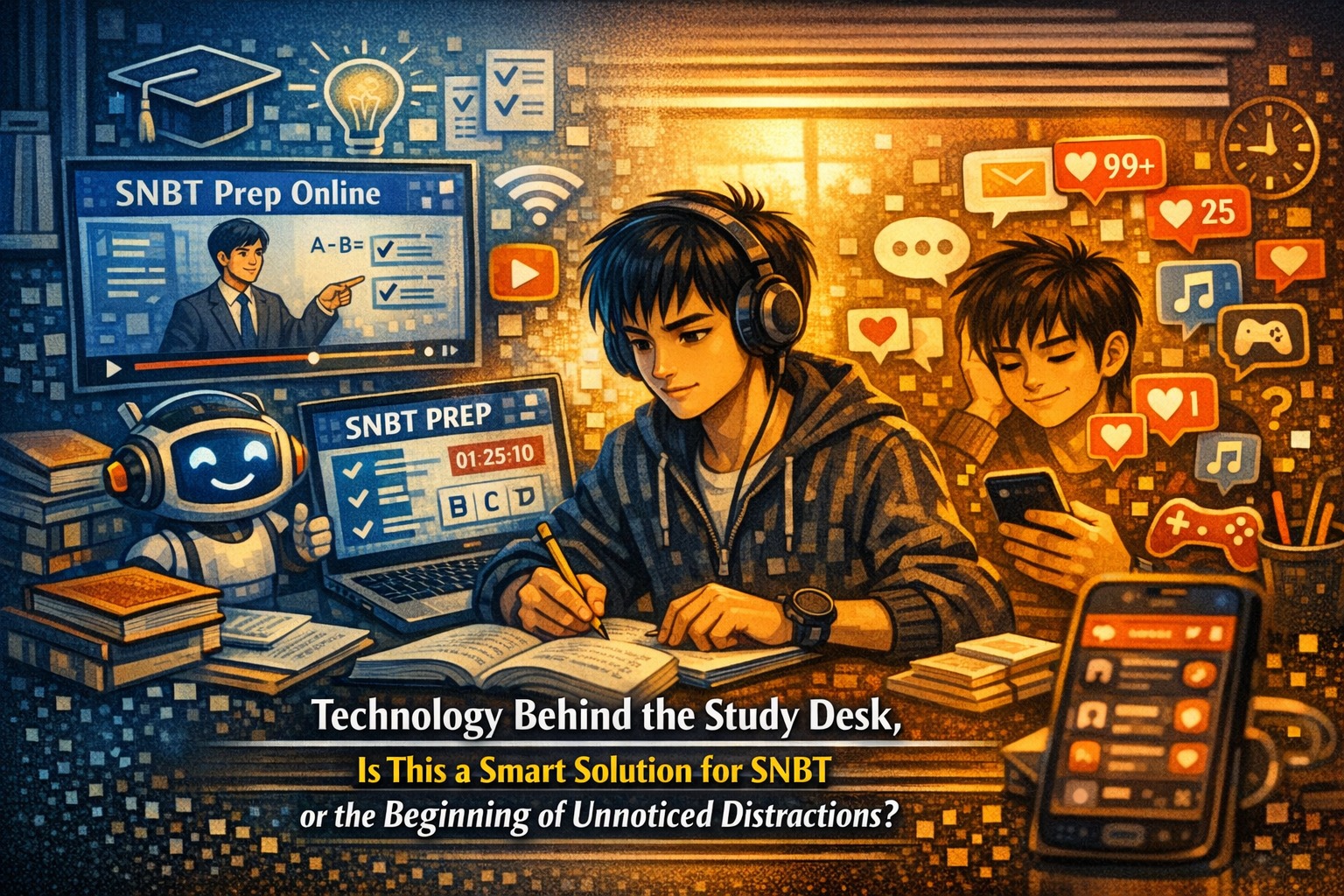
Preparing for SNBT (Seleksi Nasional Berdasarkan Tes) has become one of the most serious academic journeys for students who dream of entering a public university. Every year, thousands of students compete for limited seats, making preparation not only important but also emotionally demanding. In the middle of this competition, technology has become a permanent part of the study desk. Smartphones, laptops, tablets, online learning platforms, and digital tryouts are now considered normal tools in daily preparation.
In the past, students mainly depended on textbooks, school notes, private tutoring, and direct explanations from teachers. Today, one screen can replace many of those traditional resources. Students can watch learning videos, join discussion groups, complete online tryouts, and access thousands of practice questions within minutes. Technology promises speed, convenience, and flexibility that previous generations could not imagine.
Because of these advantages, many students believe technology is the smartest solution for SNBT preparation. It helps them save time, study independently, and access better academic support. However, behind this convenience, another reality quietly appears. The same device that supports learning also carries social media, entertainment, notifications, and endless distractions. Many students begin with serious study intentions but slowly lose focus without realizing it.
This creates an important question: is technology behind the study desk truly a smart solution for SNBT, or is it actually the beginning of unnoticed distractions that weaken concentration and discipline?
The answer depends on how students use technology. Devices themselves are neutral. What matters is whether students control the screen or the screen controls them.
Success in SNBT is not determined by how advanced the tools are, but by how wisely they are used to support real understanding and consistent effort.
THE MODERN STUDY DESK HAS CHANGED
The image of a study desk has changed significantly in the digital era.
A few years ago, a student’s desk was filled with notebooks, printed modules, textbooks, pens, and handwritten summaries. Today, much of that has been replaced by a laptop screen, online notes, digital planners, and mobile applications.
This transformation makes learning more practical. Students no longer need to carry heavy books or wait for classroom explanations. Everything is available faster and often more efficiently.
Technology creates a learning environment that feels flexible and connected.
Students can switch from reading material to solving tryout questions and then discussing answers with peers—all without leaving the desk.
This convenience changes not only tools, but also study habits and expectations.
Learning becomes faster, but also more dependent on attention management.
WHY TECHNOLOGY FEELS LIKE THE SMARTEST SOLUTION
Many students see technology as the best solution because it removes traditional learning barriers.
Distance is no longer a major problem. Students in remote areas can access the same high-quality lessons as students in big cities.
Time also becomes more flexible. Learning does not depend only on school schedules. Students can study early in the morning, late at night, or during short breaks throughout the day.
Online tryouts provide immediate feedback, making progress easier to measure. Educational videos simplify difficult concepts quickly, while digital discussion groups create academic support from anywhere.
This makes preparation feel more efficient and personalized.
Students can focus on weak subjects, repeat difficult explanations, and create study routines that match their own pace.
Technology gives freedom, and freedom feels powerful.
THE HIDDEN DISTRACTION INSIDE ONE DEVICE
The same device used for studying is also the center of distraction.
A smartphone that opens a mathematics lesson also contains social media, entertainment videos, games, shopping applications, and personal messages.
This creates a dangerous learning environment because distraction is always only one click away.
Students may start with the intention to study for two hours, but one notification can break concentration and lead to thirty minutes of unrelated scrolling.
These interruptions feel small, but repeated distractions destroy deep focus.
The danger is often unnoticed because students still feel “busy” while using the device.
In reality, their attention is divided.
Technology becomes risky not because of the device itself, but because of how easily focus disappears inside it.
WHY SMALL INTERRUPTIONS BECOME BIG PROBLEMS
Many students underestimate how harmful small interruptions can be.
Checking one message or watching one short video may seem harmless. However, every interruption forces the brain to switch focus.
For difficult subjects like quantitative reasoning, literacy analysis, and logical problem solving, concentration is essential. The brain needs uninterrupted time to process complex information deeply.
Frequent interruptions create mental fatigue because students must repeatedly restart their focus.
This slows understanding and reduces confidence.
Students may feel they studied for hours, but their real progress remains small because attention was fragmented.
Focus is not lost through one major mistake. It disappears through many small moments of distraction.
This is why unnoticed interruptions are often more dangerous than obvious procrastination.
ONLINE TRYOUTS AS A STRATEGIC ADVANTAGE
One of the strongest benefits of technology for SNBT preparation is the online tryout.
These simulations allow students to experience exam conditions before the real test day. Time limits, score reports, rankings, and detailed feedback create a realistic training environment.
Students can identify weak subjects more clearly and improve strategies based on actual performance.
This makes preparation more targeted.
Instead of studying everything equally, students can focus energy where improvement is needed most.
Online tryouts also train emotional readiness. Students learn how to manage pressure, control panic, and stay calm when facing difficult questions.
This mental preparation is often as important as academic knowledge.
Technology becomes powerful when it transforms uncertainty into measurable progress.
LEARNING VIDEOS AND THE COMFORT OF FAST EXPLANATIONS
Learning videos are one of the most popular digital tools for SNBT fighters.
Students prefer them because visual explanations feel easier than reading long textbooks. A difficult concept can be explained in a short video with examples and step-by-step solutions.
This creates comfort and saves time.
Students can replay lessons, pause difficult parts, and review explanations without depending on classroom schedules.
However, there is also a hidden risk.
Watching explanations can feel productive even when students are not actively learning.
Understanding a video is different from solving questions independently.
Technology helps best when videos become the beginning of practice, not the final stage of preparation.
PASSIVE LEARNING AND THE ILLUSION OF PRODUCTIVITY
Technology makes passive learning very easy.
Students watch educational content, save PDFs, join discussion groups, and read study threads for hours. Because these activities are connected to learning, they feel productive.
But feeling productive is not always the same as making progress.
SNBT requires active thinking. Students must solve questions independently, analyze mistakes, and train speed under pressure.
Passive learning creates familiarity. Active learning creates mastery.
Many students become trapped in the illusion of productivity because digital activity looks like academic effort.
They stay busy but do not grow.
Technology should support action, not become a comfortable place to avoid real practice.
INFORMATION OVERLOAD AND DECISION FATIGUE
Unlimited access to learning resources can become a problem when students lose clarity.
They save too many modules, follow too many teachers, and join too many study groups at once. Every source feels important.
Instead of stronger preparation, they experience information overload.
Too many choices create decision fatigue. Students spend more time deciding what to study than actually studying.
This reduces discipline because mental energy is wasted before learning even begins.
Sometimes fewer resources with stronger consistency produce better results than endless content with scattered focus.
Simplicity is often more powerful than abundance.
Technology should organize learning, not multiply confusion.
SOCIAL MEDIA AS A SILENT ENEMY
Social media often becomes the strongest hidden enemy of focus.
It does not always look dangerous because it feels normal and harmless. Students tell themselves they are taking a short break, checking updates, or relaxing for a moment.
But short breaks often become long distractions.
Social media is designed to keep users engaged. Notifications, short videos, and endless recommendations create continuous emotional stimulation.
Compared to difficult study material, scrolling feels easier and more rewarding.
This makes discipline harder.
The problem is not only lost time, but also broken mental rhythm. Returning to deep concentration after entertainment becomes difficult.
Technology helps learning, but social media often fights against it.
BUILDING DISCIPLINE IN A DIGITAL ENVIRONMENT
Technology does not remove the need for discipline. It makes discipline even more important.
Students need clear systems to protect focus.
Turning off unnecessary notifications during study sessions is a simple but powerful step. Using separate applications for learning and entertainment also helps reduce temptation.
Time-blocking methods improve consistency. Short focused study sessions are often more effective than long distracted hours.
Clear daily goals create stronger accountability. Instead of saying “I will study today,” students should define exact tasks and priorities.
Discipline grows when decisions are simple and repeated.
Motivation changes every day. Systems protect progress when motivation disappears.
THE ROLE OF PARENTS IN DIGITAL STUDY HABITS
Parents often see screens as a source of distraction, but digital learning requires a more balanced perspective.
Not all screen time is negative. Many students genuinely study through online platforms, tryouts, and academic communities.
Parents who understand this difference can provide stronger support.
Instead of focusing only on restrictions, they can help students build routines, healthy sleep patterns, and emotional balance.
Supportive communication works better than constant suspicion.
Students preparing for SNBT already face strong pressure. Guidance creates responsibility, while excessive control often creates resistance.
Technology becomes safer when home environments support discipline and trust.
TEACHERS STILL SHAPE LEARNING QUALITY
Even in a digital world, teachers remain essential.
Students need guidance to choose reliable resources, understand difficult concepts, and avoid confusion caused by too much information.
Teachers help students focus on understanding instead of chasing shortcuts.
They also shape academic mindset. When education values reflection and critical thinking, students become less dependent on memorization and passive learning.
Technology should support teaching, not replace it.
The strongest preparation happens when digital access and human mentorship work together.
MENTAL HEALTH BEHIND ACADEMIC PERFORMANCE
SNBT preparation is not only about study strategies. It is also about emotional endurance.
Students face pressure from competition, family expectations, and fear of failure. Technology can increase this pressure through constant comparison and the feeling of never doing enough.
Seeing others post high tryout scores or productive study routines can create anxiety and self-doubt.
Students begin comparing their private struggles with someone else’s public success.
This emotional exhaustion weakens discipline and concentration.
Healthy preparation includes rest, boundaries, and permission to recover.
Mental health is not separate from academic success. It protects consistency.
USING TECHNOLOGY WITH PURPOSE
Technology becomes helpful only when it is used with clear purpose.
Opening a learning app without a goal often leads to distraction. Watching educational content without reflection often creates passive learning.
Students need simple awareness: Why am I opening this device? What do I want to finish? Is this helping my progress or only filling time?
Purpose creates stronger focus.
Without intention, convenience becomes delay.
With intention, even simple tools become powerful academic support.
The screen should serve the student, not control the student.
SMART SOLUTION OR UNNOTICED DISTRACTION?
So, is technology behind the study desk a smart solution for SNBT or the beginning of unnoticed distractions?
The honest answer is both are possible.
For students who use digital tools with discipline, reflection, and strong routines, technology becomes a major academic advantage. It creates access, flexibility, confidence, and better preparation.
But for students without boundaries, the same technology becomes a silent trap of procrastination, divided attention, and emotional exhaustion.
Technology does not decide success. Habits do.
The smartest solution is not the newest device or the most expensive platform. It is the ability to protect focus in a world full of interruptions.
In the end, the real challenge of SNBT is not only answering difficult questions. It is learning how to stay disciplined when distraction is always within reach.
That lesson may be even more valuable than the exam itself.
Tentang Penulis
Gusti Ayu Tita P
Penulis — Universitas STEKOM
Penulis aktif yang berfokus pada isu-isu akademik, teknologi pendidikan, dan pengembangan sumber daya manusia di lingkungan kampus.