Business Incubation vs Business Acceleration Understanding the Differences
Gusti Ayu Tita P
12 Oktober 2026
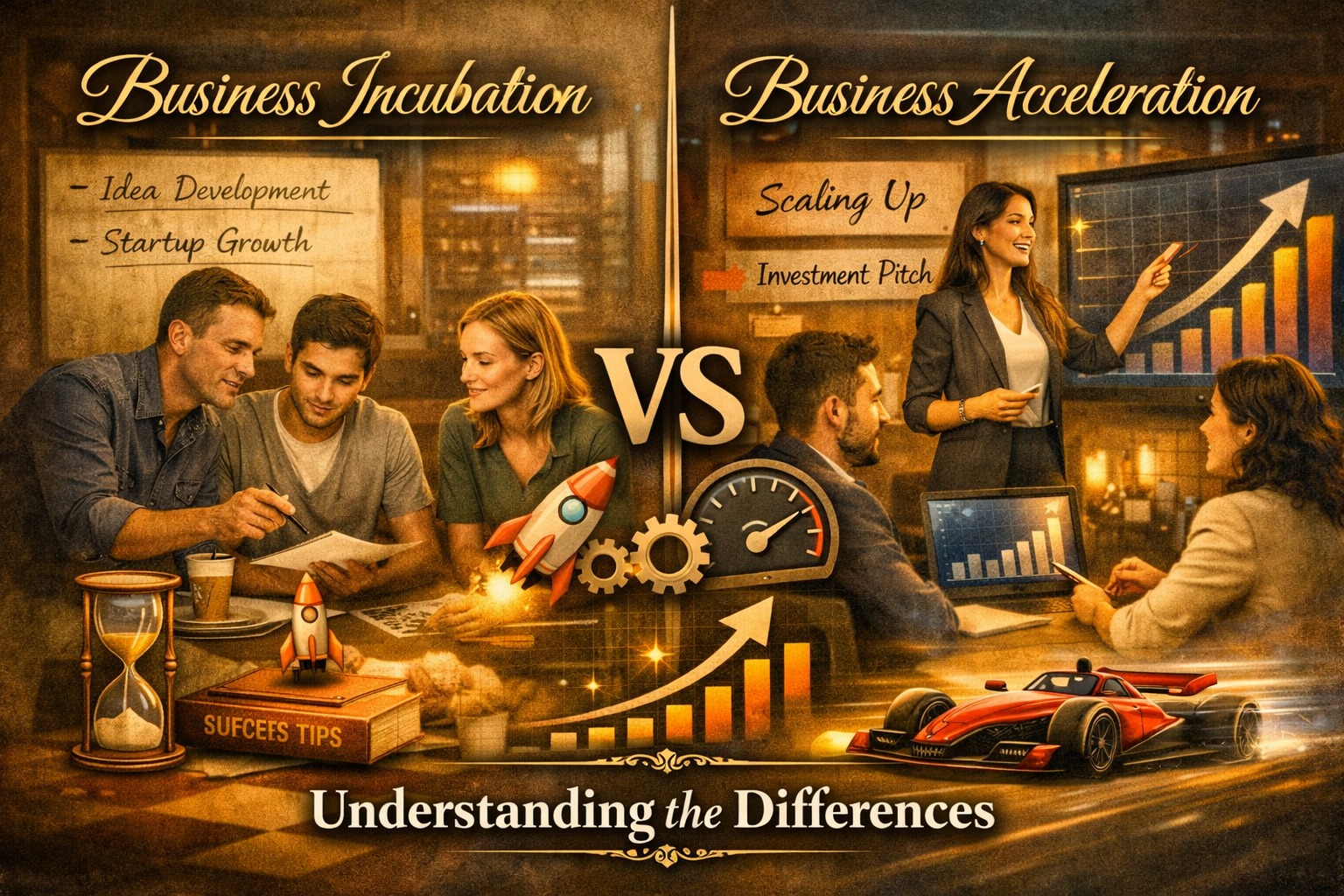
Starting a business requires more than a great idea. Entrepreneurs often need guidance, funding, networking opportunities, and professional support to grow successfully. Two of the most popular startup development models are business incubation and business acceleration. Although both programs aim to help businesses succeed, they serve different purposes and target companies at different stages of growth.
Understanding the differences between business incubation and business acceleration helps entrepreneurs choose the right program based on their current needs and long-term business goals. Selecting the appropriate support system can significantly improve a startup's chances of achieving sustainable growth and long-term success.
WHAT IS BUSINESS INCUBATION?
Business incubation is a long-term support program designed for entrepreneurs who are still developing their business ideas or newly established startups. The primary objective is to help founders build a solid business foundation before entering a highly competitive market. Incubation programs usually offer business mentoring, office facilities, training sessions, networking opportunities, and guidance in creating effective business strategies.
Unlike short-term programs, business incubation often lasts from several months to even a few years depending on the startup's progress. Entrepreneurs receive continuous assistance in validating business models, improving products or services, and preparing for future investment opportunities. This gradual approach reduces risks while increasing the likelihood of sustainable business growth.
WHAT IS BUSINESS ACCELERATION?
Business acceleration is a structured program created for startups that already have a validated product or service and are ready to grow rapidly. These programs focus on scaling operations, increasing revenue, attracting investors, and expanding into larger markets within a relatively short period.
Most acceleration programs run between three and six months with intensive mentoring, workshops, networking events, and investor pitch sessions. Participants are expected to move quickly, implement feedback efficiently, and achieve measurable business milestones. The ultimate goal is to accelerate growth and prepare startups for significant investment or market expansion.
KEY DIFFERENCES BETWEEN BUSINESS INCUBATION AND BUSINESS ACCELERATION
The most noticeable difference lies in the business stage they support. Business incubation is intended for startups that are still building their concepts, while business acceleration targets businesses that have already demonstrated market potential and are ready to scale.
Another important distinction is the program duration and intensity. Incubation programs generally provide flexible, long-term assistance, whereas acceleration programs are shorter, more intensive, and performance-driven. Additionally, accelerators frequently connect startups directly with investors, while incubators focus more on developing strong operational foundations before seeking external funding.
BENEFITS OF BUSINESS INCUBATION
One of the biggest advantages of business incubation is reducing the challenges faced by early-stage entrepreneurs. New business owners gain access to experienced mentors, educational resources, and valuable professional networks that help them avoid common startup mistakes.
Business incubation also encourages innovation by allowing entrepreneurs sufficient time to refine products, understand customer needs, and improve operational processes. This supportive environment enables startups to build stronger business models before facing larger market competition.
BENEFITS OF BUSINESS ACCELERATION
Business acceleration offers startups the opportunity to achieve rapid growth through intensive coaching and strategic guidance. Entrepreneurs receive direct feedback from industry experts, successful founders, and experienced investors, allowing them to improve decision-making and business performance.
Acceleration programs also increase visibility within the startup ecosystem. Many businesses secure investment, establish strategic partnerships, and expand into new markets after successfully completing accelerator programs. This makes acceleration an excellent option for startups seeking fast and scalable growth.
HOW TO CHOOSE THE RIGHT PROGRAM?
Choosing between business incubation and business acceleration depends largely on your company's current development stage. If your business idea is still evolving or you need assistance building a sustainable foundation, incubation is generally the better choice.
On the other hand, if your startup already has paying customers, validated products, and clear growth potential, acceleration can provide the momentum needed for rapid expansion. Entrepreneurs should carefully evaluate their business objectives, available resources, and readiness before selecting either program.
WHY BOTH PROGRAMS ARE IMPORTANT FOR THE STARTUP ECOSYSTEM?
Both business incubation and business acceleration contribute significantly to building healthy entrepreneurial ecosystems. Incubators nurture innovative ideas from their earliest stages, while accelerators help promising startups become competitive businesses capable of generating economic impact.
Together, these programs create a continuous development pathway for entrepreneurs. By supporting startups throughout different phases of growth, they encourage innovation, create employment opportunities, attract investment, and strengthen overall economic development.
CONCLUSION
Although business incubation and business acceleration share the common goal of helping startups succeed, they differ in their target audience, program structure, duration, and objectives. Business incubation focuses on building strong business foundations for early-stage entrepreneurs, while business acceleration emphasizes rapid growth for startups that are ready to scale.
Understanding these differences enables entrepreneurs to choose the most suitable program for their current business stage. By selecting the right support system, startups can improve their chances of achieving sustainable growth, attracting investment, expanding into larger markets, and building long-term business success.
Tentang Penulis
Gusti Ayu Tita P
Penulis — Universitas STEKOM
Penulis aktif yang berfokus pada isu-isu akademik, teknologi pendidikan, dan pengembangan sumber daya manusia di lingkungan kampus.