Can a Permanent Employment Agreement Be Terminated Unilaterally?
Gusti Ayu Tita P
15 Oktober 2026
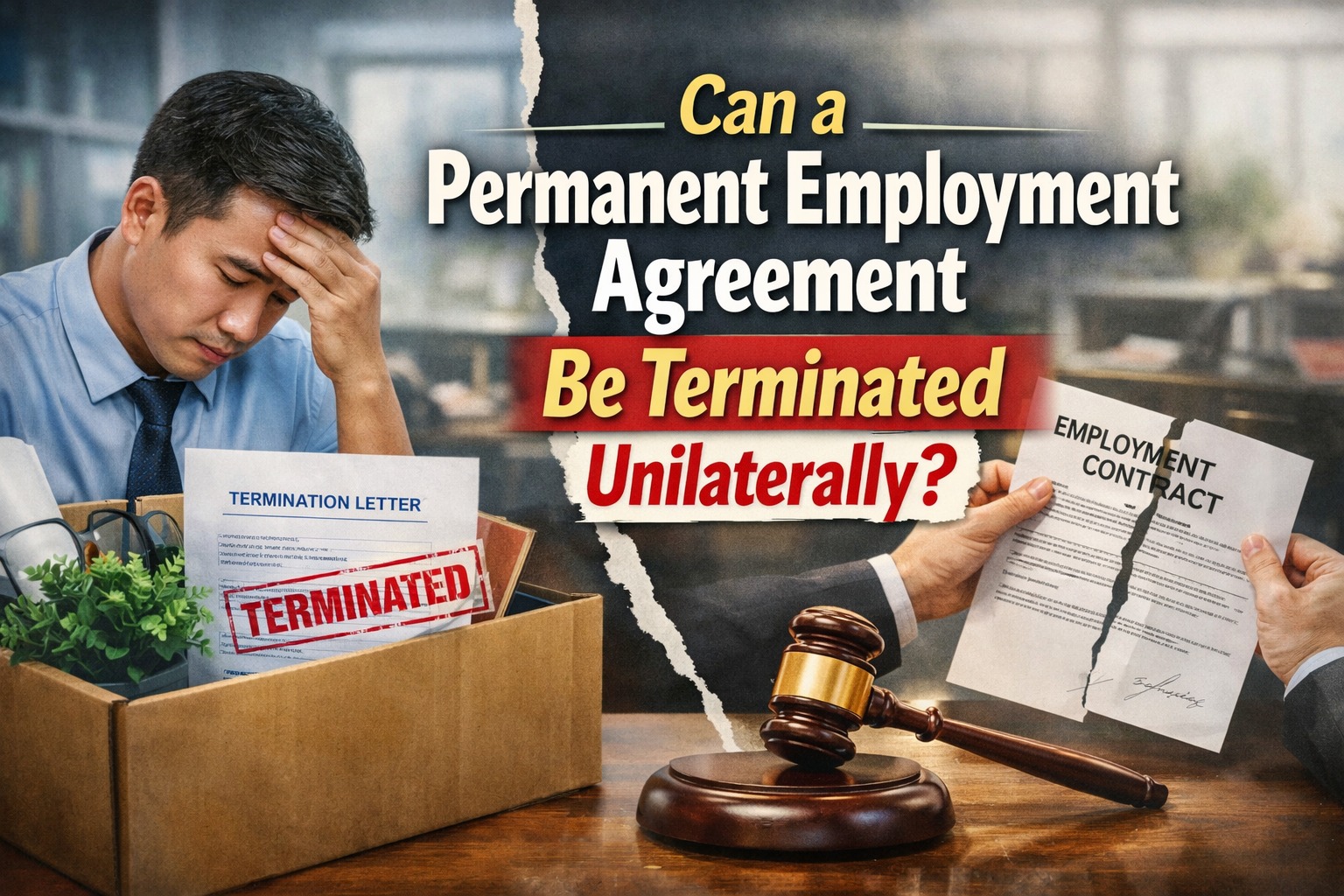
A Permanent Employment Agreement is designed to provide long-term job security for employees while ensuring stability for employers. However, many people wonder whether this type of employment contract can be terminated unilaterally by either party. The answer depends on employment laws, the terms of the agreement, and the circumstances surrounding the termination.
In most countries, employers cannot simply dismiss a permanent employee without a valid legal reason. Likewise, employees are generally expected to follow the procedures outlined in their employment contract if they wish to resign. Understanding the legal framework helps both employers and employees avoid disputes and protect their rights.
WHAT IS A PERMANENT EMPLOYMENT AGREEMENT?
A Permanent Employment Agreement is a contract that establishes an ongoing employment relationship without a predetermined end date. Unlike fixed-term contracts, permanent agreements continue until they are legally ended by either the employer or the employee. These agreements usually include details about job responsibilities, salary, working hours, benefits, and termination procedures.
Because of their long-term nature, permanent contracts provide greater employment stability and often include stronger legal protections. Employees may receive benefits such as paid leave, health insurance, retirement contributions, and severance rights depending on local labor regulations. Employers also benefit by retaining experienced workers and reducing recruitment costs.
CAN AN EMPLOYER TERMINATE A PERMANENT EMPLOYMENT AGREEMENT UNILATERALLY?
In general, an employer cannot legally terminate a Permanent Employment Agreement without following applicable labor laws. A unilateral termination is usually only permitted when there is a lawful reason, such as serious employee misconduct, poor performance supported by evidence, company restructuring, or financial difficulties that justify layoffs.
Even when valid reasons exist, employers are typically required to follow a fair dismissal process. This may include providing written notice, conducting an investigation, offering the employee an opportunity to respond, and paying any required compensation or severance. Failure to follow these procedures can result in legal disputes and financial penalties.
CAN AN EMPLOYEE END THE AGREEMENT WITHOUT EMPLOYER CONSENT?
Employees generally have the right to resign voluntarily without needing the employer's approval. However, they are usually required to comply with the notice period specified in the employment agreement or required by labor law. Giving proper notice allows the employer sufficient time to find a replacement and maintain business operations.
If an employee leaves without following the agreed procedures, they may face certain legal or contractual consequences depending on the applicable laws. Nevertheless, employees may be allowed to resign immediately in exceptional situations, such as unsafe working conditions, serious breaches of contract, or other legally recognized reasons.
LEGAL FACTORS THAT DETERMINE WHETHER UNILATERAL TERMINATION IS VALID
Several legal factors determine whether a unilateral termination is considered lawful. Courts and labor authorities commonly examine the employment contract, labor legislation, company policies, and the specific facts of each case. Proper documentation is often essential in proving that the termination was justified.
Another important consideration is whether the employee's rights have been respected throughout the process. Issues such as discrimination, retaliation, unpaid wages, or violations of procedural requirements may make an otherwise valid dismissal unlawful. Seeking legal advice is often recommended when disputes arise.
HOW EMPLOYERS AND EMPLOYEES CAN PREVENT DISPUTES?
Both employers and employees should clearly understand the terms of their Permanent Employment Agreement before signing it. A well-written contract reduces misunderstandings by explaining each party's rights, obligations, and termination procedures. Regular communication also helps resolve workplace issues before they escalate.
Employers should maintain proper employment records and consistently apply workplace policies. Employees, on the other hand, should fulfill their contractual responsibilities and communicate any concerns professionally. Following legal procedures protects both parties and encourages a fair employment relationship.
CONCLUSION
A Permanent Employment Agreement generally cannot be terminated unilaterally without complying with applicable employment laws and contractual obligations. Employers must have a valid legal reason and follow the required procedures before ending the employment relationship, while employees should respect resignation requirements such as notice periods.
Understanding the legal principles governing permanent employment agreements helps reduce workplace conflicts and ensures that both employers and employees receive fair treatment. Always reviewing the employment contract and relevant labor regulations is the best way to protect everyone's rights.
Tentang Penulis
Gusti Ayu Tita P
Penulis — Universitas STEKOM
Penulis aktif yang berfokus pada isu-isu akademik, teknologi pendidikan, dan pengembangan sumber daya manusia di lingkungan kampus.