
Can Students Balance the Pursuit of Knowledge and the Goal of a Degree?
Gusti Ayu Tita P
19 Februari 2026
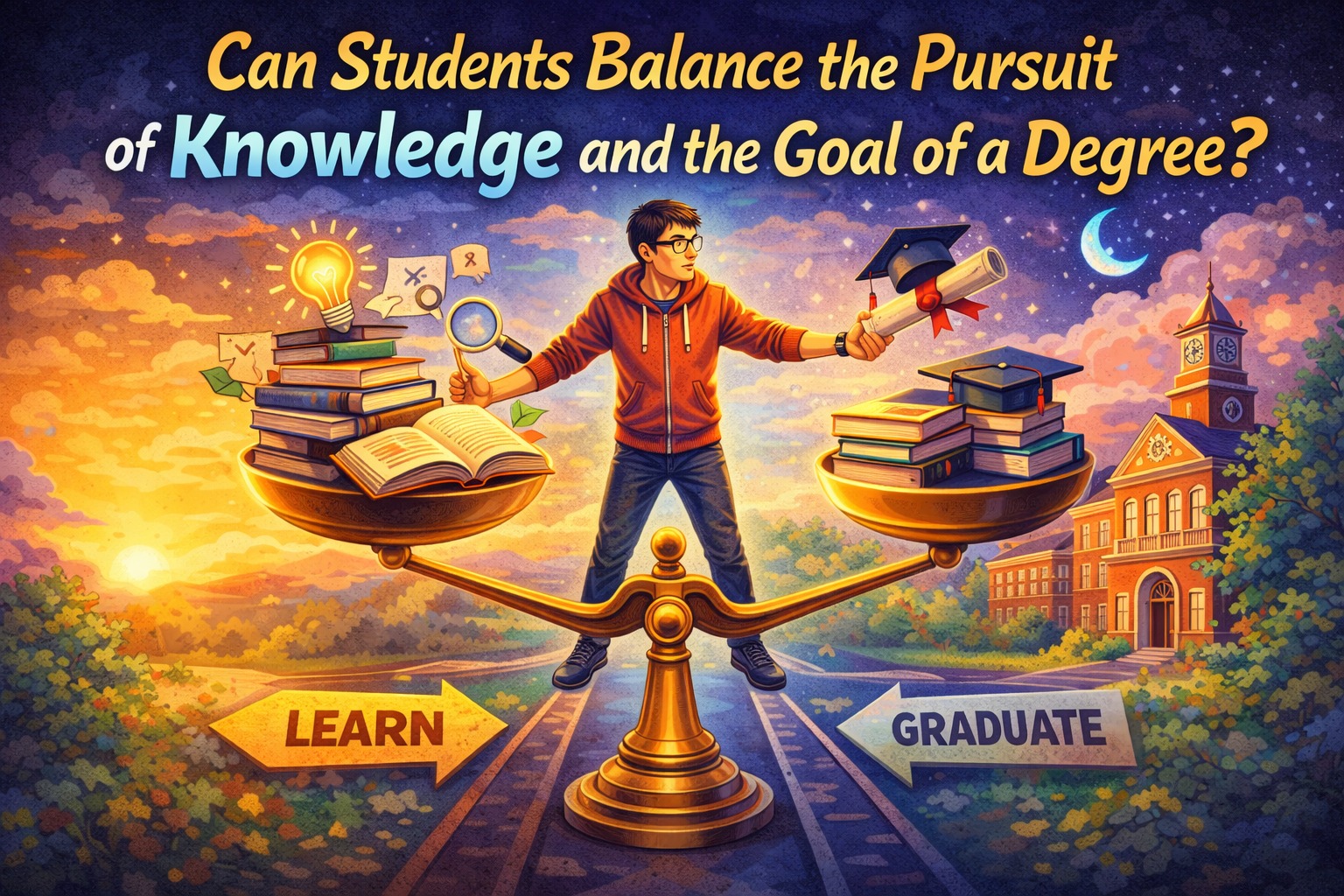
Amid increasing academic demands and intense job market competition, many university students face a dilemma: should they focus on earning a degree or truly mastering knowledge? For some, it feels difficult to achieve both at the same time. The important question is: is it possible to balance the pursuit of knowledge and the goal of obtaining a degree?
The answer is not only possible but highly realistic when approached with the right strategy and mindset. Higher education is designed to produce graduates who are not only degree holders but also competent individuals.
THE DIFFERENCE BETWEEN GOALS AND PROCESS
A degree is an administrative end goal, while mastering knowledge is a continuous process. Many students become overly result-oriented, focusing primarily on graduating on time and maintaining a high GPA.
However, deeply understanding the material often leads to better academic performance. When students truly grasp concepts, good grades tend to follow naturally. In other words, mastering knowledge and earning a degree are not mutually exclusive.
THE CHALLENGES OF MAINTAINING BALANCE
Balancing both aspects is not easy. Busy class schedules, heavy assignments, and social pressure to graduate quickly often push students toward shortcuts in learning.
Additionally, academic environments that emphasize grades too heavily can shift the focus from understanding to merely achieving high scores. If not managed properly, students may graduate with a degree but lack sufficient competence.
STRATEGIES TO ACHIEVE BOTH
Several steps can help students maintain balance:
First, prioritize understanding over memorization. Learning with the intention of comprehension leads to more stable and meaningful academic results.
Second, engage in practical activities such as internships, research projects, or collaborative work. Real-world experience helps bridge the gap between theory and practice.
Third, manage time effectively. Balancing academic responsibilities with personal development allows students to maintain their GPA while expanding their skills.
Fourth, build intrinsic motivation. Recognizing that knowledge is a long-term investment encourages consistent and purposeful learning.
THE LONG-TERM BENEFITS OF BALANCE
Students who successfully balance earning a degree and mastering knowledge gain a competitive advantage. They not only meet administrative requirements but are also well-prepared to face professional challenges.
Strong mastery of knowledge also fosters critical thinking and adaptability. In an ever-changing job market, these qualities are far more valuable than academic status alone.
CONCLUSION
Balancing the pursuit of knowledge and the goal of earning a degree is not impossible. Both can go hand in hand with clear strategy, discipline, and strong motivation.
A degree serves as formal recognition of academic achievement, while mastery of knowledge becomes the foundation for long-term growth. When integrated, higher education truly produces graduates who are ready to compete and contribute meaningfully.
Tentang Penulis
Gusti Ayu Tita P
Penulis — Universitas STEKOM
Penulis aktif yang berfokus pada isu-isu akademik, teknologi pendidikan, dan pengembangan sumber daya manusia di lingkungan kampus.



