Challenges And Solutions In Managing A Rental House Business
Gusti Ayu Tita P
21 Agustus 2026
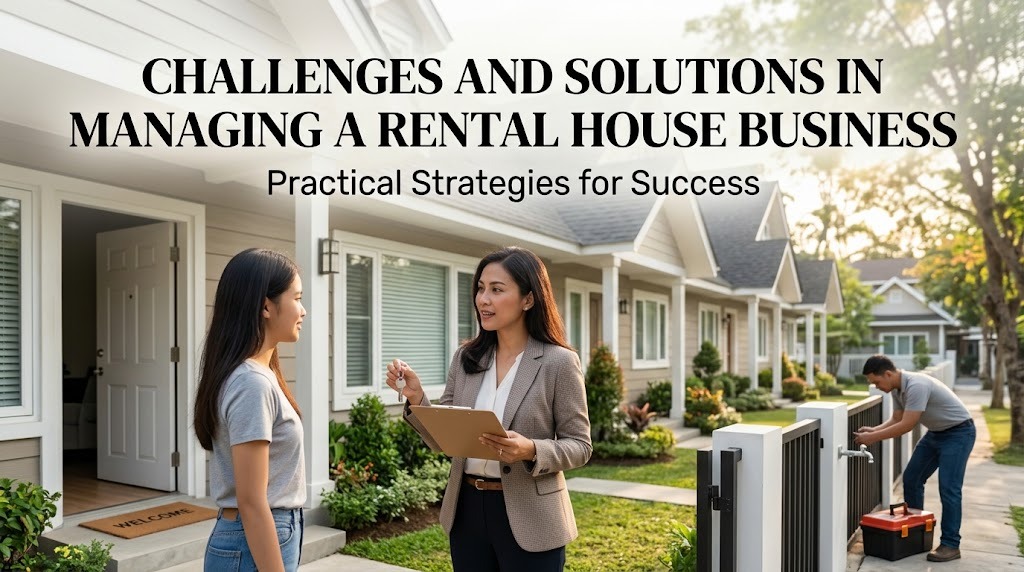
Managing a rental house business can provide a regular source of income while also creating long term property value. However, becoming a successful landlord requires more than simply finding tenants and collecting rent. Property owners must deal with maintenance, vacancies, tenant relationships, operating costs, and changing market conditions. Poor management can reduce profits and damage the condition of the property. Therefore, understanding common challenges and preparing practical solutions is essential for building a stable rental house business.
MANAGING PROPERTY MAINTENANCE
Property maintenance is one of the most common challenges in a rental house business. Roof leaks, plumbing problems, damaged electrical systems, broken fixtures, and other issues can appear unexpectedly. If these problems are ignored, they may become more expensive and cause greater damage to the property. Regular inspections can help owners identify problems before they become serious.
Owners should create a routine maintenance schedule and keep records of repairs and expenses. It is also useful to have reliable technicians or service providers who can respond when urgent problems occur. Setting aside a maintenance reserve can help cover unexpected costs without disrupting other finances. Preventive maintenance can protect the property's condition and support its long term value.
PROTECTING THE PROPERTY FROM DAMAGE
Property damage is another concern in rental house management. Normal wear and tear is different from damage caused by negligence or misuse, so owners should understand the distinction under applicable laws. A detailed move in inspection can document the property's condition before a tenant occupies it. Photos and written records can provide useful evidence if disagreements arise later.
Owners should also communicate property rules clearly from the beginning. Tenants need to know how to use important facilities and which activities are not permitted under the rental agreement. Regular inspections should be conducted only when legally permitted and with appropriate notice. Proper documentation and clear rules can help protect the property while respecting tenant rights.
KEEPING THE PROPERTY COMPETITIVE
Rental markets can change as new properties are developed and tenant preferences evolve. A house that was attractive several years ago may become less competitive if its facilities or appearance no longer meet local expectations. Owners should periodically compare their property with similar rental houses in the same area. This can help identify reasonable improvements.
Improvements should focus on features that tenants actually value. Better lighting, reliable internet infrastructure where appropriate, improved security, functional kitchens, and well-maintained bathrooms may increase a property's appeal. Owners should calculate expected costs before making major upgrades. Strategic improvements can strengthen competitiveness without unnecessary spending.
MANAGING LEGAL AND CONTRACTUAL RESPONSIBILITIES
Rental businesses involve legal responsibilities that vary by location. Owners should understand applicable rules concerning rental agreements, deposits, tenant rights, property standards, taxes, and termination procedures. Ignoring legal requirements can create financial and operational problems. Professional legal or property advice may be appropriate when an issue is complex.
A written rental agreement should clearly describe important terms and responsibilities. Both parties should understand payment schedules, maintenance obligations, property rules, and procedures for ending the tenancy. Owners should also keep relevant documents and payment records organized. Legal compliance and proper documentation are important foundations for responsible rental management.
USING TECHNOLOGY FOR PROPERTY MANAGEMENT
Technology can simplify many rental management tasks. Digital tools can help owners organize rent payments, maintenance requests, property records, tenant communication, and financial information. Online advertising can also make it easier to reach potential tenants. These tools can reduce administrative work and improve organization.
However, technology should be used responsibly. Owners need to protect personal information and use secure systems for sensitive records and payments. Digital tools should support good management rather than replace professional judgment. Technology-assisted management can be particularly useful for owners who manage multiple rental properties.
PREPARING FOR FINANCIAL AND MARKET RISKS
Rental house businesses can be affected by economic changes, shifting tenant demand, unexpected repairs, and changes in operating costs. Owners should not assume that rental income will always remain stable. A financial emergency fund can help cover periods of vacancy or unexpected property expenses. Maintaining sufficient liquidity can make the business more resilient.
Owners should also avoid taking on more debt than they can reasonably manage. Regularly reviewing rental income, expenses, occupancy, and market conditions can help identify potential problems early. Diversifying investments may also reduce dependence on one rental property. Risk management is essential for maintaining long term financial stability.
CONCLUSION
Managing a rental house business involves challenges related to maintenance, tenants, vacancies, operating costs, communication, legal responsibilities, and market competition. These challenges can be managed through careful planning, regular property maintenance, fair tenant selection, clear agreements, effective marketing, and responsible financial management. Technology can also make administrative tasks more efficient when used appropriately. Owners should focus not only on short term rental income but also on protecting the property's condition and long term value. With consistent management and practical strategies, a rental house business can become a more stable and sustainable source of income.
Tentang Penulis
Gusti Ayu Tita P
Penulis — Universitas STEKOM
Penulis aktif yang berfokus pada isu-isu akademik, teknologi pendidikan, dan pengembangan sumber daya manusia di lingkungan kampus.