Challenges Lecturers Face In Adapting To Modern Higher Education
Gusti Ayu Tita P
12 Agustus 2026
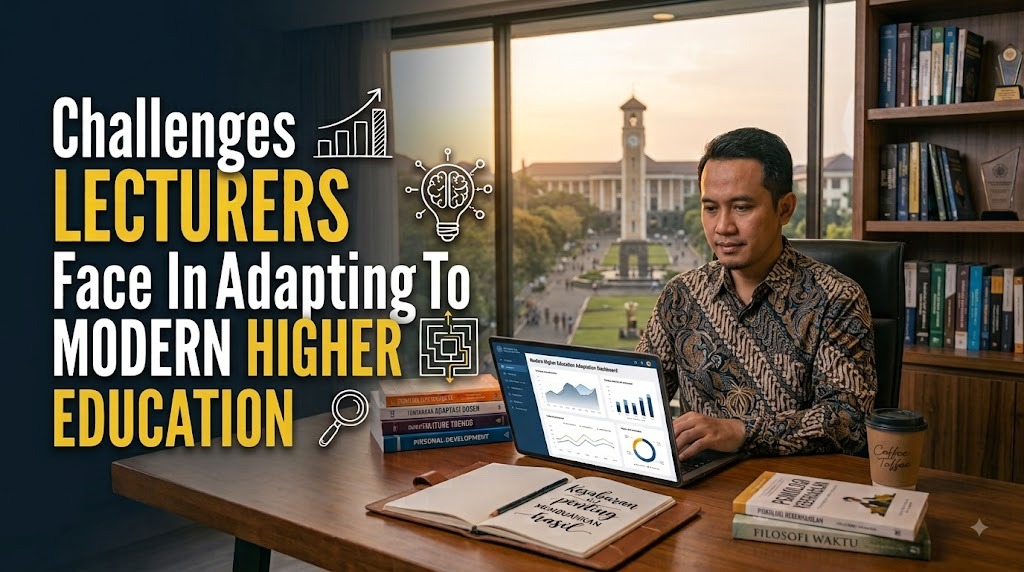
Higher education continues to change because of technological development, changing student expectations, and new approaches to teaching and research. These changes require lecturers to update their knowledge and teaching methods regularly. Lecturers are no longer expected to rely only on traditional classroom approaches. They also need to understand digital tools, support different learning needs, and prepare students for a changing professional environment. Therefore, adapting to modern higher education can create several challenges that require continuous learning and institutional support.
ADAPTING TO RAPID TECHNOLOGICAL DEVELOPMENT
Technology has become an important part of modern higher education. Lecturers may need to use learning management systems, video conferencing platforms, digital assessment tools, and other educational technologies. Learning these tools can take time, especially for lecturers who are more familiar with traditional teaching methods. Digital competence is therefore becoming increasingly important for effective teaching.
Technology also changes quickly, which means learning one platform may not be enough. Lecturers need to evaluate new tools and decide whether they genuinely improve learning outcomes. Using technology simply because it is popular does not guarantee better education. Purposeful technology use should focus on improving learning, communication, accessibility, or academic efficiency.
MEETING CHANGING STUDENT EXPECTATIONS
Modern students often expect learning to be flexible, interactive, and connected to real-world situations. They may be familiar with digital communication and online information resources before entering university. However, familiarity with technology does not automatically mean students have strong academic or digital literacy skills. Lecturers must therefore balance student expectations with academic standards.
Different students may also have different learning preferences, backgrounds, and levels of preparation. A single teaching approach may not work equally well for everyone. Lecturers need to create learning activities that encourage participation while maintaining clear academic objectives. Student-centered learning can help address these differences when implemented carefully.
DEVELOPING NEW TEACHING METHODS
Traditional lectures can still be useful, but modern higher education increasingly emphasizes active participation. Lecturers may need to use discussions, projects, case studies, simulations, collaborative assignments, and problem-based learning. Designing these activities requires additional preparation and careful planning. Innovative teaching methods can improve engagement when they are appropriate for the subject and learning goals.
Lecturers also need to evaluate whether new methods actually improve student understanding. An activity may be interesting but still fail to support the intended learning outcomes. Regular reflection and student feedback can help lecturers improve their teaching strategies. Teaching innovation should therefore involve experimentation, evaluation, and continuous improvement.
MANAGING INCREASED ACADEMIC RESPONSIBILITIES
Lecturers often have responsibilities beyond classroom teaching. They may be expected to conduct research, publish academic work, supervise students, participate in community service, and contribute to institutional activities. Managing these responsibilities can become challenging when time and resources are limited. Workload management is therefore an important part of maintaining teaching quality.
Balancing multiple responsibilities requires clear priorities and effective planning. Institutions can also help by providing reasonable workloads, administrative support, and appropriate resources. Without adequate support, excessive responsibilities may affect productivity and academic performance. Institutional support can make adaptation more realistic and sustainable.
KEEPING UP WITH RESEARCH AND KNOWLEDGE
Knowledge develops continuously, especially in fields affected by technological and scientific changes. Lecturers need to stay informed about new research, theories, tools, and professional practices. This requires regular reading, research activities, training, conferences, and academic discussions. Continuous professional development helps lecturers maintain relevant expertise.
Keeping knowledge current can be challenging when lecturers have limited time. They need to identify reliable academic sources and focus on developments that are relevant to their fields. Research activities can also strengthen teaching because lecturers can introduce current findings into classroom discussions. Updated knowledge helps students receive education that reflects current developments.
ADDRESSING DIFFERENT LEARNING NEEDS
Students may differ in their academic preparation, learning pace, language skills, and access to technology. These differences can make classroom management and lesson design more complex. Lecturers need to provide appropriate explanations and learning resources without lowering academic expectations. Inclusive teaching can help create a learning environment where more students have opportunities to participate.
Accessibility is another important consideration. Some students may face limitations that affect how they access learning materials or participate in activities. Lecturers may need to provide alternative formats or flexible approaches when appropriate. Inclusive academic practices can improve participation while supporting equal opportunities for learning.
MAINTAINING ACADEMIC INTEGRITY IN THE DIGITAL ERA
Digital technology has made information easier to access, but it has also created new challenges for academic integrity. Plagiarism, unauthorized collaboration, fabricated information, and inappropriate use of artificial intelligence can affect the quality of academic work. Lecturers need to explain expectations clearly and teach students about responsible academic practices. Assessment methods may also need to be designed to evaluate genuine understanding.
Artificial intelligence can be useful for learning and research when used appropriately, but students need clear guidance about acceptable use. Lecturers must stay informed about institutional policies and emerging practices. They also need to encourage students to verify information and maintain proper citation. Academic integrity remains essential regardless of the tools used in education.
IMPROVING DIGITAL AND INFORMATION LITERACY
Having access to digital resources does not guarantee that students know how to evaluate information effectively. Lecturers may need to teach students how to identify credible sources, compare evidence, and recognize misleading information. These skills are important because online environments contain both high-quality academic material and unreliable content. Information literacy is therefore an important part of modern higher education.
Lecturers also need digital literacy to manage their own academic activities. This includes using research databases, digital teaching platforms, data tools, and online communication systems. Professional training can help lecturers improve these abilities. Digital literacy development benefits both lecturers and students by supporting more effective academic work.
ENCOURAGING STUDENT ENGAGEMENT
Student engagement can be difficult to maintain, especially in large classes or online learning environments. Students may become passive when lessons rely heavily on one-way communication. Lecturers need to create opportunities for discussion, questions, collaboration, and practical application. Active learning can encourage students to participate more meaningfully.
Engagement also depends on how relevant students find the learning material. Connecting concepts to real-world examples can help students understand why a topic matters. Lecturers can use projects, case studies, and practical problems to make learning more meaningful. Relevant learning experiences can improve participation and encourage deeper understanding.
BUILDING ADAPTABILITY AND PROFESSIONAL RESILIENCE
Modern higher education is unlikely to remain static. New technologies, educational policies, research trends, and student needs will continue to influence academic work. Lecturers therefore need adaptability and professional resilience to respond to change. Being adaptable does not mean accepting every new trend without evaluation, but being willing to learn and adjust when necessary.
Professional resilience can be strengthened through collaboration and continuous development. Lecturers can share experiences with colleagues, participate in professional communities, and seek institutional support when facing challenges. Learning from both successful and unsuccessful experiences can improve future decisions. A growth mindset can help lecturers view change as an opportunity for professional development.
CONCLUSION
The challenges lecturers face in adapting to modern higher education include rapid technological development, changing student expectations, increased academic responsibilities, diverse learning needs, and the need to maintain academic integrity. Lecturers also need to continuously update their knowledge, develop digital skills, and improve teaching strategies. Successful adaptation requires more than individual effort because institutional support, professional development, adequate resources, and collaboration are also important. Lecturers who remain willing to learn and evaluate new approaches can respond more effectively to changes in higher education. By combining adaptability with academic quality, lecturers can continue providing relevant, inclusive, and meaningful education for modern students.
Tentang Penulis
Gusti Ayu Tita P
Penulis — Universitas STEKOM
Penulis aktif yang berfokus pada isu-isu akademik, teknologi pendidikan, dan pengembangan sumber daya manusia di lingkungan kampus.