Challenges of Developing Nuclear Power Plants as Future Energy
Gusti Ayu Tita P
1 September 2026
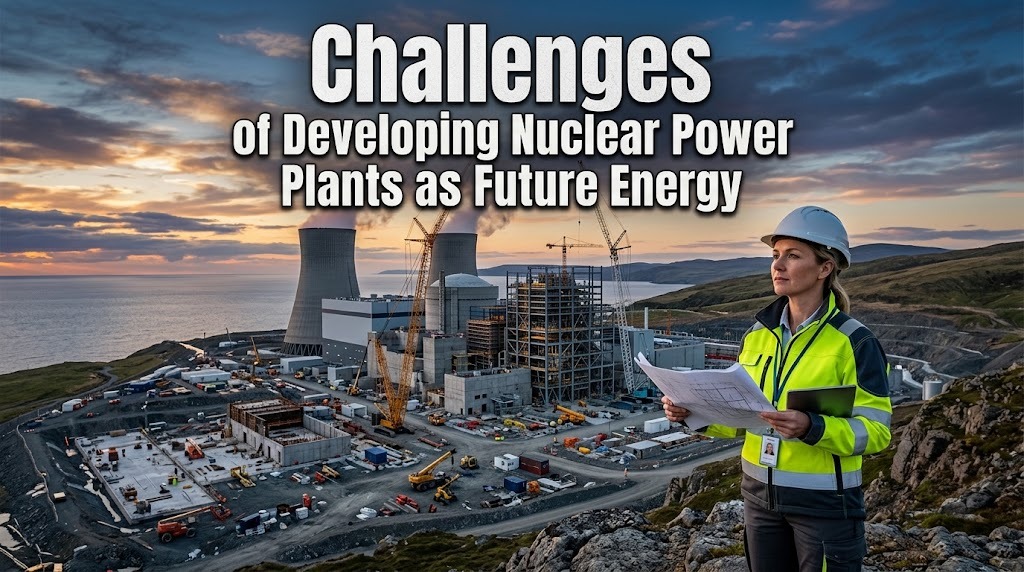
Nuclear power plants are often considered an important option for meeting future electricity demand while reducing dependence on fossil fuels. Nuclear energy can produce large amounts of electricity with low greenhouse gas emissions during operation. However, developing a nuclear power plant is a complex process that requires careful planning, significant investment, strong regulation, and highly trained personnel.
The potential benefits of nuclear energy must therefore be considered alongside its challenges. Countries need to prepare for technical, economic, environmental, safety, and social issues before building and operating a nuclear facility. Understanding these challenges is essential for developing nuclear power responsibly and sustainably.
HIGH INITIAL INVESTMENT
One of the biggest challenges of developing nuclear power plants is the high initial cost. Building a nuclear facility requires specialized equipment, advanced safety systems, trained workers, and supporting infrastructure. The project also involves extensive studies, licensing, construction, testing, and quality assurance. These requirements can make the initial investment much higher than that of some other power generation projects.
Financing is also complicated because nuclear projects can take many years before they begin generating revenue. Construction delays or changes in project requirements can increase costs further. For this reason, governments and investors need strong financial planning before starting a project. The economic feasibility of a nuclear plant should be assessed across its entire life cycle rather than based only on construction costs.
COMPLEX SAFETY REQUIREMENTS
Safety is one of the most important challenges in nuclear power development. Nuclear facilities require multiple layers of protection to prevent accidents and limit their consequences. Systems must be carefully designed, tested, maintained, and monitored throughout the plant's operating life. Operators also need extensive training to respond appropriately to abnormal situations.
Emergency preparedness is equally important. Governments and operators need clear procedures for monitoring radiation, protecting workers and communities, and responding to potential emergencies. Independent regulatory oversight is essential to ensure that safety requirements are followed. A strong safety culture must therefore be maintained from the design stage through operation and eventual decommissioning.
RADIOACTIVE WASTE MANAGEMENT
Radioactive waste is another major issue that must be addressed before nuclear power can be developed on a large scale. Different types of radioactive waste require different treatment, storage, and disposal methods. Used nuclear fuel requires particularly careful management because some materials remain radioactive for very long periods. A nuclear program therefore needs a credible strategy for handling radioactive materials throughout the plant's life cycle.
Waste management also requires suitable facilities, trained personnel, monitoring systems, and clear regulations. The public needs reliable information about how radioactive waste will be contained and managed. Long term planning is especially important because waste management does not end when a nuclear reactor stops operating. Responsible waste policies are essential for maintaining environmental protection and public confidence.
LIMITED AVAILABILITY OF SPECIALIZED WORKFORCE
Nuclear power plants require professionals with specialized knowledge in engineering, reactor operations, radiation protection, safety, security, maintenance, and regulation. Developing this workforce can take many years because nuclear facilities require high levels of competence and training. Countries that are new to nuclear power may need to strengthen their education and training systems before operating their first reactor.
Universities, research institutions, industry, and regulatory bodies can play an important role in developing nuclear expertise. International cooperation can also provide opportunities for training and knowledge transfer. Building a strong workforce is not simply about hiring enough employees. It requires creating a long term professional system that can maintain expertise throughout the lifetime of nuclear facilities.
CAREFUL SITE SELECTION
Choosing the right location for a nuclear power plant is a complex process. A potential site needs to be assessed for geological stability, seismic activity, flooding, water availability, environmental conditions, population distribution, and access to infrastructure. The site must also be suitable for connecting the plant to the electricity grid. These factors require detailed scientific and technical studies.
Natural hazards are particularly important in countries with significant geological activity. The design of a nuclear facility must account for relevant site-specific risks. Environmental impacts and emergency planning also need to be considered during site selection. A carefully chosen location can help reduce risks and improve the long term reliability of the facility.
PUBLIC ACCEPTANCE
Public opinion can strongly influence nuclear energy projects. Concerns about radiation, accidents, radioactive waste, and environmental impacts may create resistance to proposed facilities. These concerns should not simply be dismissed because public confidence is an important part of successful nuclear development. Communities need access to accurate and understandable information about both the benefits and risks.
Public engagement should begin early rather than after major decisions have already been made. Governments and project developers need to provide opportunities for communities to ask questions and express concerns. Transparent communication can help prevent misinformation and improve understanding. Trust is more likely to develop when safety decisions and regulatory processes are open and accountable.
LONG CONSTRUCTION PERIODS
Nuclear power plants generally require extensive preparation and construction. Before construction begins, projects may need to complete feasibility studies, site assessments, licensing, financing arrangements, environmental reviews, and detailed engineering. Construction itself can then take several years depending on the reactor design and project conditions. This makes nuclear power unsuitable as a quick solution to an immediate electricity shortage.
Long development periods also create financial and planning risks. Electricity demand, technology, regulations, and market conditions can change while a project is being developed. Governments therefore need long term energy strategies that can accommodate these changes. Strong project management and realistic schedules are essential to prevent unnecessary delays.
INFRASTRUCTURE AND SUPPLY CHAIN REQUIREMENTS
Nuclear power plants require specialized infrastructure and reliable supply chains. Equipment must meet strict quality and safety requirements, while transportation systems must be capable of supporting large and specialized components. The electricity grid also needs to be capable of integrating the plant safely and efficiently. Countries developing nuclear power may need to strengthen existing infrastructure before construction begins.
A reliable nuclear supply chain is also important for long term operation. Fuel services, spare parts, maintenance equipment, technical expertise, and specialized services need to remain available throughout the plant's lifetime. Developing domestic capabilities can reduce some supply risks, although international cooperation may remain necessary. Supply chain planning should therefore be included in the early stages of nuclear development.
REGULATORY AND INSTITUTIONAL READINESS
A strong legal and regulatory framework is essential for nuclear energy. Nuclear regulators need the authority, expertise, and independence required to evaluate facilities and enforce safety standards. Regulations should cover areas such as licensing, radiation protection, nuclear security, emergency preparedness, radioactive waste, and decommissioning. These requirements must be established before a nuclear facility begins operation.
Institutional readiness also involves cooperation between government agencies, operators, emergency services, research institutions, and local authorities. Each organization needs clearly defined responsibilities. Effective coordination becomes particularly important during emergencies or regulatory inspections. Strong institutions can help ensure that nuclear technology is managed responsibly over the long term.
MANAGING DECOMMISSIONING
Planning for a nuclear power plant does not end when the reactor starts operating. Every nuclear project needs a strategy for eventually shutting down and decommissioning the facility. Decommissioning can involve removing equipment, managing radioactive materials, dismantling structures, and restoring the site according to applicable requirements. These activities can require significant time and resources.
The costs and responsibilities associated with decommissioning should be considered from the beginning of the project. Setting aside appropriate financial resources can reduce future burdens. Clear regulations also help ensure that operators remain responsible for safely managing the end of the facility's operating life. Long term planning is therefore essential for responsible nuclear development.
BALANCING NUCLEAR POWER WITH OTHER ENERGY SOURCES
Nuclear power should not be viewed as the only answer to future energy needs. Renewable energy sources such as solar, wind, hydropower, and geothermal power can also contribute significantly to a low carbon electricity system. Energy storage, stronger transmission networks, and energy efficiency are equally important. The most effective energy mix will depend on each country's resources, infrastructure, electricity demand, and economic conditions.
For many countries, the challenge is finding the right balance between different technologies. Nuclear power can provide steady electricity, while renewable energy can take advantage of naturally available resources. Flexible generation and storage can help manage changes in supply and demand. A diversified approach can make the energy system more resilient than relying heavily on one technology.
CONCLUSION
Developing nuclear power plants as a future energy source presents significant challenges, including high investment costs, complex safety requirements, radioactive waste management, workforce development, site selection, public acceptance, long construction periods, and regulatory readiness. Each challenge requires careful preparation rather than a short term solution.
Despite these difficulties, nuclear power can provide reliable low carbon electricity and contribute to energy security when developed responsibly. Its success depends on strong institutions, qualified professionals, transparent communication, effective regulation, and long term financial and technical planning. Nuclear power should also be developed alongside renewable energy, storage, efficient grids, and other clean energy solutions. With a balanced and carefully planned approach, nuclear energy can potentially become an important part of the future energy system.
Tentang Penulis
Gusti Ayu Tita P
Penulis — Universitas STEKOM
Penulis aktif yang berfokus pada isu-isu akademik, teknologi pendidikan, dan pengembangan sumber daya manusia di lingkungan kampus.