
Challenges of Practicing Pancasila Values in the Age of Modern Technology
Gusti Ayu Tita P
4 Agustus 2026
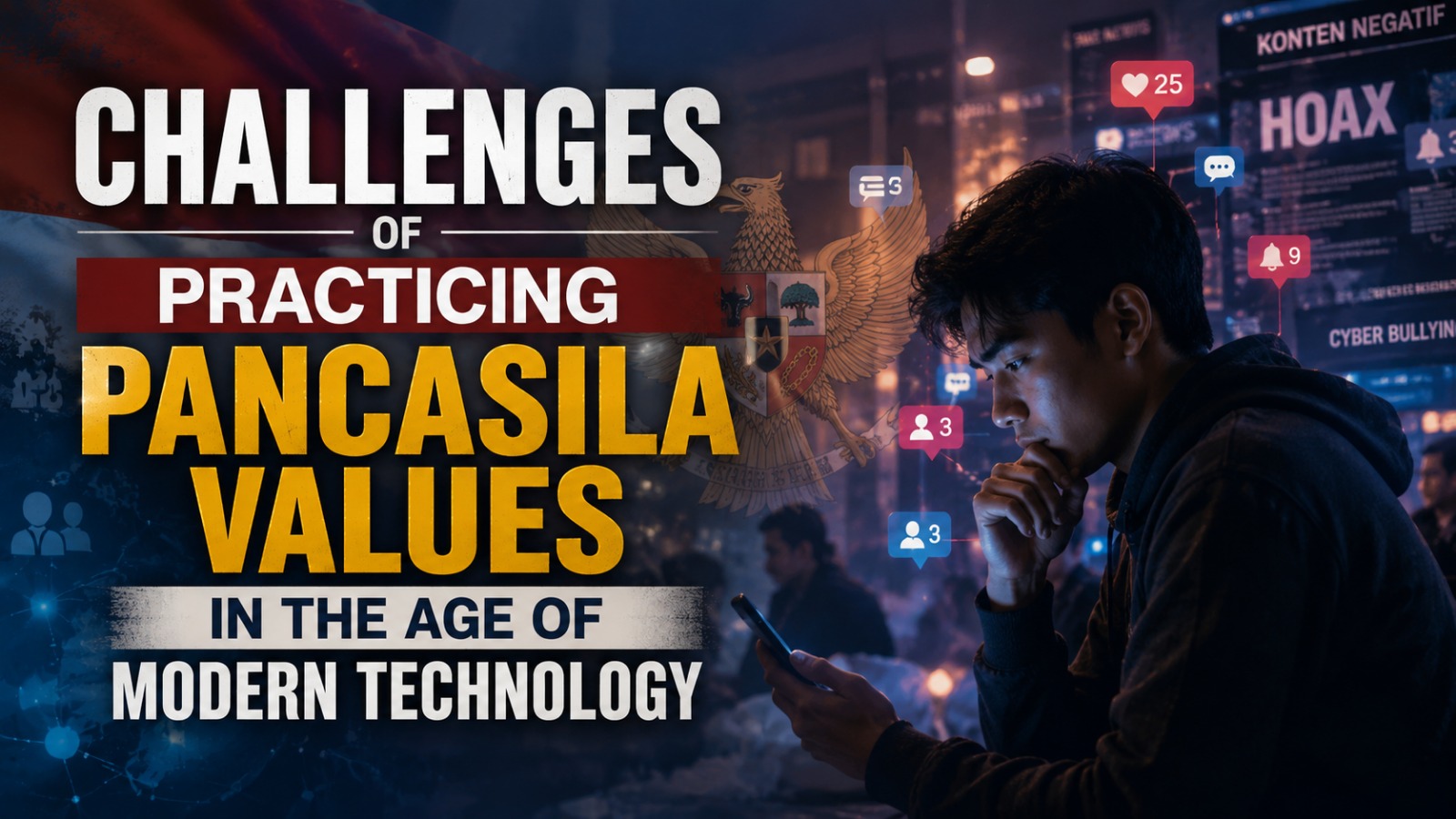
Pancasila is the foundation of Indonesia that contains important values for guiding the behavior of citizens. The principles of Pancasila teach about religious respect, humanity, unity, democracy, and social justice. These values have remained relevant throughout history because they help Indonesian society maintain harmony and national identity. However, the rapid development of modern technology creates new challenges in applying Pancasila values in everyday life.
The digital era and technological advancement have changed the way people communicate, work, learn, and interact. Technology provides many benefits, but it can also create problems such as misinformation, reduced social interaction, online conflicts, and declining ethical behavior. Therefore, understanding and practicing Pancasila values in modern society is essential to ensure that technological progress continues to support positive social development.
THE IMPACT OF MODERN TECHNOLOGY ON PANCASILA VALUES
Modern technology has brought significant changes to human life. The internet, smartphones, and social media allow people to access information and communicate more easily. However, these developments also influence how individuals think, behave, and interact with others. Without proper guidance, technology can affect the implementation of Pancasila values in society.
One major challenge is the decrease in direct social interaction. Many people spend more time communicating through digital platforms rather than building relationships in real life. This situation may reduce the spirit of cooperation and mutual assistance that represents important Indonesian values. Therefore, society needs to balance technological use with maintaining social relationships.
THE CHALLENGE OF MAINTAINING HUMANITY VALUES IN THE DIGITAL WORLD
The second principle of Pancasila emphasizes just and civilized humanity. In the digital era, applying this value can become challenging because online communication often lacks personal connection. People may easily write negative comments, spread hate speech, or criticize others without considering their feelings.
Practicing humanity values online requires awareness and responsibility. Digital users should communicate politely, respect different opinions, and avoid actions that harm others. By applying empathy and ethical behavior, technology can become a tool that strengthens human relationships instead of creating conflict.
THE SPREAD OF MISINFORMATION AND ITS EFFECT ON NATIONAL UNITY
One of the biggest challenges in modern technology is the rapid spread of fake news and misinformation. Social media allows information to spread quickly, but not all information is accurate or reliable. False information can create misunderstandings, social conflicts, and divisions among communities.
The third principle of Pancasila, The Unity of Indonesia, teaches the importance of maintaining harmony. To protect unity, citizens must develop digital awareness by checking information before sharing it. Responsible use of technology helps prevent conflicts and supports a peaceful digital environment.
CHALLENGES OF APPLYING TOLERANCE IN ONLINE COMMUNICATION
Indonesia is a diverse country with different cultures, religions, and opinions. In the digital era, these differences are often discussed through social media platforms. While online discussions can increase understanding, they can also create conflicts when people lack tolerance.
Applying Pancasila values in digital communication means respecting differences and accepting various perspectives. People should avoid discrimination, online harassment, and extreme attitudes that can damage social harmony. Tolerance remains an important value to maintain unity in both real and digital communities.
THE INFLUENCE OF GLOBAL CULTURE ON INDONESIAN IDENTITY
Technology makes global culture easier to access, especially among young generations. Foreign lifestyles, trends, and ideas can influence Indonesian society in positive and negative ways. While global interaction provides opportunities for learning, excessive adoption of foreign values may weaken appreciation for Indonesian culture.
Pancasila as Indonesia’s national identity helps society choose which influences are beneficial and which should be avoided. Young people need to remain open to global development while continuing to respect Indonesian traditions and values. This balance allows modernization without losing national character
THE CHALLENGE OF DEVELOPING DIGITAL RESPONSIBILITY
Using technology requires responsibility and ethical awareness. Many users still face challenges such as excessive internet use, privacy violations, and irresponsible content sharing. These behaviors can conflict with the values of responsibility and social justice in Pancasila.
Digital responsibility can be developed by using technology wisely and considering the impact of online actions. Citizens should protect personal information, respect others’ rights, and use digital platforms for positive purposes. Responsible technology use reflects the practice of Pancasila in modern life.
THE ROLE OF EDUCATION IN STRENGTHENING PANCASILA VALUES
Education plays an important role in helping society, especially young generations, understand how to apply Pancasila values in the digital era. Schools and universities can provide knowledge about ethics, citizenship, and responsible technology use. Learning Pancasila should focus not only on theory but also on practical implementation.
Through effective education, students can develop critical thinking and moral awareness when using technology. They can learn how to identify misinformation, respect diversity, and contribute positively to digital communities. Strong education helps ensure that technological development remains aligned with national values.
CONCLUSION
Practicing Pancasila values in the age of modern technology has become a significant challenge for Indonesian society. Technological development brings many benefits, but it also requires strong ethical awareness to prevent negative impacts. Pancasila remains an important guideline for maintaining humanity, unity, responsibility, and social harmony.
By applying Pancasila principles in both real and digital environments, Indonesian citizens can use technology wisely while preserving national identity. The combination of technological progress and strong moral values will help Indonesia build a modern society that remains connected to its cultural foundation.
Tentang Penulis
Gusti Ayu Tita P
Penulis — Universitas STEKOM
Penulis aktif yang berfokus pada isu-isu akademik, teknologi pendidikan, dan pengembangan sumber daya manusia di lingkungan kampus.