Choosing the Best Seat on Economy Trains
Gusti Ayu Tita P
24 Agustus 2026
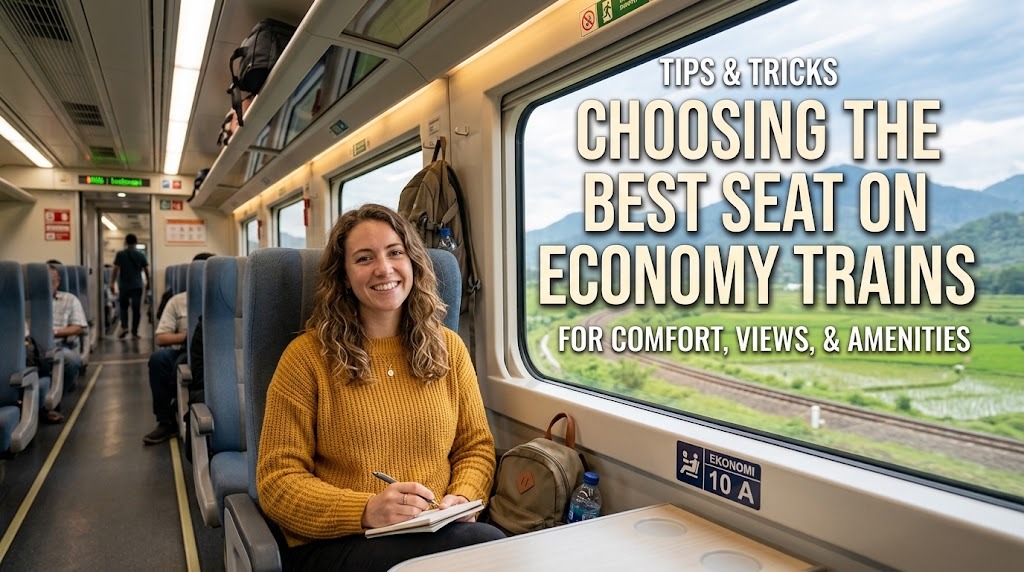
Choosing a seat can make a significant difference during a train journey, especially when traveling for several hours. Economy trains are designed to provide practical transportation at an accessible price, but passengers can still improve their comfort through smart seat selection. Window seats, aisle seats, and different carriage positions each offer their own advantages. The best choice depends on the traveler's needs, journey duration, and personal preferences. Understanding these factors can make economy train travel more comfortable and enjoyable.
CONSIDER THE LENGTH OF THE JOURNEY
The duration of the trip should be one of the first factors considered when choosing a seat. A seat that feels comfortable for a short journey may not provide the same experience after several hours. Longer trips require more attention to legroom, movement, access to facilities, and personal comfort. Journey duration can therefore influence the most suitable seating position.
For short trips, passengers may prioritize convenience or a good view. For longer journeys, they may prefer a position that allows easier movement and access to facilities. Think about how you normally spend your travel time before selecting a seat. Matching the seat to the trip length can help reduce discomfort.
CHOOSE A WINDOW SEAT FOR THE VIEW
Window seats are popular among travelers who enjoy scenery during the journey. They provide a direct view of cities, villages, farmland, rivers, and other landscapes along the route. Passengers can also use the window as a relaxing visual break from phones or other activities. Window seats are especially appealing for people who enjoy scenic train travel.
A window position can also provide a greater sense of personal space because one side of the seat borders the carriage wall. However, passengers who need to stand frequently may find it less convenient. Consider your priorities before choosing this option. If scenery and quiet observation matter most, a window seat may be an excellent choice.
CONSIDER AN AISLE SEAT FOR EASY ACCESS
An aisle seat can be more convenient for passengers who frequently need to stand or move around. It provides easier access to the aisle without requiring another passenger to move. This can be useful during longer journeys when travelers want to stretch or visit onboard facilities. Aisle seats can therefore provide practical flexibility.
Passengers who prefer easy movement may find this position more comfortable than sitting by the window. However, aisle seats may experience more activity from people walking through the carriage. Travelers should consider whether convenience or a quieter position is more important. The ideal train seat depends on individual habits.
THINK ABOUT YOUR TRAVEL COMPANIONS
Traveling with family or friends can influence seat selection. Sitting together allows companions to communicate more easily and share the journey. This can be particularly useful for parents traveling with children or groups traveling together. Adjacent seats can make a shared journey more convenient.
When possible, check the seating arrangement before booking. Avoid choosing seats separately if staying together is important. If your preferred seats are unavailable, consider the alternatives offered by the train operator. Planning early can improve the chance of finding suitable seats together.
PAY ATTENTION TO THE CARRIAGE LOCATION
The position of your seat within the carriage can affect the travel experience. Seats close to doors or busy areas may experience more passenger movement. Positions farther from high-traffic areas may feel calmer, although the exact experience varies by train design. Carriage location should therefore be considered alongside personal preferences.
Access to facilities can also matter during longer journeys. Some passengers may prefer to sit relatively close to toilets or other facilities, while others may prioritize a quieter area. Check the available carriage layout before booking whenever possible. Understanding the train layout helps passengers make more informed decisions.
CONSIDER YOUR PERSONAL COMFORT
Every traveler has different comfort requirements. Some people prefer to look outside, while others value easy movement or a quieter position. Passengers should also consider how they usually behave during long trips. Personal comfort should remain one of the main priorities when selecting a seat.
Think about whether you prefer reading, sleeping, working, talking, or enjoying the scenery. Your preferred activity can influence which seat works best. There is no single seat that is perfect for everyone. Choosing according to your travel habits can lead to a better experience.
CHECK THE SEATING CONFIGURATION
Economy train seating can vary depending on the train model and service. Some trains may have different seat arrangements, while others may use a consistent configuration throughout the carriage. Understanding the available layout can help passengers avoid choosing a seat that does not match their expectations. Seating configuration is especially important for longer journeys.
If a seat map is available during booking, review it carefully. Look for information about window positions, aisle access, and nearby facilities. The actual arrangement may differ between services, so do not assume every economy train has the same design. Checking details in advance supports better seat selection.
CONSIDER NOISE AND PASSENGER MOVEMENT
Noise can influence how comfortable a seat feels. Areas near doors or other busy sections may experience more movement and conversation. Travelers who want to rest or work may prefer positions that are less exposed to frequent activity. A quieter seat can be valuable during long journeys.
However, noise levels cannot always be predicted because passenger behavior varies. Bringing headphones or earplugs can provide an additional way to manage unwanted sounds. Choosing a suitable seat and preparing personal comfort items can work together. This approach can improve the overall train journey.
BOOK EARLY WHEN POSSIBLE
Popular seats can become unavailable quickly, especially during busy travel periods. Booking earlier can provide more choices and increase the chance of getting a preferred position. Travelers should check official booking information for the selected train and date. Early booking can make seat selection easier.
However, availability depends on the operator, route, travel date, and booking system. A preferred seat may not always be available even when booking early. If this happens, focus on the features that matter most to you rather than trying to find a perfect option. Having flexible preferences can reduce travel stress.
KEEP YOUR NEEDS AND OTHERS IN MIND
Selecting a comfortable seat does not mean ignoring other passengers. Keep personal belongings within the appropriate storage areas and avoid occupying seats or shared spaces unnecessarily. If you need to adjust your position, be considerate of the person sitting nearby. Respectful seating habits contribute to a better environment.
Passengers should also follow the train operator's seating rules and staff instructions. Keeping the area clean and using headphones for entertainment can improve the atmosphere. Comfort is easier to achieve when everyone considers the people around them. Good train etiquette benefits the entire carriage.
CONCLUSION
Choosing the best seat on economy trains depends on several factors, including journey duration, personal comfort, scenery preferences, accessibility, carriage location, and travel companions. Window seats can be ideal for enjoying views, while aisle seats may be better for passengers who value easy movement. Checking the seating layout and booking early can also improve your chances of finding a suitable position.
Ultimately, there is no universally perfect economy train seat. The best option is the one that matches your travel habits and priorities. By understanding the available seating choices and considering your needs before booking, you can make an affordable train journey more comfortable, practical, and enjoyable.
Tentang Penulis
Gusti Ayu Tita P
Penulis — Universitas STEKOM
Penulis aktif yang berfokus pada isu-isu akademik, teknologi pendidikan, dan pengembangan sumber daya manusia di lingkungan kampus.