Collective Voices and Change Through Mass Action
Gusti Ayu Tita P
1 September 2026
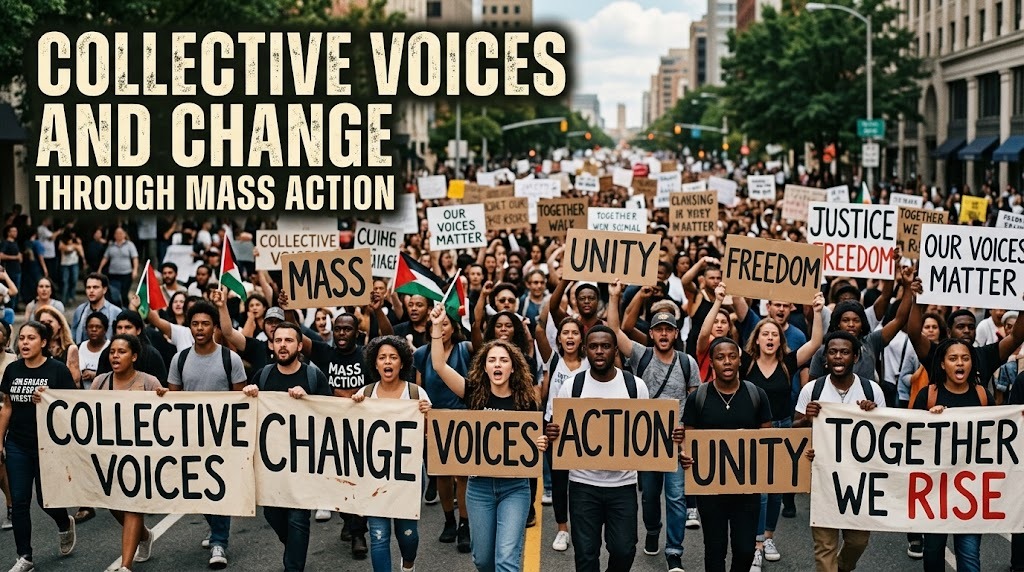
Collective action is one of the ways people communicate concerns and demands in public life. When individuals with similar interests come together, their separate opinions can develop into a stronger collective voice. Mass action can occur through peaceful demonstrations, community movements, campaigns, petitions, or other forms of civic participation. These activities can bring greater attention to issues that communities consider important. In a democratic society, collective voices can become part of the process of discussing and pursuing social change.
COLLECTIVE VOICES IN SOCIETY
A collective voice develops when people recognize that they share a particular concern or goal. Individuals may have different backgrounds, experiences, and motivations, but they can still cooperate around a common issue. This cooperation can make their message more visible to the wider public. Collective participation also gives people opportunities to communicate concerns that may be difficult to express individually. As a result, social issues can receive greater attention.
Collective voices do not necessarily represent the opinions of an entire population. Society contains different perspectives, and people can respond differently to the same issue. Some may support a movement, while others may disagree or remain neutral. Respect for different opinions is therefore important when collective action becomes part of public debate. Healthy disagreement can exist without preventing people from expressing their concerns.
WHY PEOPLE JOIN MASS ACTION
People participate in mass action for many reasons. They may be affected directly by a policy, concerned about economic conditions, or interested in broader social and environmental issues. Some participants may also join because they believe existing channels have not produced sufficient responses. Shared concerns can encourage individuals to become part of a larger movement. The desire to influence public discussion can further strengthen participation.
Personal experiences can also motivate people to become involved. When individuals discover that others have experienced similar problems, they may feel a stronger sense of connection. Community groups, organizations, and social networks can help bring these individuals together. Social solidarity can then turn individual concerns into collective demands. This process often develops gradually as awareness and participation increase.
MASS ACTION AND PUBLIC AWARENESS
One major effect of mass action is its ability to increase public awareness. A gathering involving many people can attract attention from the media and wider communities. Issues that were previously discussed only among specific groups may become topics of national or regional conversation. This visibility can encourage more people to learn about the background of an issue. Public awareness can therefore become an important first step toward broader discussion.
However, increased attention does not always lead to agreement. People may interpret the same demonstration differently depending on their experiences and beliefs. Some may focus on the demands, while others may pay greater attention to the methods used. Public perception can therefore vary significantly. Accurate information and balanced discussion can help citizens form more informed opinions.
THE ROLE OF SOCIAL MEDIA
Social media has made it easier for collective voices to reach large audiences. People can share information, discuss concerns, publish statements, and follow developments without being physically present at an event. A local movement can therefore gain attention from communities in other regions. Digital communication can connect individuals who share similar concerns and support wider participation.
However, social media also creates challenges for collective action. False information, misleading images, and incomplete claims can spread quickly during periods of social tension. Users should check sources and context before sharing information. Digital literacy is essential for maintaining informed public discussion. Responsible use of social media can strengthen collective action without increasing unnecessary conflict.
MASS ACTION AND INSTITUTIONAL RESPONSE
Large-scale public action can encourage institutions to pay greater attention to specific concerns. Policymakers may respond through public statements, consultations, policy reviews, or negotiations. The response depends on the issue, political environment, and strength of public demands. Institutional response is an important part of determining whether collective action produces meaningful results.
A protest or campaign does not automatically guarantee that every demand will be accepted. Social change often involves negotiation between different interests and requires time. Citizens can continue monitoring policies and communicating their concerns through formal channels. Continued civic engagement can help maintain public attention after a mass action has ended. This makes collective participation more than a temporary event.
ECONOMIC AND SOCIAL EFFECTS
Mass action can influence communities in both positive and challenging ways. Demonstrations may strengthen relationships among participants and bring attention to important social problems. At the same time, large gatherings can affect transportation, businesses, public facilities, and daily activities. Community impact depends on factors such as the location, duration, size, and organization of an event.
Responsible planning can reduce unnecessary disruption. Organizers and participants can communicate schedules clearly and consider the needs of people who are not involved in the action. Authorities can also focus on public safety while respecting lawful civic expression. Social responsibility helps create a balance between collective action and the rights of the wider community. This balance is important for maintaining public trust.
FROM PUBLIC VOICES TO SOCIAL CHANGE
Collective voices can contribute to social change by bringing neglected issues into public discussion. When an issue receives sustained attention, communities and institutions may begin examining possible solutions. However, social change rarely happens because of one demonstration or campaign alone. It usually develops through continued advocacy, public dialogue, institutional decisions, and changes in social attitudes.
Mass action can also influence how people understand certain social problems. An issue that was once considered unimportant may gradually become recognized as a serious concern. This change in awareness can influence future discussions and policy priorities. Changing public attitudes can therefore be an important outcome even when immediate policy changes do not occur. Over time, collective voices may help shape broader social expectations.
THE IMPORTANCE OF PEACEFUL PARTICIPATION
The methods used during collective action can influence how society responds to its message. Peaceful demonstrations allow people to communicate strong opinions while reducing risks to participants and the wider community. Clear demands and respectful communication can help keep attention focused on the issue. Peaceful participation also supports a healthier democratic environment.
Responsibility is shared by everyone involved. Participants should respect public facilities and other citizens, while authorities should manage safety without unnecessarily restricting lawful expression. Media organizations and social media users also have a role in communicating accurate information. Constructive communication can prevent disagreements from becoming unnecessary social conflict. This creates better conditions for public dialogue and problem solving.
THE IMPORTANCE OF CONTINUED CIVIC ENGAGEMENT
Mass action may attract significant attention, but long-term change requires continued participation. Citizens can remain involved by monitoring government decisions, joining community discussions, supporting public education, and using formal channels to communicate concerns. These activities help maintain pressure and attention when necessary. Civic engagement can therefore extend the influence of a movement beyond the original event.
Continued engagement also provides opportunities to evaluate whether proposed solutions are effective. Citizens can provide feedback when policies change or new measures are introduced. Institutions can use this feedback to understand how decisions affect communities. Ongoing dialogue creates opportunities for different sides to adjust their positions based on evidence and experience. This process can make social change more sustainable.
CONCLUSION
Collective voices can become powerful when people unite around shared concerns and participate through responsible mass action. Demonstrations, campaigns, and other forms of collective participation can increase public awareness, strengthen social solidarity, influence public discussion, and encourage institutional responses. Their impact, however, depends on more than the number of participants. Clear demands, accurate information, peaceful methods, and continued engagement are also important.
Ultimately, meaningful change is usually the result of a longer process. Collective action can open the door to dialogue, but lasting improvements require cooperation, public participation, institutional responsibility, and careful evaluation. When different voices are given space to be heard and disagreements are handled respectfully, mass action can contribute positively to democratic life. In this way, collective voices can become an important force for constructive social change.
Tentang Penulis
Gusti Ayu Tita P
Penulis — Universitas STEKOM
Penulis aktif yang berfokus pada isu-isu akademik, teknologi pendidikan, dan pengembangan sumber daya manusia di lingkungan kampus.