Common Mistakes Campus Volunteers Make And How To Avoid Them
Gusti Ayu Tita P
15 Oktober 2026
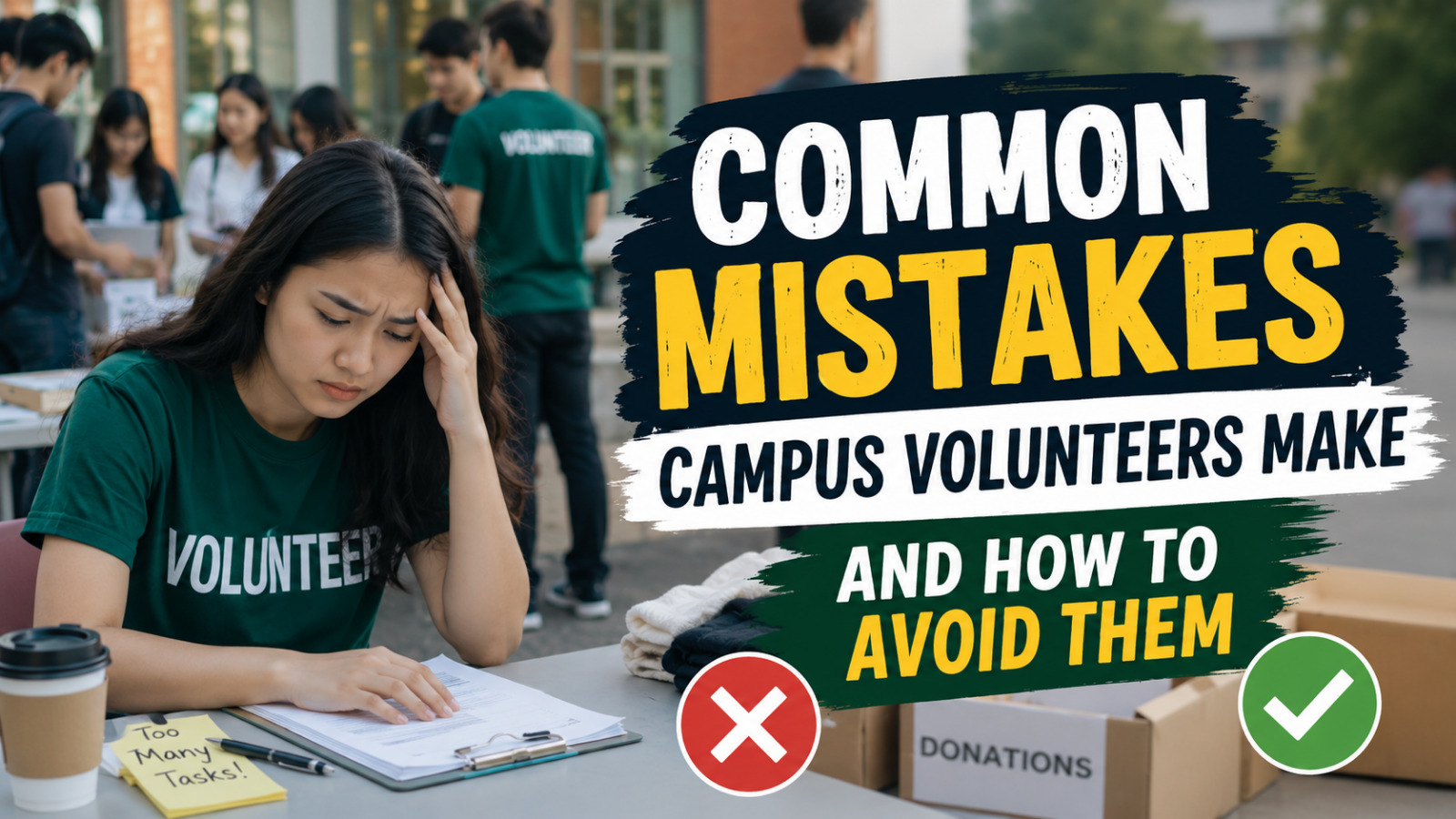
Joining campus volunteer activities is an excellent way for students to build leadership skills, improve communication, expand professional networks, and gain valuable real-world experience. However, many students unintentionally make mistakes that reduce the positive impact of their volunteer work. These mistakes can affect both their academic performance and their ability to contribute effectively to their organizations. Fortunately, most of these problems can be prevented with proper planning and self-awareness.
Understanding the most common mistakes made by campus volunteers helps students become more responsible, organized, and productive. By developing good habits early, volunteers can enjoy meaningful experiences while maintaining strong academic performance throughout their college years.
TAKING ON TOO MANY RESPONSIBILITIES
One of the most common mistakes campus volunteers make is accepting too many responsibilities at the same time. Many students are eager to prove themselves and rarely decline new assignments. While enthusiasm is a positive quality, taking on excessive work often leads to stress, missed deadlines, and lower-quality results. It can also reduce the amount of time available for studying and personal well-being.
To avoid this problem, students should understand their personal limits and prioritize tasks wisely. Learning to say no respectfully is an important leadership skill. Creating a realistic schedule helps volunteers manage commitments without becoming overwhelmed. Balanced responsibility allows students to perform well in both volunteer work and academic life.
POOR TIME MANAGEMENT
Time Management is one of the most important skills for every campus volunteer. Without proper planning, students may spend too much time attending meetings and organizing events while neglecting coursework and assignments. As deadlines accumulate, stress levels increase, making it difficult to stay productive. Poor scheduling can eventually affect grades and overall academic performance.
Students should use planners, digital calendars, or productivity apps to organize their daily activities. Setting clear priorities helps them allocate enough time for studying, volunteering, and resting. Breaking large tasks into smaller goals also improves efficiency. Effective time management creates a healthy balance between campus involvement and educational success.
LACK OF COMMUNICATION WITH THE TEAM
Another frequent mistake is failing to communicate effectively with fellow volunteers and team leaders. Some students assume everyone already understands their responsibilities, resulting in misunderstandings and incomplete tasks. Poor communication can also create unnecessary conflicts and reduce team productivity. Even highly motivated volunteers may struggle if communication is inconsistent.
Maintaining regular communication strengthens teamwork and improves project coordination. Volunteers should provide updates, ask questions when needed, and share any challenges they encounter. Being open to feedback also encourages continuous improvement. Strong communication skills help organizations achieve better outcomes while creating a more supportive working environment.
NEGLECTING ACADEMIC RESPONSIBILITIES
Many students become deeply involved in Volunteer Activities and unintentionally overlook their academic obligations. Missing lectures, submitting assignments late, or studying only before exams can negatively affect their grades. While extracurricular involvement is valuable, education should remain the primary priority during college. Ignoring academic responsibilities can create long-term consequences.
Students should carefully plan their volunteer schedules around important academic deadlines. During examination periods, reducing organizational commitments is often the best decision. Maintaining open communication with volunteer coordinators also helps prevent scheduling conflicts. Academic balance ensures students succeed both inside and outside the classroom.
IGNORING PHYSICAL AND MENTAL HEALTH
Busy volunteer schedules sometimes cause students to sacrifice sleep, healthy meals, and relaxation. Over time, this lifestyle may lead to exhaustion, decreased concentration, and even burnout. Physical fatigue often reduces motivation and overall performance in both volunteer projects and academic work. Maintaining health is essential for long-term success.
Students should prioritize regular sleep, nutritious meals, exercise, and sufficient breaks throughout the week. Practicing stress management techniques such as meditation or light physical activities can also improve mental well-being. Asking for help when feeling overwhelmed is a sign of responsibility rather than weakness. Physical health and mental well-being are the foundation of sustainable volunteer performance.
FAILING TO EVALUATE PERSONAL PERFORMANCE
Some volunteers complete projects without reflecting on what they have learned or what could be improved. As a result, the same mistakes continue to occur in future activities. Self-evaluation is an important step in personal and professional development. It allows students to recognize strengths while identifying areas for improvement.
After every event or project, volunteers should review their achievements, challenges, and lessons learned. Seeking constructive feedback from teammates and supervisors provides valuable perspectives. Continuous improvement develops stronger leadership, communication, and problem-solving skills. Self-evaluation helps students become more effective and confident campus volunteers.
CONCLUSION
Becoming a Campus Volunteer offers valuable opportunities for personal growth, leadership development, and professional networking. However, mistakes such as taking on too many responsibilities, poor time management, lack of communication, neglecting academics, ignoring health, and failing to evaluate performance can reduce these benefits. By practicing good planning, maintaining healthy habits, communicating effectively, and continuously improving, students can maximize their volunteer experience while achieving academic excellence. The key to long-term success is maintaining a healthy balance between College Responsibilities and meaningful volunteer involvement.
Tentang Penulis
Gusti Ayu Tita P
Penulis — Universitas STEKOM
Penulis aktif yang berfokus pada isu-isu akademik, teknologi pendidikan, dan pengembangan sumber daya manusia di lingkungan kampus.