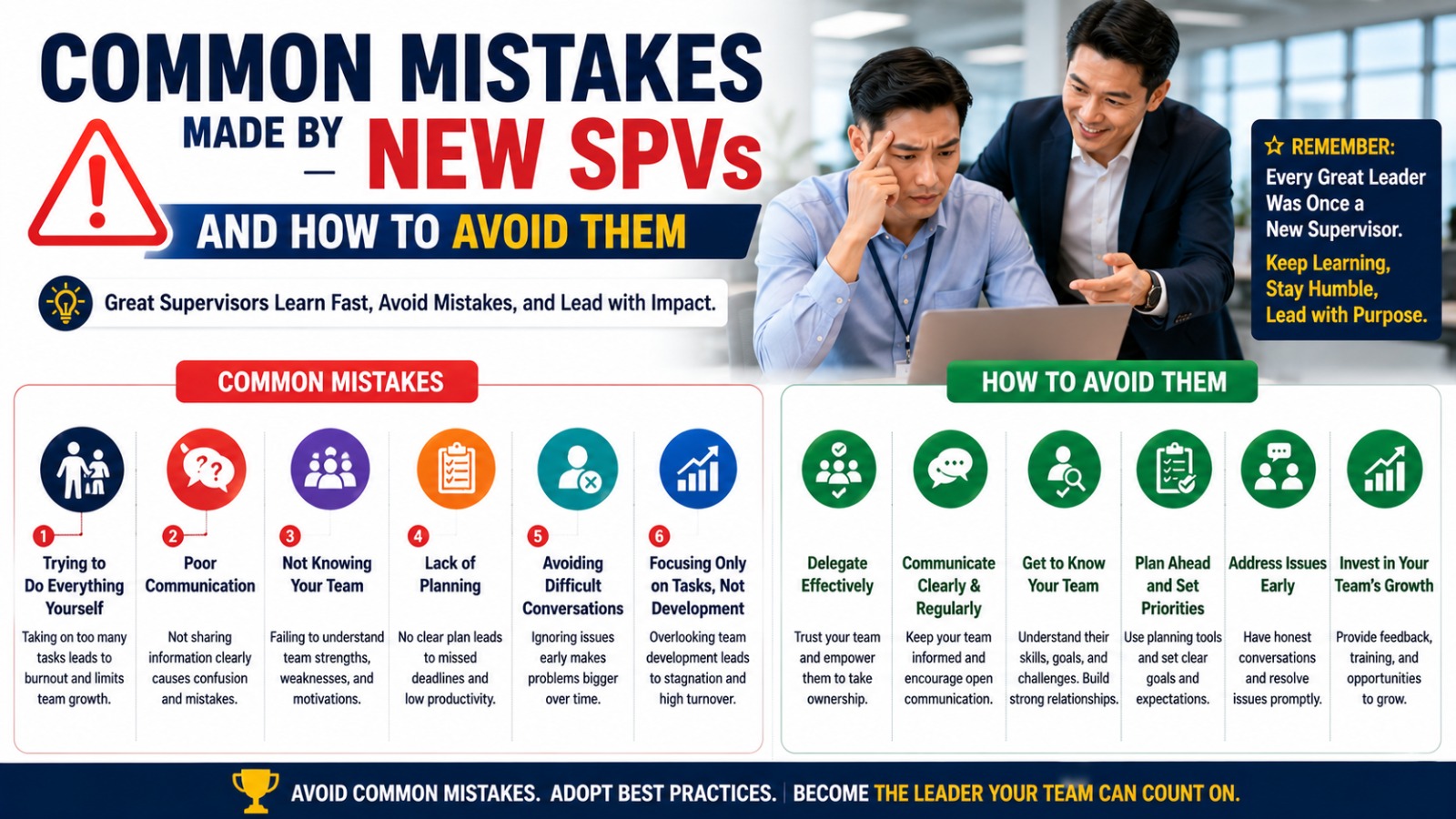
Becoming a supervisor, often called an SPV, is an important career milestone. However, many new supervisors struggle to adapt to their leadership responsibilities. Transitioning from being a regular employee to managing a team requires different skills, including communication, leadership, decision-making, and problem-solving abilities.
New SPVs often make mistakes that can affect employee morale, productivity, and workplace relationships. Understanding these common mistakes and learning how to avoid them can help supervisors become more effective leaders and build stronger teams.
FAILING TO COMMUNICATE CLEARLY
One of the most common mistakes made by new supervisors is poor communication. Some SPVs provide unclear instructions, avoid feedback discussions, or fail to listen to employee concerns properly.
Miscommunication can create confusion, reduce productivity, and damage teamwork.
HOW TO AVOID IT
New supervisors should focus on developing strong communication skills by:
- Giving clear instructions
- Listening actively to employees
- Providing constructive feedback
- Encouraging open discussions
- Confirming employee understanding
Good communication helps build trust and improves workplace efficiency.
TRYING TO CONTROL EVERYTHING
Many new SPVs struggle with delegation because they feel responsible for every task. As a result, they may try to control every detail of the work process.
Micromanagement can reduce employee confidence, increase stress, and lower team motivation.
HOW TO AVOID IT
Supervisors should learn to trust their team members and delegate tasks appropriately. Effective delegation allows employees to develop their skills while helping supervisors focus on larger responsibilities.
Managers should provide guidance and support without excessive control.
AVOIDING DIFFICULT CONVERSATIONS
Some new supervisors hesitate to address employee problems, poor performance, or workplace conflicts because they want to avoid tension.
Ignoring issues often causes problems to become worse over time.
HOW TO AVOID IT
SPVs should handle problems professionally and quickly. Difficult conversations should be conducted privately, respectfully, and with a focus on solutions rather than blame.
Timely communication helps maintain discipline and healthy workplace relationships.
SHOWING FAVORITISM
Treating certain employees differently can damage workplace morale and create conflict within the team. Favoritism may involve giving unfair advantages, unequal workloads, or special treatment to specific employees.
HOW TO AVOID IT
Supervisors should treat all employees fairly and consistently. Decisions should be based on performance, company policies, and professional standards rather than personal preferences.
Fair leadership builds employee trust and respect.
LACK OF CONFIDENCE IN DECISION-MAKING
New supervisors may feel uncertain when making important decisions. Fear of making mistakes can lead to delayed actions or inconsistent leadership.
HOW TO AVOID IT
SPVs should improve their decision-making skills by gathering information carefully, analyzing situations objectively, and learning from experience.
Seeking advice from experienced managers can also help build confidence.
NEGLECTING EMPLOYEE MOTIVATION
Some new supervisors focus only on tasks and targets without paying attention to employee morale and motivation. Employees who feel unappreciated may lose enthusiasm and productivity.
HOW TO AVOID IT
Supervisors should recognize employee achievements, provide encouragement, and create positive work environments. Simple appreciation can significantly improve employee engagement.
Motivated employees are generally more productive and cooperative.
POOR TIME MANAGEMENT
Supervisors often manage multiple responsibilities at once, including reports, meetings, employee supervision, and operational tasks. Without good time management, important responsibilities may be neglected.
HOW TO AVOID IT
New SPVs should prioritize tasks, create schedules, and avoid unnecessary delays. Effective planning helps supervisors manage workloads more efficiently and reduce stress.
Delegating tasks appropriately can also improve time management.
RESISTING FEEDBACK AND LEARNING
Some supervisors believe they must appear perfect and avoid asking for help. This mindset can limit personal growth and leadership improvement.
HOW TO AVOID IT
Successful SPVs remain open to feedback and continuous learning. Participating in leadership training, seeking mentorship, and listening to employee suggestions can improve management skills significantly.
Continuous improvement helps supervisors adapt to workplace challenges more effectively.
FAILING TO LEAD BY EXAMPLE
Employees often observe supervisor behavior closely. New SPVs who ignore company rules, arrive late, or behave unprofessionally may lose employee respect.
HOW TO AVOID IT
Supervisors should demonstrate professionalism, discipline, accountability, and positive workplace behavior consistently.
Leading by example encourages employees to follow the same standards.
IGNORING TEAM RELATIONSHIPS
Strong teamwork is essential for workplace success. Some new supervisors focus too heavily on tasks while neglecting team relationships and collaboration.
HOW TO AVOID IT
SPVs should encourage teamwork, open communication, and mutual respect among employees. Team-building activities and supportive leadership can strengthen workplace relationships.
Positive team environments improve morale and productivity.
CONCLUSION
New SPVs often face challenges as they adjust to leadership responsibilities. Common mistakes such as poor communication, micromanagement, favoritism, weak decision-making, and neglecting employee motivation can affect team performance and workplace culture.
By improving communication, leadership, time management, and teamwork skills, supervisors can avoid these mistakes and become more effective leaders. Strong supervision not only improves employee productivity but also contributes to long-term organizational success.
Tentang Penulis
Gusti Ayu Tita P
Penulis — Universitas STEKOM
Penulis aktif yang berfokus pada isu-isu akademik, teknologi pendidikan, dan pengembangan sumber daya manusia di lingkungan kampus.