The Importance of Digital Literacy for Teen Social Media Users
Gusti Ayu Tita P
17 Juli 2026
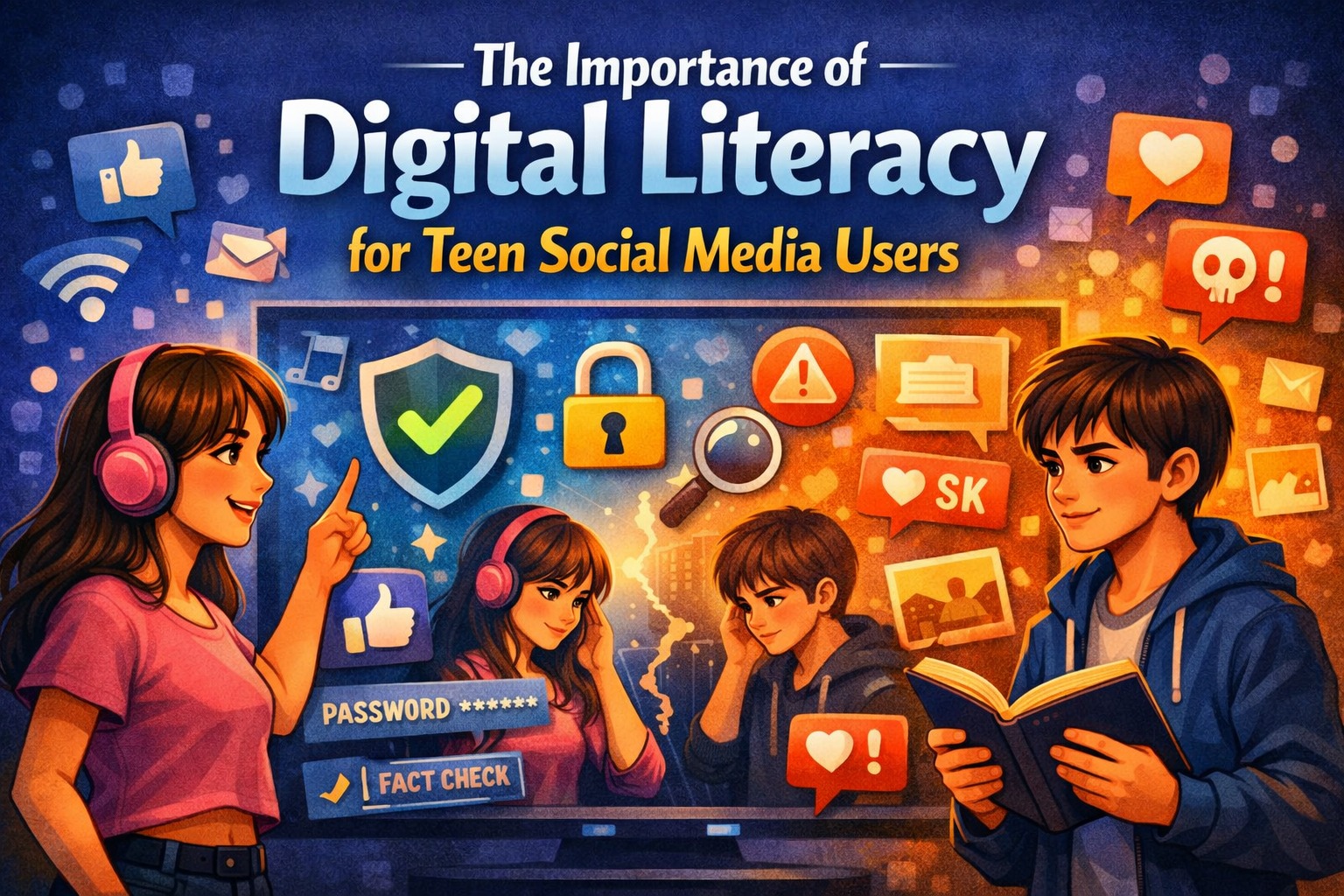
Digital literacy has become an essential skill for teenagers who use social media every day. Platforms such as TikTok, Instagram, YouTube, and Snapchat offer entertainment, communication, and learning opportunities. However, they also expose users to misinformation, privacy risks, scams, and unhealthy online behavior. This is why the importance of digital literacy for teen social media users continues to grow in today’s connected world.
WHAT IS DIGITAL LITERACY
Digital literacy is the ability to use technology responsibly, safely, and effectively. It includes understanding how to find reliable information, communicate respectfully online, protect personal data, and think critically about digital content.
For teenagers, digital literacy is more than knowing how to use apps. It means understanding the impact of their online actions and making smart choices in digital spaces.
WHY TEENAGERS NEED DIGITAL LITERACY?
Teenagers spend a large amount of time online, making them vulnerable to many digital challenges. Without proper guidance, they may believe false information, overshare private details, or engage in harmful online behavior.
Digital literacy helps teenagers:
- Recognize fake news and misleading content
- Protect privacy and personal information
- Avoid scams and suspicious links
- Communicate respectfully with others
- Build a positive online reputation
- Manage screen time responsibly
THE RISK OF MISINFORMATION
Social media spreads information quickly, but not all of it is accurate. Teenagers may see edited videos, false health claims, or fake news presented as facts.
With digital literacy skills, they can check sources, compare information, and question sensational posts before sharing them.
ONLINE SAFETY AND PRIVACY
Many teenagers do not realize how valuable their personal data can be. Posting location details, school names, phone numbers, or private photos may create security risks.
1.PROTECTING ACCOUNTS
Using strong passwords and enabling two-factor authentication can improve account safety.
2.MANAGING PRIVACY SETTINGS
Teenagers should learn how to control who can view their profiles, posts, and messages.
3.THINKING BEFORE SHARING
Once content is posted online, it can be difficult to remove completely. Careful thinking prevents future problems.
BUILDING POSITIVE ONLINE BEHAVIOR
Digital literacy also includes ethics and respectful communication. Teenagers should understand that words online can affect others deeply.
Practicing kindness, avoiding cyberbullying, and respecting different opinions help create healthier online communities.
THE ROLE OF PARENTS AND SCHOOLS
Parents and schools play a major role in teaching digital literacy. Teenagers benefit when adults discuss online risks, guide responsible behavior, and encourage open conversations about internet experiences.
Schools can include digital education programs, while parents can model healthy technology habits at home.
HOW TEENAGERS CAN IMPROVE DIGITAL LITERACY?
Teenagers can strengthen their digital skills by:
- Following trusted information sources
- Learning fact-checking habits
- Updating privacy settings regularly
- Reporting harmful content
- Balancing online and offline life
- Asking questions when unsure
CONCLUSION
The importance of digital literacy for teen social media users cannot be ignored. In a world filled with endless content and constant connection, teenagers need the skills to stay safe, think critically, and behave responsibly online. By developing digital literacy early, young users can enjoy the benefits of social media while avoiding many of its risks.
Tentang Penulis
Gusti Ayu Tita P
Penulis — Universitas STEKOM
Penulis aktif yang berfokus pada isu-isu akademik, teknologi pendidikan, dan pengembangan sumber daya manusia di lingkungan kampus.