
Common Mistakes When Choosing a Research Method
Gusti Ayu Tita P
8 Oktober 2026
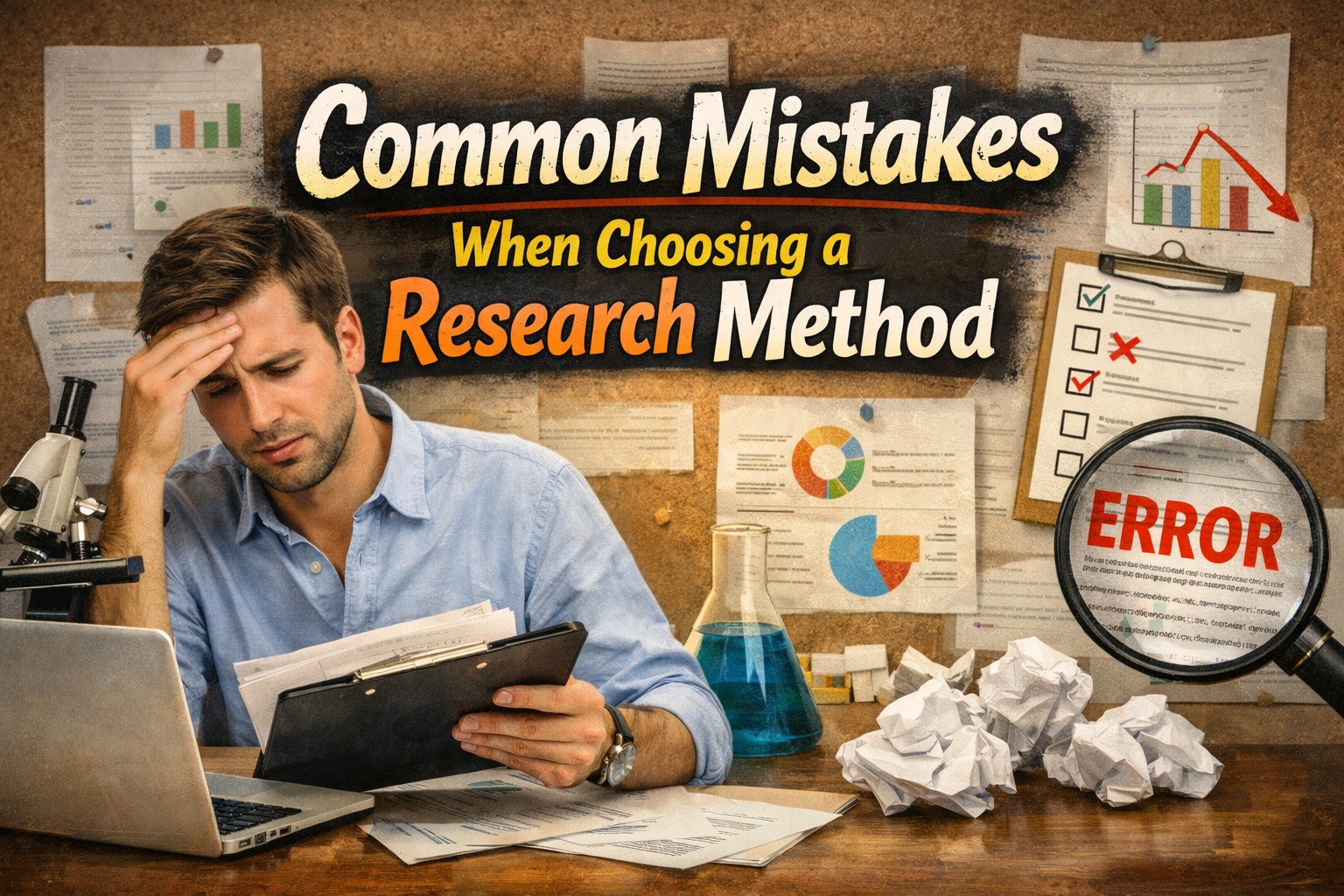
Choosing the right research method is one of the most important steps in any academic or professional research project. The selected method influences how data is collected, analyzed, and interpreted. Unfortunately, many students and beginner researchers make avoidable mistakes that reduce the quality and credibility of their work.
Understanding these common mistakes can help researchers design stronger studies, produce more reliable findings, and achieve research objectives more effectively. This article explains the most frequent errors and provides practical tips to avoid them.
NOT UNDERSTANDING THE RESEARCH OBJECTIVE
One of the most common mistakes is choosing a research method without clearly defining the research objective. Every study begins with a specific question or problem that needs to be answered. If the objective is unclear, the selected method may fail to collect the information needed to solve the research problem. This often results in irrelevant data and weak conclusions.
For example, researchers who want to understand people's experiences should generally consider qualitative methods, while those aiming to measure trends or relationships may benefit more from quantitative methods. Clearly identifying the purpose of the study before selecting a method helps ensure that every stage of the research remains focused and effective.
SELECTING A METHOD BASED ON POPULARITY
Many researchers choose a method simply because it is widely used or recommended by others. While certain methods are popular, they are not automatically suitable for every research topic. Every research problem has unique characteristics that require careful consideration before deciding on the methodology.
Instead of following trends, researchers should evaluate whether the chosen method can answer their research questions accurately. A method should be selected because it matches the research goals, available resources, and expected outcomes—not because it is fashionable or commonly used.
IGNORING DATA CHARACTERISTICS
Another frequent mistake is failing to consider the type of data required for the study. Data characteristics play a crucial role in determining the appropriate research method. Using the wrong approach may produce incomplete or misleading results.
For instance, numerical data are generally analyzed using statistical techniques, while descriptive information such as interviews or observations requires qualitative analysis. Understanding the nature of the data before collecting it improves the accuracy and reliability of the research findings.
OVERLOOKING SAMPLE SIZE AND PARTICIPANTS
Many beginner researchers underestimate the importance of selecting the right sample. An inappropriate sample size may produce biased results or limit the ability to generalize findings. Similarly, choosing participants who do not represent the target population can reduce research validity.
Researchers should carefully determine who should participate and how many participants are needed. The sampling technique should also match the research design, ensuring that the collected data accurately reflects the population being studied.
NEGLECTING VALIDITY AND RELIABILITY
A high-quality study depends on valid and reliable research methods. Unfortunately, some researchers focus only on data collection without evaluating whether their instruments actually measure what they are intended to measure. This can reduce confidence in the research results.
Reliability is equally important because consistent results indicate that the research process is dependable. Conducting pilot studies, reviewing previous research, and testing research instruments can significantly improve both validity and reliability before the main study begins.
FAILING TO CONSIDER TIME AND AVAILABLE RESOURCES
Some research methods require extensive funding, advanced equipment, or long periods of data collection. Choosing such methods without considering available resources often leads to unfinished or poorly executed research. Proper planning helps researchers avoid unnecessary obstacles during the project.
Researchers should evaluate their budget, schedule, research team, and available technology before making methodological decisions. Selecting a realistic method allows the research to be completed efficiently without sacrificing quality.
NOT REVIEWING PREVIOUS STUDIES
Ignoring previous research is another mistake that often affects research quality. Literature reviews provide valuable information about which methods have been successful for similar topics. Without reviewing existing studies, researchers may repeat previous mistakes or overlook better methodological approaches.
Reading scholarly articles also helps researchers justify their methodological choices. A strong literature review demonstrates that the selected method is supported by existing evidence and appropriate for addressing the research problem.
CONCLUSION
Selecting the right research method requires more than simply choosing between qualitative and quantitative approaches. Researchers must carefully evaluate research objectives, data characteristics, sample selection, validity, reliability, and available resources before making a decision.
By avoiding these common mistakes, researchers can improve the overall quality of their studies, produce more trustworthy findings, and contribute meaningful knowledge to their academic or professional fields. Careful planning at the beginning of the research process is the foundation of successful and credible research.
Tentang Penulis
Gusti Ayu Tita P
Penulis — Universitas STEKOM
Penulis aktif yang berfokus pada isu-isu akademik, teknologi pendidikan, dan pengembangan sumber daya manusia di lingkungan kampus.



