Community Based Service Programs as Solutions to Local Problems
Gusti Ayu Tita P
3 September 2026
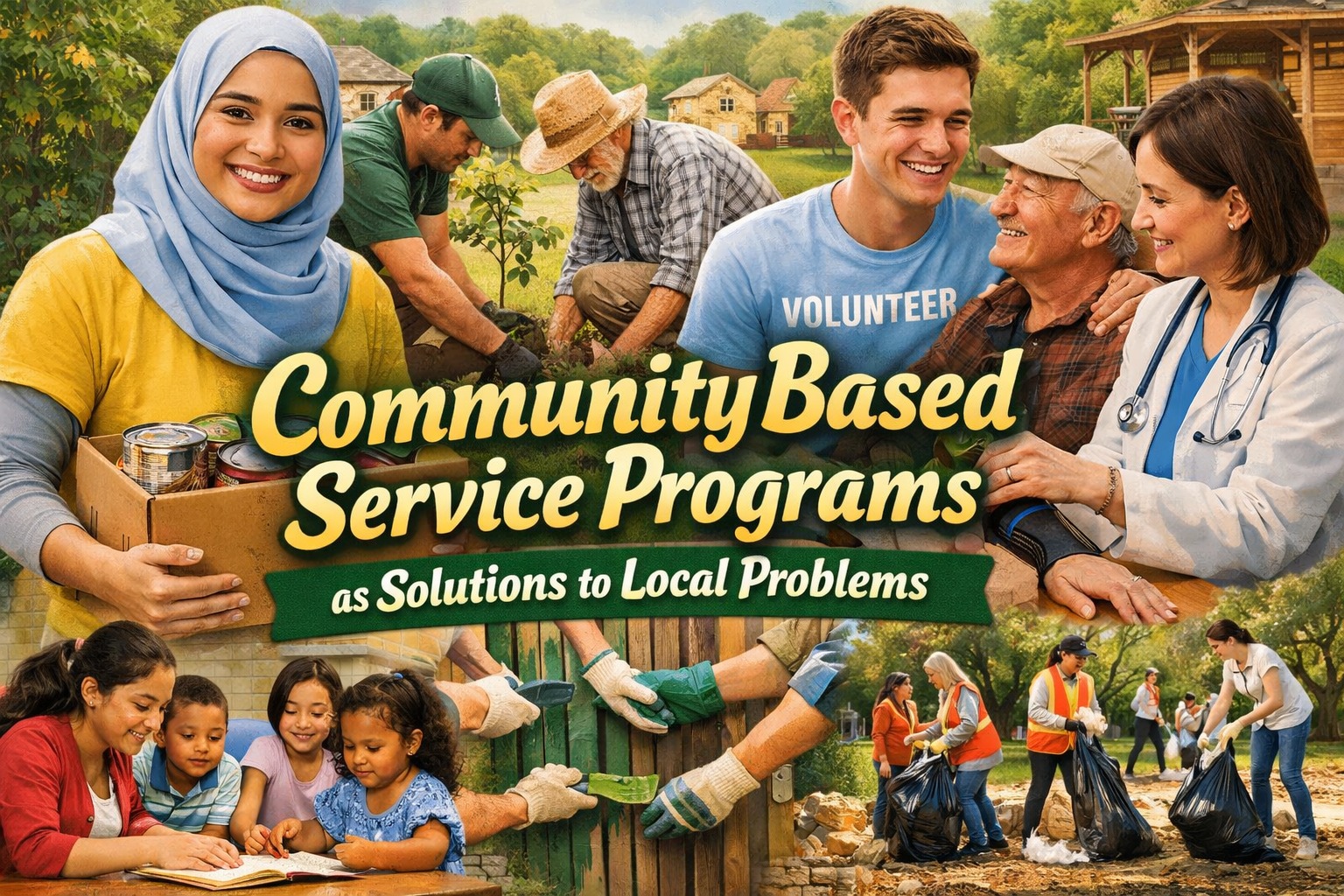
Community-based service programs have become an effective approach to addressing various local challenges. These programs involve active participation from community members, educational institutions, organizations, and local governments to create meaningful and sustainable solutions. By focusing on the actual needs of a community, service programs can improve social welfare, strengthen local development, and encourage collective responsibility. As communities continue to face economic, educational, environmental, and health-related issues, community-based service programs provide practical ways to generate positive change.
UNDERSTANDING COMMUNITY BASED SERVICE PROGRAMS
Community-based service programs are initiatives designed to solve local problems through direct community involvement. Unlike temporary aid projects, these programs focus on empowering people by encouraging participation, collaboration, and skill development. The goal is not only to address immediate concerns but also to build long-term solutions that communities can sustain independently.
These programs often involve students, volunteers, non-governmental organizations, and local leaders working together. Through cooperation and shared responsibility, communities can identify challenges more accurately and implement solutions that fit local conditions. This participatory approach increases the likelihood of successful outcomes and strengthens community bonds.
ADDRESSING EDUCATIONAL CHALLENGES
Many communities face educational barriers such as limited learning resources, low literacy rates, and inadequate access to quality education. Community-based service programs can help by organizing tutoring sessions, literacy campaigns, digital learning workshops, and educational mentoring activities. These initiatives provide valuable support for students and educators alike.
In addition, educational service programs promote lifelong learning among community members. They encourage knowledge sharing and skill development, helping individuals improve their personal and professional opportunities. As education levels rise, communities become better equipped to solve other social and economic challenges.
SUPPORTING ECONOMIC DEVELOPMENT
Economic difficulties are among the most common local problems. Unemployment, limited business opportunities, and lack of entrepreneurial skills can hinder community growth. Through community service initiatives, local residents can receive training in business management, financial literacy, and vocational skills.
Many programs also support small businesses and local entrepreneurs by providing mentorship and market access opportunities. These efforts help create sustainable sources of income, reduce poverty, and improve overall economic stability. Strong local economies contribute significantly to community resilience and development.
IMPROVING ENVIRONMENTAL SUSTAINABILITY
Environmental issues such as waste management, pollution, and resource depletion affect many communities worldwide. Community-based environmental programs encourage residents to participate in activities like recycling campaigns, tree planting projects, and environmental education programs. These efforts raise awareness about the importance of protecting natural resources.
When community members actively participate in environmental initiatives, they develop a stronger sense of responsibility toward their surroundings. This collective effort helps create cleaner, healthier, and more sustainable environments for future generations. Long-term environmental improvements often begin with small actions at the local level.
ENHANCING PUBLIC HEALTH AND WELL BEING
Health-related challenges can significantly impact a community's quality of life. Community service programs often support public health through health education, sanitation campaigns, nutrition awareness activities, and preventive healthcare initiatives. These programs help communities better understand health risks and healthy lifestyle practices.
By increasing access to information and basic health services, communities can reduce the spread of preventable diseases and improve overall well-being. Strong community engagement also helps identify local health concerns more quickly, allowing for more targeted and effective interventions.
BUILDING STRONGER COMMUNITY PARTICIPATION
One of the greatest benefits of community-based service programs is their ability to strengthen community participation. Residents become actively involved in identifying problems, planning solutions, and evaluating results. This involvement creates a sense of ownership and responsibility for local development.
As trust and cooperation grow, communities become more capable of addressing future challenges independently. Strong social connections encourage collaboration and make it easier to mobilize resources when needed. Active participation is therefore a key factor in achieving sustainable community progress.
CONCLUSION
Community-based service programs offer practical and sustainable solutions to a wide range of local problems. By addressing challenges related to education, economic development, environmental sustainability, public health, and community engagement, these programs create lasting positive impacts. Their success lies in the active involvement of community members and the collaborative efforts of various stakeholders. As communities continue to evolve, investing in community-based service programs remains an effective strategy for promoting inclusive growth and long-term development.
Tentang Penulis
Gusti Ayu Tita P
Penulis — Universitas STEKOM
Penulis aktif yang berfokus pada isu-isu akademik, teknologi pendidikan, dan pengembangan sumber daya manusia di lingkungan kampus.