
Community Service as a Space for Personal Growth or a Strategy to Complete Academic Credits
Gusti Ayu Tita P
27 Februari 2026
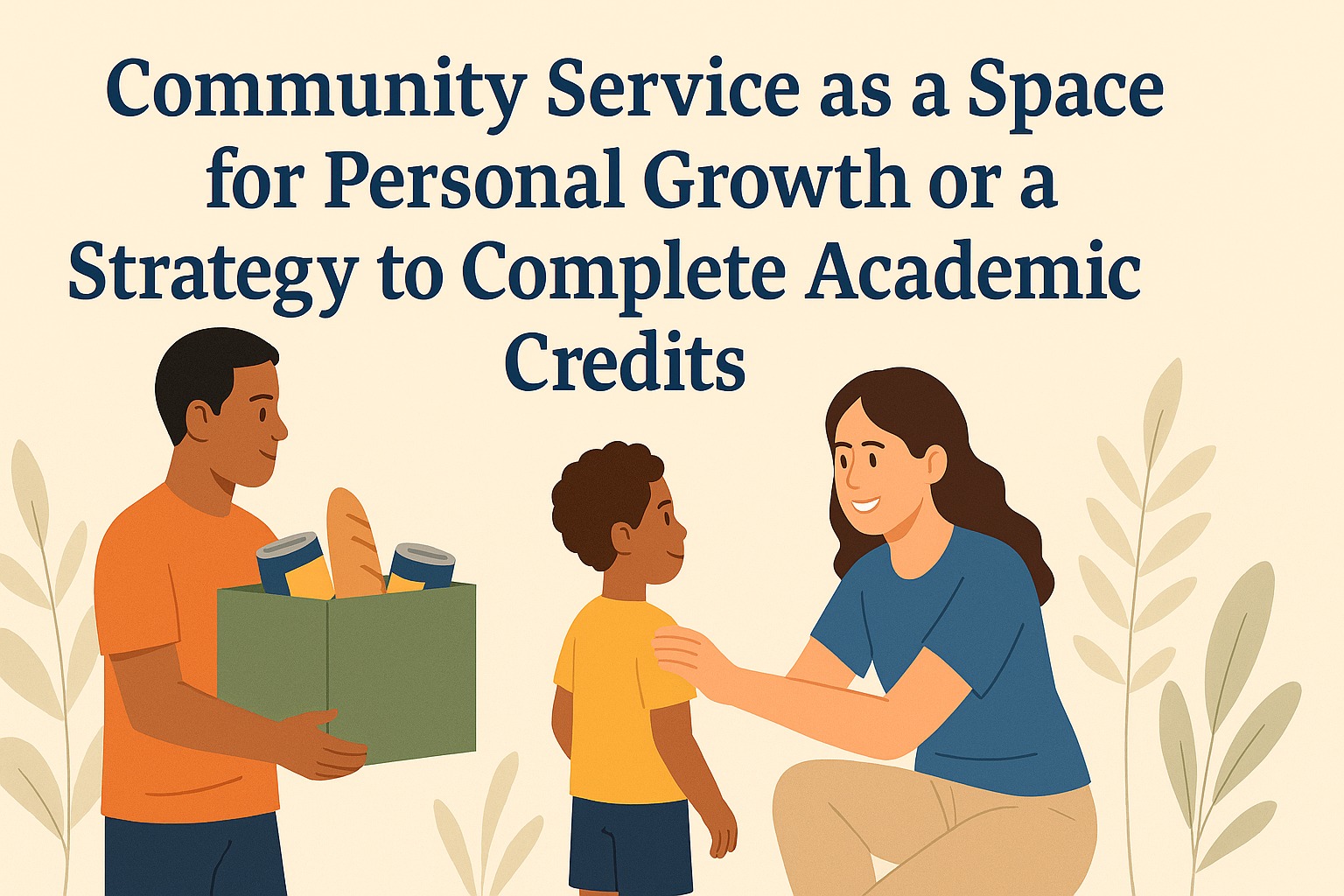
Community service has become a defining feature of contemporary higher education. Positioned as a practical extension of classroom learning, it offers students direct exposure to real-world challenges. Yet, debates persist regarding its deeper significance. Is community service truly a space for personal growth, or has it gradually shifted into a strategic step to complete academic credits?Understanding this dual perspective is crucial to evaluating the role of community service within academic institutions and its long-term impact on students.
COMMUNITY SERVICE AS A SPACE FOR PERSONAL GROWTH
At its best, community service provides a transformative learning environment. Students step outside structured lecture halls and encounter complex social realities. They interact with individuals from diverse economic, cultural, and educational backgrounds, broadening their worldview.
Personal growth often begins with discomfort. Facing unfamiliar conditions—limited infrastructure, communication barriers, or community resistance—pushes students to develop adaptability and resilience. These experiences cultivate emotional intelligence, empathy, and cultural sensitivity.
Moreover, community service nurtures self-awareness. Students frequently discover strengths they did not realize they possessed, such as leadership, negotiation skills, or crisis management abilities. The responsibility of organizing programs, collaborating with local stakeholders, and solving real problems encourages maturity and accountability.
In this sense, community service becomes more than an academic requirement; it evolves into a formative life experience.
COMMUNITY SERVICE AS AN ACADEMIC STRATEGY
Despite its growth potential, community service can also be perceived as a strategic move to fulfill graduation requirements. When participation is mandatory and heavily tied to academic evaluation, students may focus primarily on completing tasks efficiently.
Administrative emphasis on attendance records, activity logs, and final reports sometimes shifts attention away from meaningful engagement. Instead of prioritizing impact, students may concentrate on meeting minimum criteria for assessment.
Short-term program structures further reinforce this perception. Limited duration restricts deep community integration, making the experience feel temporary and transactional. As a result, community service risks being viewed as a checklist item rather than a genuine learning journey.
FACTORS THAT DETERMINE THE OUTCOME
Whether community service fosters personal growth or functions as an academic strategy depends on several factors. Institutional design plays a central role. Programs that incorporate reflective discussions, mentorship, and impact measurement encourage deeper learning.
Student mindset is equally important. Individuals who approach community service with intrinsic motivation tend to gain more meaningful insights than those driven solely by grades. Community partnership quality also influences outcomes. Collaborative engagement leads to stronger mutual learning compared to one-sided intervention.
When these elements align, community service transcends administrative obligation and becomes an empowering educational platform.
CONCLUSION
Community service stands at the intersection of personal development and academic necessity. It has the capacity to shape character, enhance leadership abilities, and strengthen social responsibility. However, without thoughtful implementation and genuine engagement, it can devolve into a procedural requirement.
Ultimately, community service becomes what institutions and students make of it. When embraced as a space for reflection and contribution, it fosters holistic growth. When treated merely as a strategy for credit completion, its transformative potential remains untapped.
Tentang Penulis
Gusti Ayu Tita P
Penulis — Universitas STEKOM
Penulis aktif yang berfokus pada isu-isu akademik, teknologi pendidikan, dan pengembangan sumber daya manusia di lingkungan kampus.















