
Complete Guide to the Madrasah Examination for Students
Gusti Ayu Tita P
29 Agustus 2026
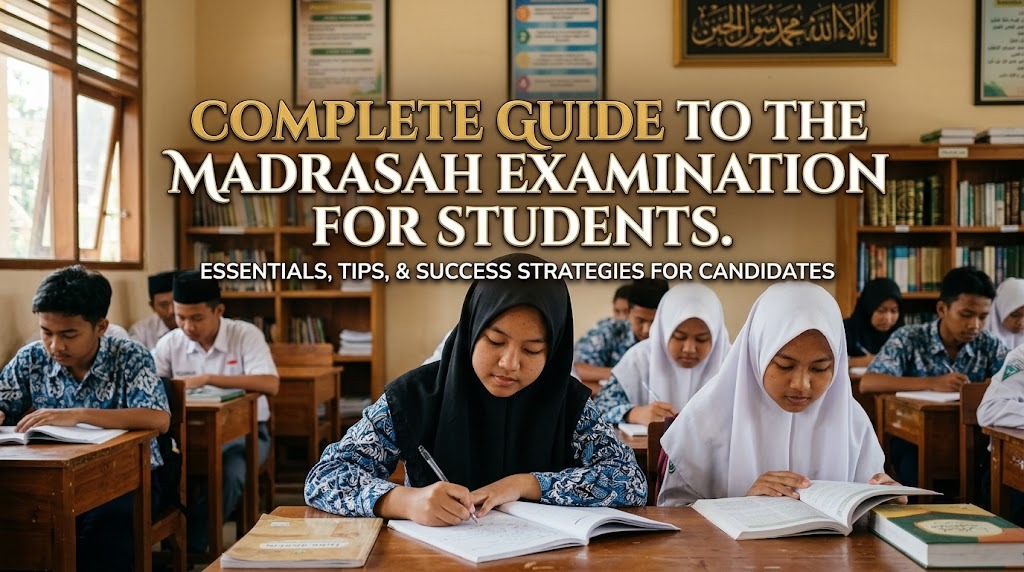
The Madrasah Examination is an important academic assessment for students studying in madrasahs. Proper preparation can help students understand the learning materials and approach the examination with greater confidence. Preparation should include regular study, practice questions, sufficient rest, and good time management. By using the right strategy, students can prepare effectively without feeling overwhelmed.
UNDERSTAND THE MADRASAH EXAMINATION
Before studying, students should understand the examination rules and requirements provided by their madrasah. Information may include the examination schedule, subjects, learning materials, assessment methods, and other technical requirements. Each madrasah may have different procedures based on applicable educational policies. Therefore, students should obtain the latest information directly from teachers or school administrators.
Understanding the examination also helps students create a realistic study plan. Make a list of all subjects that need to be prepared and identify the topics that require more attention. Do not focus only on difficult subjects while ignoring others. A balanced approach can help students prepare more effectively.
CREATE A CONSISTENT STUDY SCHEDULE
A consistent study schedule helps students manage their preparation more efficiently. Divide study time according to the number of subjects and the difficulty of each topic. Avoid studying for many hours without breaks because concentration can decrease over time. Short and focused study sessions can be easier to maintain than long sessions.
Include enough time for rest, meals, worship, and other daily activities. Alternate between reviewing lessons, creating summaries, and practicing questions. Review the schedule regularly to determine whether study targets are being achieved. If a particular topic remains difficult, adjust the schedule and give it additional attention.
STUDY ACCORDING TO THE LEARNING MATERIALS
Students should identify the learning materials that are likely to be assessed. Teachers notes, textbooks, class assignments, and official study guidelines can become useful references. Organize the materials into smaller topics so they are easier to understand. Avoid relying only on memorization because understanding the basic concepts is more useful for answering different types of questions.
Creating personal summaries can help students remember important information. Use simple words and highlight key concepts, definitions, formulas, or important points. When a topic is unclear, ask the teacher or discuss it with classmates. Addressing difficult topics early can prevent confusion before the examination.
PRACTICE WITH EXAMINATION QUESTIONS
Practice questions help students measure how well they understand the learning materials. Start with questions related to topics that have already been studied. Review every incorrect answer and identify the reason for the mistake. This process can show which concepts need to be reviewed again.
Students can also practice with a time limit to improve their ability to manage examination time. Try completing a set of questions without looking at notes or answers. After finishing, evaluate the results and record recurring mistakes. Regular practice can make students more familiar with different question formats and improve their confidence.
USE EFFECTIVE STUDY METHODS
Every student has different learning preferences, so there is no single study method that works for everyone. Some students may learn better through summaries, mind maps, discussions, explanations, or practice questions. Try several methods and identify which one helps improve understanding and memory. Choose a method that keeps learning focused and manageable.
Active learning can be more effective than simply reading the same material repeatedly. Students can explain a topic using their own words, create questions, or teach the material to someone else. Taking short breaks can also help maintain concentration. The goal is not to study for the longest time but to make each study session productive.
JOIN A STUDY GROUP
Study groups can help students understand difficult subjects through discussion and peer explanations. Different students may have different ways of understanding the same topic. Explaining an idea to others can also strengthen the students own understanding. Group study can make preparation more interactive and engaging.
However, study groups should have a clear purpose and schedule. Decide which subjects or topics will be discussed before the session begins. Avoid spending too much time on unrelated conversations or activities. If a question cannot be answered within the group, write it down and ask the teacher for clarification.
TAKE CARE OF PHYSICAL AND MENTAL HEALTH
Good physical health supports concentration and learning performance during examination preparation. Students should get enough sleep and avoid making late night study sessions a regular habit. Eating nutritious meals and drinking enough water can also help maintain energy. Light physical activity can be useful for keeping the body active during intensive study periods.
Mental well being is equally important. Examination pressure can cause worry, but excessive anxiety can make studying more difficult. Students can take short breaks, practice relaxation techniques, or talk with trusted people when they feel overwhelmed. Maintaining a healthy balance between study and rest can support better preparation.
PREPARE BEFORE EXAMINATION DAY
Students should prepare their examination supplies in advance to avoid unnecessary stress. Check the required stationery and other items permitted by the madrasah. Review the examination schedule and location so there is enough time to arrive. Students should also understand and follow all examination rules.
The night before the examination should not be used for intensive last minute studying. Review important notes briefly and then prioritize sufficient sleep. Prepare clothing and examination supplies before going to bed if necessary. Starting the examination day calmly can help students maintain better concentration.
USE A SMART EXAMINATION STRATEGY
Read the instructions and questions carefully before answering. Start with questions that seem easier so that time can be used efficiently. If a question is difficult, avoid spending too much time on it at the beginning. Mark it and return to it after completing other questions.
Leave several minutes at the end to review the answers. Check whether any questions have been missed and make sure the answers match what is being asked. Avoid changing answers without a clear reason because unnecessary changes can create additional mistakes. Staying calm and managing time wisely can help students perform at their best.
CONCLUSION
Preparing for the Madrasah Examination requires consistency, good planning, and a balanced approach. Students should understand the examination requirements, organize a study schedule, review learning materials, and practice questions regularly. Maintaining sufficient sleep, healthy habits, and emotional balance is also important for effective preparation. With the right strategy and a calm mindset, students can face the Madrasah Examination with greater confidence and readiness.
Tentang Penulis
Gusti Ayu Tita P
Penulis — Universitas STEKOM
Penulis aktif yang berfokus pada isu-isu akademik, teknologi pendidikan, dan pengembangan sumber daya manusia di lingkungan kampus.















