
Differences Between Indonesian and International Education Systems
Gusti Ayu Tita P
23 Agustus 2026
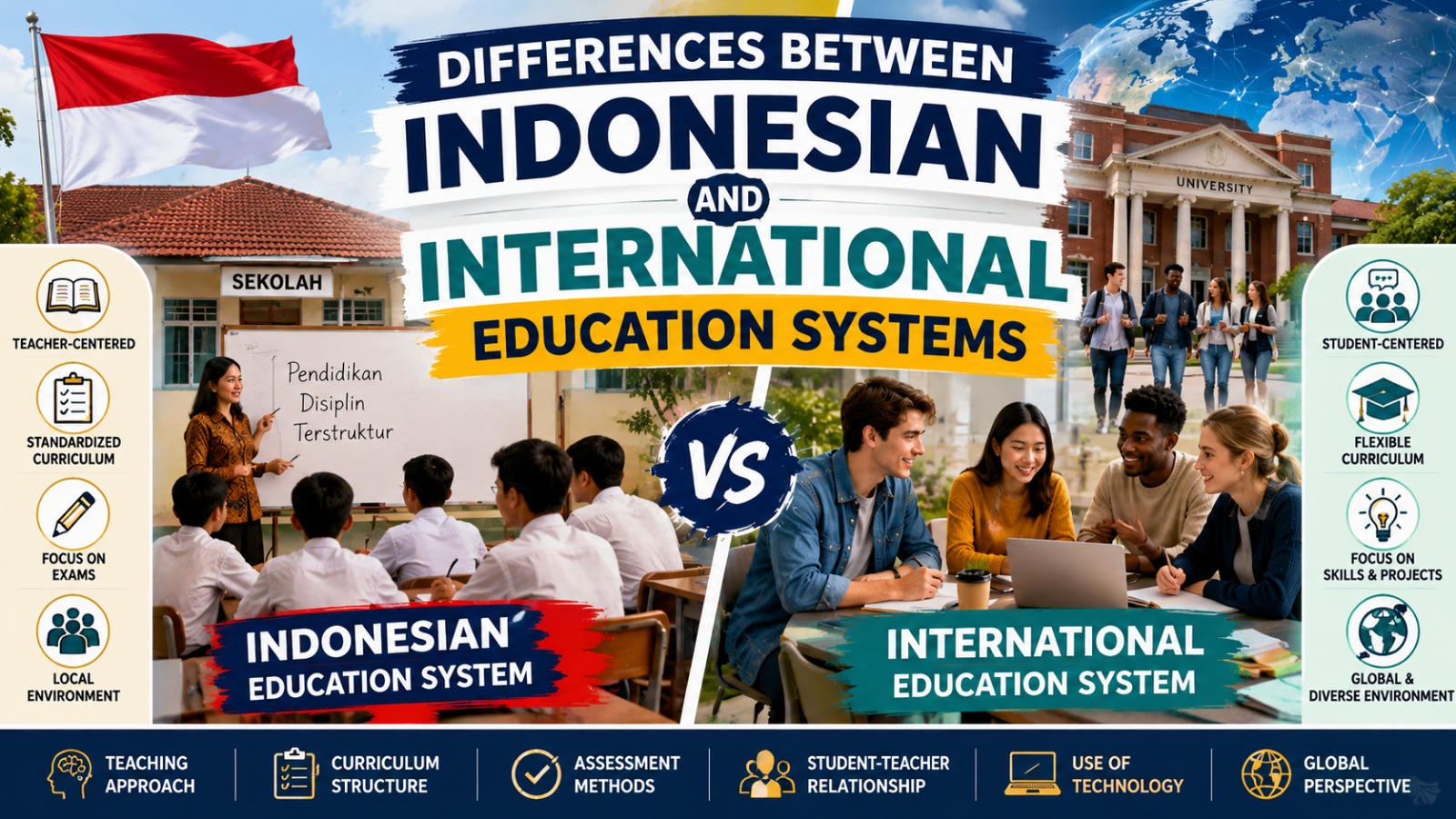
Education systems around the world have different approaches, teaching methods, and learning environments. Indonesia has its own educational structure that reflects local culture, national values, and academic goals. Meanwhile, international education systems often emphasize global perspectives, critical thinking, and practical learning experiences.
Understanding the differences between Indonesian and international education systems is important for students who plan to study abroad or compare educational quality across countries. These differences influence how students learn, communicate, and prepare for future careers.
TEACHING METHODS
One of the biggest differences between Indonesian and international education systems is the teaching method used in classrooms.
In Indonesia, learning often focuses on theory, memorization, and teacher-centered instruction. Teachers usually explain the material while students listen, take notes, and complete assignments based on textbooks.
On the other hand, international education systems generally encourage interactive learning. Students are expected to participate actively in discussions, ask questions, and share opinions. Many international campuses also use project-based learning to improve creativity and problem-solving skills.
This approach helps students become more independent and confident in expressing ideas.
CURRICULUM STRUCTURE
The curriculum structure also differs significantly between Indonesia and many international institutions.
Indonesian schools usually follow a national curriculum determined by the government. Subjects and learning standards are relatively standardized across schools.
International education systems, however, often provide more flexibility. Students may have opportunities to choose elective subjects based on their interests and career goals. Universities abroad also tend to combine academic learning with practical experiences such as internships, research projects, and industry collaborations.
This flexibility allows students to explore their passions more deeply.
ASSESSMENT AND EXAMINATION
Assessment systems in Indonesia commonly rely on written exams and final test scores. Academic performance is often measured through grades from assignments, quizzes, midterm exams, and national examinations.
In contrast, many international schools and universities use broader assessment methods. Student performance may include:
- Group projects
- Presentations
- Research papers
- Classroom participation
- Practical assignments
This system focuses not only on academic knowledge but also on communication, teamwork, and analytical abilities.
STUDENT-TEACHER RELATIONSHIP
In Indonesian education culture, teachers are highly respected authority figures. Communication between students and teachers can sometimes feel formal, especially in traditional schools.
International education systems usually encourage more open communication. Students often feel comfortable discussing ideas, asking for feedback, and interacting directly with lecturers or professors.
This supportive environment helps students build confidence and improve academic performance.
USE OF TECHNOLOGY
Technology integration is another important difference between the two systems.
Many international campuses use advanced educational technology such as digital learning platforms, online libraries, virtual classrooms, and interactive learning applications. Students are encouraged to use technology for research, collaboration, and independent study.
Indonesia has also improved technology use in education, especially after the rise of online learning. However, technology access and digital learning quality may still vary depending on the region and school facilities.
LEARNING ENVIRONMENT
International campuses often provide multicultural learning environments where students from different countries study together. This diversity helps students improve cross-cultural communication and global understanding.
In Indonesia, most schools and universities mainly consist of local students. Although cultural diversity exists, international exposure may be more limited compared to global campuses.
Studying in an international environment can help students develop broader perspectives and international networking opportunities.
FOCUS ON CRITICAL THINKING
International education systems strongly emphasize critical thinking and independent analysis. Students are encouraged to challenge ideas, conduct research, and solve real-world problems creatively.
In Indonesia, critical thinking is becoming more important, but some educational environments still prioritize memorization and structured learning methods.
Developing critical thinking skills is essential because modern industries value innovation and adaptability.
COST AND ACCESSIBILITY
Education costs also differ significantly between Indonesia and international institutions.
Public education in Indonesia is generally more affordable compared to studying abroad. International education often requires higher tuition fees, living expenses, and additional costs such as accommodation and insurance.
However, many international universities provide scholarships and financial aid programs for international students.
Students should carefully consider financial planning before choosing to study overseas.
ADVANTAGES OF BOTH SYSTEMS
Both Indonesian and international education systems have unique strengths.
Advantages of the Indonesian system:
- Strong cultural and moral education
- Affordable tuition costs
- Familiar learning environment
Advantages of international education systems:
- Global exposure
- Interactive learning methods
- Advanced facilities and technology
- Strong focus on practical skills
Students can benefit from understanding both systems and adapting the best aspects of each approach.
CONCLUSION
The differences between Indonesian and international education systems can be seen in teaching methods, curriculum structure, assessment styles, technology use, and learning environments. International education systems generally focus more on critical thinking, flexibility, and practical experience, while Indonesian education emphasizes structure, discipline, and theoretical learning.
Both systems offer valuable educational experiences. By understanding these differences, students can make better decisions about their academic future and prepare themselves for global opportunities.
Tentang Penulis
Gusti Ayu Tita P
Penulis — Universitas STEKOM
Penulis aktif yang berfokus pada isu-isu akademik, teknologi pendidikan, dan pengembangan sumber daya manusia di lingkungan kampus.