Differences Between Vehicle Registration And Ownership Documents
Gusti Ayu Tita P
7 September 2026
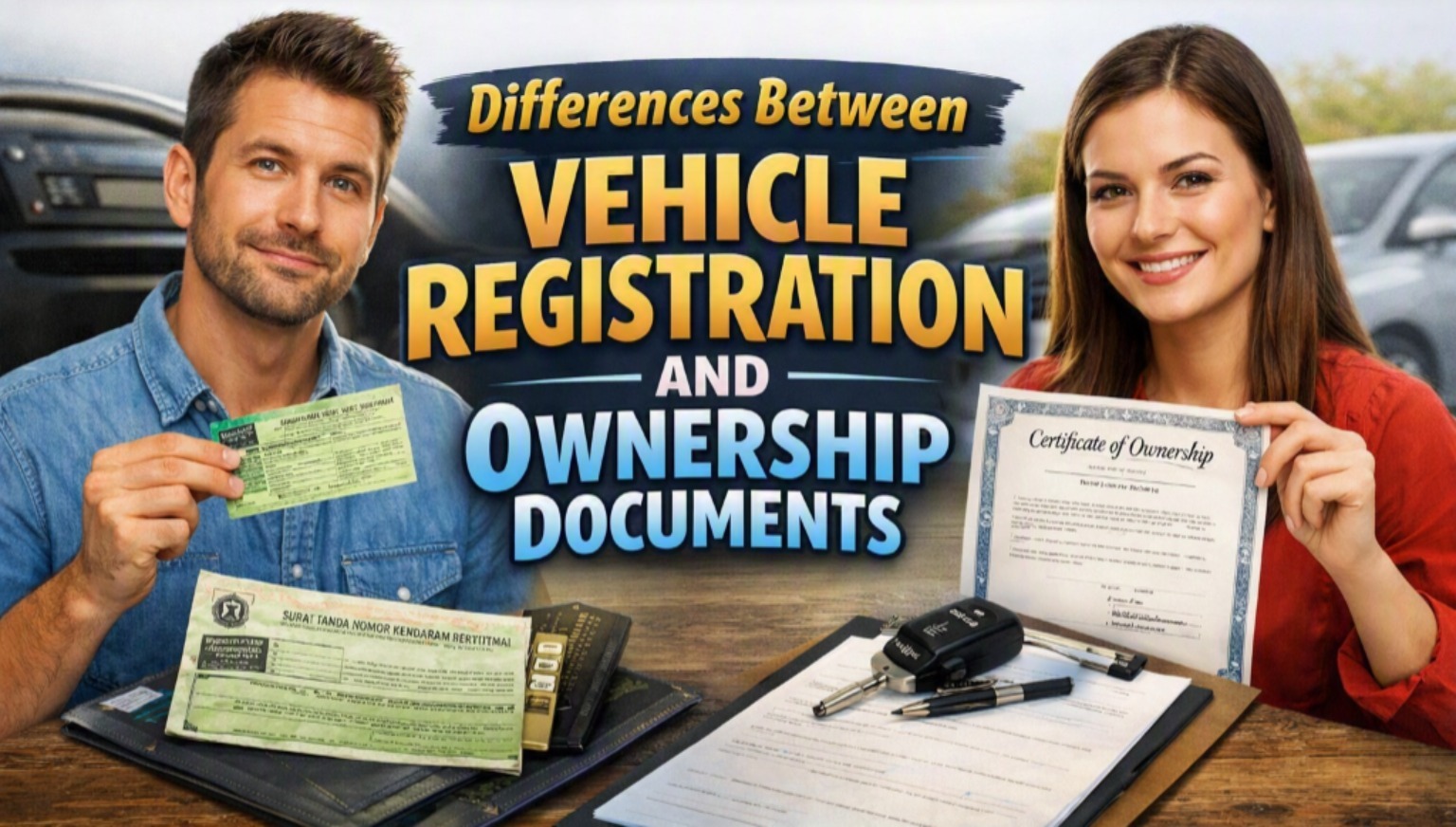
Vehicle registration and ownership documents are both important for anyone who buys or uses a vehicle. However, they serve different purposes, contain different information, and may be used in different situations. Understanding the difference can help vehicle owners avoid confusion when dealing with registration, ownership transfers, taxes, or legal administration.
In simple terms, vehicle registration generally confirms that a vehicle is legally registered for use, while an ownership document provides evidence of who legally owns the vehicle. The exact names and formats of these documents vary by country, so the terminology should always be understood within the applicable local system.
WHAT IS A VEHICLE REGISTRATION DOCUMENT?
A vehicle registration document is an official record showing that a particular vehicle has been registered with the relevant government authority. It commonly contains details such as the vehicle registration number, make, model, vehicle identification number, and other identifying information. The document connects the vehicle to an official registration record and helps authorities identify it. Registration is generally important for ensuring that a vehicle can be legally operated according to local requirements. Depending on the country, registration may also need to be renewed periodically.
Vehicle registration is not necessarily the same as proof of ownership. A person may be listed as the registered keeper or user of a vehicle without being the person who legally owns it. This distinction can be particularly important for leased vehicles, company vehicles, financed vehicles, or vehicles used by someone other than the owner.
WHAT IS A VEHICLE OWNERSHIP DOCUMENT?
A vehicle ownership document is a legal record used to establish who has ownership rights over a vehicle. It may include the owner's name, vehicle identification details, and information about previous owners or ownership changes. In some countries, this document is known as a title, while other countries use different names or systems. Its primary purpose is to provide evidence of the legal ownership of the vehicle. This makes it especially important when a vehicle is sold, transferred, inherited, or otherwise changes ownership.
Ownership documentation can also contain information about liens or financing interests when applicable. For example, a lender may have a legal interest in a financed vehicle until the loan has been fully paid. Therefore, checking ownership records can help buyers determine whether a vehicle has unresolved financial claims or other restrictions.
KEY DIFFERENCES BETWEEN REGISTRATION AND OWNERSHIP
The main difference between the two documents is their legal function. Registration primarily establishes that a vehicle is recorded with the relevant authority and is associated with a registration record. Ownership documentation, on the other hand, focuses on establishing the person or organization that holds legal ownership rights. Registration is commonly connected to the vehicle's lawful use on public roads. Ownership documents are more closely connected to property rights and ownership transfers.
Another important difference is that the information in the documents may not always be identical. A registration record can identify the vehicle and the person responsible for its registration, while an ownership document can identify the legal owner. Because registration does not automatically prove ownership, buyers should not rely on registration information alone when purchasing a used vehicle.
WHY BOTH DOCUMENTS ARE IMPORTANT?
Both types of documentation can be important because they address different aspects of a vehicle's legal status. Registration documents help demonstrate that the vehicle has been properly recorded for legal use under applicable regulations. Ownership documents help establish who has the legal right to own or transfer the vehicle. Keeping both records accurate can make administrative procedures easier. They may also be requested when completing certain vehicle-related transactions or resolving documentation issues.
These documents can become particularly important when buying or selling a used vehicle. A buyer should verify that the vehicle identification information is consistent across the available records. The buyer should also confirm that the seller has the legal authority to transfer ownership. Any differences in names, identification numbers, or vehicle details should be investigated before completing the transaction.
HOW REGISTRATION AND OWNERSHIP ARE CONNECTED?
Although registration and ownership are different concepts, they are often connected through government vehicle records. When a vehicle is purchased, the ownership information may need to be updated while the registration record is also changed. However, the procedures depend on the country's laws and administrative system. In some systems, the same authority manages both registration and ownership records, while in others they may be handled separately. This is why vehicle owners should follow the specific requirements of the relevant government authority.
A change in ownership does not always mean that every registration detail changes automatically. Ownership transfers, registration renewals, address changes, and registration updates can involve different procedures. Vehicle owners should therefore check which documents are required for each transaction. Maintaining accurate records can reduce delays and prevent problems when the vehicle is later sold or transferred.
WHAT TO CHECK WHEN BUYING A USED VEHICLE?
Before purchasing a used vehicle, it is important to check the vehicle identification number and other identifying details against the available documents. The buyer should confirm that the seller's information is consistent with the ownership record or that the seller has valid authorization to make the sale. It is also useful to check whether there are outstanding loans, liens, registration issues, or other restrictions where such records are available. Any unexplained discrepancy should be resolved before payment is finalized. These checks can help reduce the risk of purchasing a vehicle with documentation problems.
Buyers should also understand that requirements differ between jurisdictions. A document that proves ownership in one country may not have the same name or legal function in another. Official government records and applicable local regulations should therefore be treated as the final reference. When a transaction involves financing, inheritance, imported vehicles, or unusual ownership arrangements, additional documentation may be required.
COMMON MISTAKES VEHICLE OWNERS SHOULD AVOID
One common mistake is assuming that a vehicle registration document automatically proves ownership. Another is failing to update records after selling, purchasing, or transferring a vehicle. Owners may also overlook differences between the vehicle identification number shown on a document and the number physically displayed on the vehicle. Such inconsistencies can create difficulties during administrative checks or ownership transfers. Keeping copies of important documents can also make future procedures easier.
Another mistake is relying solely on information provided by a seller. Independent verification is especially important when buying a used vehicle because registration status and ownership status may not be the same. Buyers should use official records whenever possible and ensure that all required paperwork is legitimate and complete. Taking these precautions can provide greater confidence before completing a vehicle transaction.
CONCLUSION
Understanding the difference between vehicle registration and ownership documents makes it easier to manage a vehicle responsibly. Registration is generally related to the vehicle's official registration and lawful use, while ownership documentation focuses on legal ownership rights. The two records can contain overlapping vehicle information but have different purposes. Neither should automatically be treated as a substitute for the other. Knowing which document is needed for a particular transaction can help prevent unnecessary administrative problems.
For vehicle owners and buyers, the safest approach is to check the applicable local rules and official records. Requirements can vary significantly depending on the country, vehicle type, financing arrangement, and type of transaction. By keeping registration and ownership information accurate and understanding their separate functions, vehicle owners can handle sales, transfers, renewals, and other administrative matters more confidently.
Tentang Penulis
Gusti Ayu Tita P
Penulis — Universitas STEKOM
Penulis aktif yang berfokus pada isu-isu akademik, teknologi pendidikan, dan pengembangan sumber daya manusia di lingkungan kampus.