Digital Technology as an Anti-Corruption Weapon
Gusti Ayu Tita P
23 Juli 2026
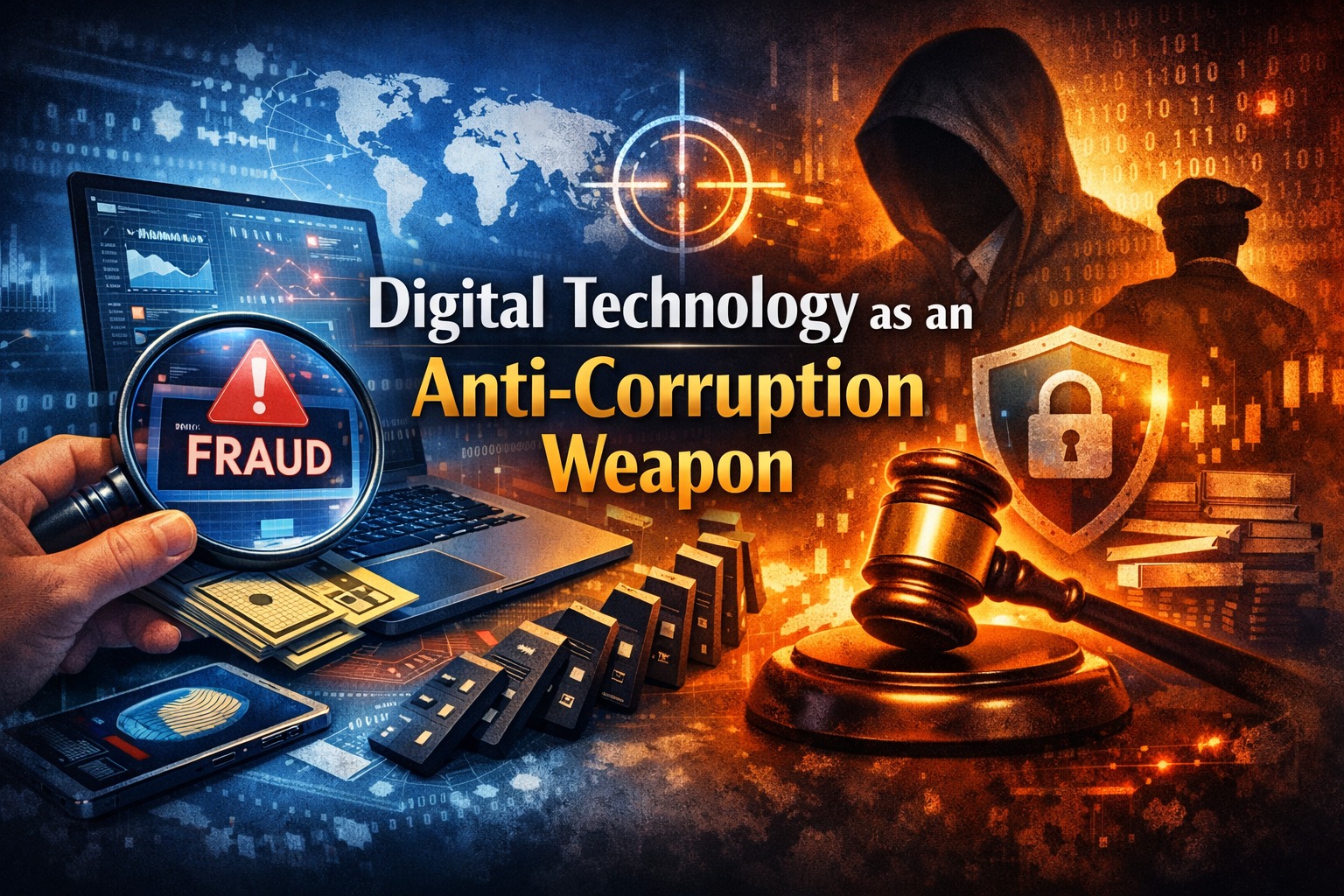
Corruption remains one of the biggest challenges faced by governments and societies worldwide. From bribery and fraud to abuse of power, corruption damages economic growth, weakens public trust, and creates social inequality. In the digital era, technology has emerged as a powerful tool to fight dishonest practices and improve transparency.
Digital technology is no longer only about communication and business innovation. Today, it also plays a major role in preventing corruption through automated systems, data transparency, and real-time monitoring. As governments and organizations adopt digital solutions, opportunities for corruption can be significantly reduced.
HOW DIGITAL TECHNOLOGY HELPS FIGHT CORRUPTION?
Technology creates systems that minimize human manipulation and improve accountability. Digital platforms can record, track, and monitor transactions more accurately than manual methods.
Several digital innovations are now widely used to combat corruption in both public and private sectors.
ONLINE PUBLIC SERVICES
Digital public services reduce direct contact between citizens and officials. This helps minimize opportunities for bribery and illegal fees.
Services such as online licensing, tax payments, and electronic identity registration allow processes to become faster, more transparent, and easier to monitor.
ELECTRONIC PROCUREMENT SYSTEMS
Government procurement is one of the sectors most vulnerable to corruption. Electronic procurement systems help create fair competition and transparent bidding processes.
By using digital platforms, all transactions and decisions can be documented clearly, making manipulation more difficult.
DIGITAL PAYMENT SYSTEMS
Cash transactions are harder to trace and often become a gateway for corruption. Digital payment systems provide transparent transaction records that can be audited anytime.
This system reduces the risk of hidden payments, bribery, and financial abuse.
BIG DATA AND ARTIFICIAL INTELLIGENCE
Big data and artificial intelligence can analyze unusual financial patterns and identify suspicious activities quickly.
Governments and anti-corruption agencies can use these technologies to detect fraud, monitor spending, and investigate corruption cases more effectively.
BENEFITS OF DIGITAL TECHNOLOGY IN ANTI-CORRUPTION EFFORTS
The use of digital technology offers many advantages in promoting clean governance and accountability.
INCREASING TRANSPARENCY
Digital systems allow public access to information and reduce secrecy in administrative processes. Citizens can monitor government activities more easily.
REDUCING HUMAN INTERVENTION
Automation minimizes opportunities for individuals to manipulate systems for personal gain.
IMPROVING EFFICIENCY
Digital services save time and reduce complicated bureaucracy that often creates opportunities for corruption.
STRENGTHENING PUBLIC TRUST
When services become transparent and fair, public confidence in institutions can improve significantly.
CHALLENGES IN IMPLEMENTING DIGITAL SOLUTIONS
Although technology offers many benefits, implementing digital anti-corruption systems is not always easy.
LIMITED DIGITAL INFRASTRUCTURE
Some regions still lack internet access and technological facilities needed to support digital transformation.
CYBERSECURITY RISKS
Digital systems can become targets of hacking, data theft, or cyber manipulation if security measures are weak.
RESISTANCE TO CHANGE
Certain individuals or groups may oppose digital reforms because they benefit from traditional corrupt systems.
LACK OF DIGITAL LITERACY
Not all citizens and public servants have the skills needed to use advanced digital platforms effectively.
THE ROLE OF SOCIETY IN SUPPORTING DIGITAL TRANSPARENCY
Technology alone cannot eliminate corruption completely. Public participation is also essential.
Citizens should support transparent digital systems, report suspicious activities, and encourage ethical behavior in everyday life. Media organizations, educational institutions, and civil society groups also play important roles in promoting accountability and digital awareness.
CONCLUSION
Digital technology has become a powerful weapon in the fight against corruption. Through online services, digital payments, artificial intelligence, and transparent data systems, governments and organizations can reduce opportunities for dishonest practices.
However, successful anti-corruption efforts require more than advanced technology. Strong regulations, cybersecurity protection, public awareness, and ethical leadership are equally important. By combining innovation with integrity, societies can build cleaner, fairer, and more transparent systems for the future.
Tentang Penulis
Gusti Ayu Tita P
Penulis — Universitas STEKOM
Penulis aktif yang berfokus pada isu-isu akademik, teknologi pendidikan, dan pengembangan sumber daya manusia di lingkungan kampus.