Digital Tools Every MSME Needs for Sustainable Business Growth
Gusti Ayu Tita P
28 September 2026
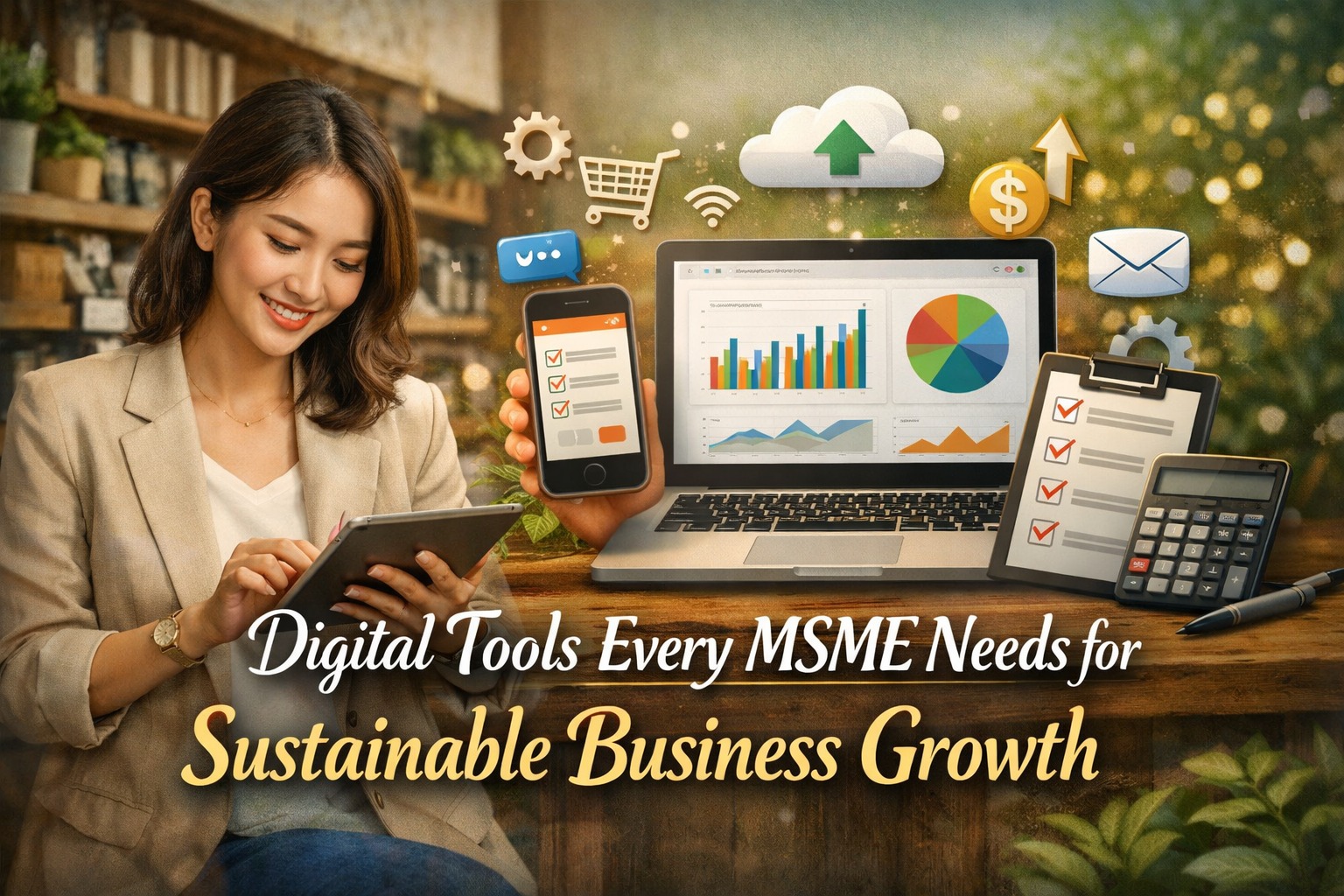
Micro, Small, and Medium Enterprises (MSMEs) play a vital role in driving economic growth, creating jobs, and encouraging innovation. However, increasing competition and rapid technological changes require businesses to adopt smarter ways of operating. Digital tools help MSMEs improve efficiency, reduce costs, and provide better customer experiences without requiring a large budget.
Today, digital transformation is no longer limited to large corporations. Affordable and user-friendly solutions allow MSMEs to automate daily operations, strengthen marketing strategies, and make data-driven decisions. By choosing the right digital tools, business owners can build a sustainable business that continues to grow in a competitive market.
ACCOUNTING AND FINANCIAL MANAGEMENT TOOLS
One of the most important digital tools for MSMEs is accounting software. Managing income, expenses, invoices, and taxes manually often leads to mistakes that affect business performance. Digital accounting systems simplify financial management by automatically recording transactions and generating financial reports. This allows business owners to understand their financial condition more accurately and make informed decisions.
In addition, many accounting platforms provide cash flow monitoring, budgeting, and tax reporting features. These capabilities help MSMEs maintain healthy finances and prepare for future expansion. A well-managed financial system also increases credibility when applying for loans or seeking investors, making sustainable growth easier to achieve.
CUSTOMER RELATIONSHIP MANAGEMENT SYSTEMS
Building strong customer relationships is essential for long-term business success. Customer Relationship Management (CRM) tools help MSMEs organize customer information, track purchase history, and manage communication in one centralized platform. This enables businesses to deliver more personalized services and improve customer satisfaction.
CRM software also supports customer retention by sending automated follow-up messages, promotional offers, and loyalty rewards. As customer engagement increases, businesses can encourage repeat purchases and strengthen brand loyalty. Retaining existing customers is often more cost-effective than continuously acquiring new ones.
DIGITAL MARKETING PLATFORMS
A strong online presence has become a necessity for modern MSMEs. Digital marketing platforms enable businesses to promote products through social media, email campaigns, search engines, and online advertisements. These channels help businesses reach wider audiences while maintaining affordable marketing costs.
Marketing tools also provide performance analytics that show which campaigns generate the best results. Business owners can measure website traffic, conversion rates, audience engagement, and advertising effectiveness. By analyzing this data, MSMEs can improve future marketing strategies and maximize their return on investment.
INVENTORY AND SALES MANAGEMENT SOFTWARE
Efficient inventory management prevents product shortages and reduces unnecessary storage costs. Inventory management software automatically tracks stock levels, records incoming and outgoing products, and alerts businesses when inventory needs replenishment. This minimizes human error while improving operational efficiency.
Many inventory systems also integrate with Point of Sale (POS) applications, allowing real-time synchronization between sales and inventory records. Accurate stock information helps businesses serve customers faster and avoid overselling products. Better inventory control contributes directly to higher customer satisfaction and stronger profitability.
COLLABORATION AND PROJECT MANAGEMENT TOOLS
As MSMEs grow, teamwork becomes increasingly important. Collaboration tools allow employees to communicate, share documents, assign tasks, and monitor project progress from anywhere. Cloud-based platforms make information accessible in real time, supporting both office-based and remote teams.
Project management applications improve productivity by organizing deadlines, responsibilities, and work priorities. Business owners can monitor project completion, identify delays, and allocate resources more effectively. Better collaboration reduces misunderstandings and helps teams achieve business goals efficiently.
DATA ANALYTICS AND BUSINESS INTELLIGENCE TOOLS
Business decisions should be supported by reliable information rather than assumptions. Data analytics tools collect and analyze information from sales, customer behavior, marketing campaigns, and financial performance. These insights allow MSMEs to recognize market trends and identify areas that require improvement.
Business intelligence platforms present complex information through interactive dashboards and easy-to-understand reports. Owners can monitor key performance indicators, evaluate business performance, and make strategic decisions based on real data. Data-driven management helps businesses remain competitive and adapt to changing market conditions.
CYBERSECURITY SOLUTIONS FOR BUSINESS PROTECTION
As businesses become more digital, protecting sensitive information becomes increasingly important. Cybersecurity tools safeguard customer data, financial records, and business systems from cyber threats such as malware, phishing attacks, and unauthorized access. Even small businesses can become targets of cybercriminals if proper protection is not implemented.
Basic cybersecurity measures include strong passwords, multi-factor authentication, regular software updates, encrypted backups, and employee security awareness training. Investing in digital security not only protects valuable assets but also strengthens customer trust. A secure business environment supports sustainable operations and long-term growth.
CONCLUSION
The right digital tools enable MSMEs to improve productivity, strengthen customer relationships, optimize financial management, and make smarter business decisions. By adopting solutions such as accounting software, CRM systems, digital marketing platforms, inventory management software, data analytics, and cybersecurity tools, businesses can operate more efficiently while remaining competitive.
Digital transformation does not require a large investment to begin. Many affordable and scalable solutions are available for businesses of all sizes. By selecting digital tools that match their needs, MSMEs can create a strong foundation for sustainable business growth and successfully face future challenges.
Tentang Penulis
Gusti Ayu Tita P
Penulis — Universitas STEKOM
Penulis aktif yang berfokus pada isu-isu akademik, teknologi pendidikan, dan pengembangan sumber daya manusia di lingkungan kampus.