Discovering the Cultural Beauty of Javanese Royal Palaces
Gusti Ayu Tita P
4 September 2026
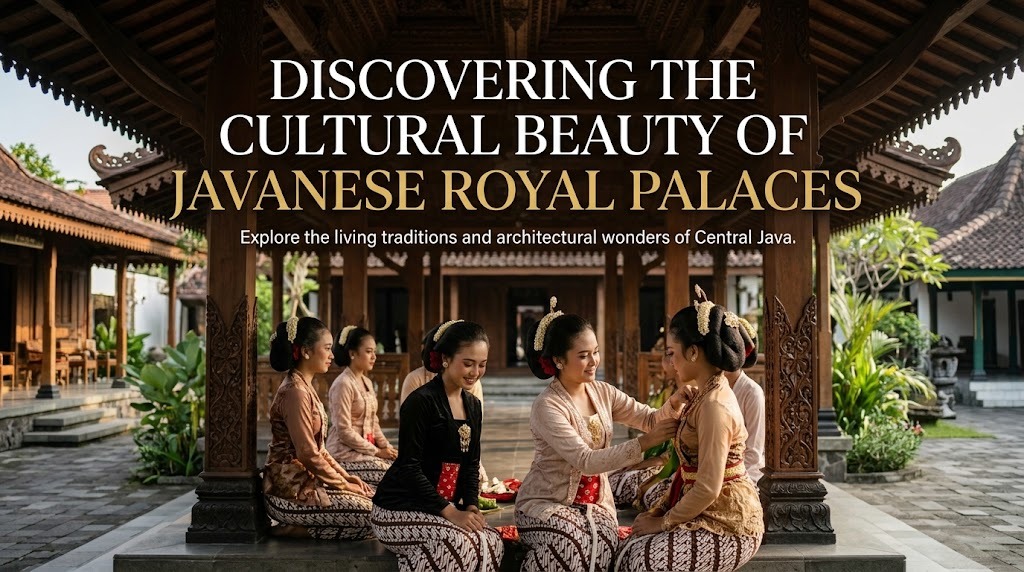
Javanese royal palaces are more than historic buildings. They are cultural spaces where architecture, traditions, art, philosophy, and community life have developed together for generations. Across Java, these palaces provide an opportunity to understand how Javanese society has preserved its cultural values while adapting to social change. Visiting a palace can therefore become more than a tourism experience because it allows visitors to explore the meaning behind traditions that remain relevant today.
THE CULTURAL ROLE OF JAVANESE ROYAL PALACES
Javanese royal palaces, often known as keraton, have historically served as centers of government, culture, and social life. Several prominent palaces in Java are associated with royal traditions that developed over centuries, including the Keraton Yogyakarta and Kasunanan Surakarta. These institutions continue to play cultural roles even though their political functions have changed significantly over time. Their existence helps maintain connections between historical traditions and contemporary Indonesian society.
The cultural importance of a palace can be seen through its ceremonies, collections, traditional arts, and community activities. Javanese cultural values such as respect, harmony, discipline, and etiquette are reflected in many palace traditions. Visitors can observe these values through traditional performances, ceremonial activities, and the way historical spaces are maintained. For this reason, royal palaces remain valuable places for learning about Java's cultural heritage.
THE BEAUTY OF JAVANESE PALACE ARCHITECTURE
One of the most impressive features of Javanese royal palaces is their distinctive architecture. Traditional palace complexes commonly contain important spaces such as courtyards, audience halls, gateways, pavilions, and open areas designed according to cultural principles. The arrangement of these spaces is not simply intended to create an attractive environment. It can also express ideas about order, hierarchy, balance, and human relationships.
Traditional Javanese architecture often emphasizes a strong connection between buildings and their surrounding environment. Open courtyards, traditional roofs, wooden structures, and carefully arranged pathways contribute to the character of a palace complex. Decorative elements may also contain symbolic meanings connected with local beliefs and philosophy. By observing these details, visitors can appreciate that palace architecture combines practical functions with cultural ideas.
TRADITIONAL ARTS AND CULTURAL PERFORMANCES
Royal palaces have long been associated with the development and preservation of Javanese traditional arts. Dance, gamelan music, wayang, batik, and other forms of cultural expression have been connected with palace environments in different historical periods. Some artistic traditions were developed, refined, or preserved within royal communities before becoming more widely practiced. This makes palace collections and performances important sources for understanding the history of Javanese art.
Traditional performances can also introduce visitors to the values represented by Javanese artistic traditions. Gamelan music, for example, uses groups of traditional instruments that create a distinctive musical character. Javanese dance often emphasizes controlled movements, gestures, and expressions rather than rapid physical action. Through these artistic forms, visitors can experience cultural heritage in a way that is both educational and engaging.
TRADITIONS AND CEREMONIES IN PALACE LIFE
Another important aspect of Javanese royal palaces is the continuation of traditional ceremonies. Certain palace communities still organize cultural events connected with historical customs, important dates, or religious and social traditions. These activities demonstrate how traditional ceremonies can continue to have meaning in modern society. They also provide opportunities for younger generations to learn about cultural practices from older generations.
The details and purposes of ceremonies can vary between different palaces. Some activities involve processions, traditional clothing, music, offerings, or other forms of ceremonial preparation. Visitors should understand that these events are not simply tourist performances because many have deeper cultural and spiritual meanings for the communities involved. Respectful observation is therefore essential when experiencing palace ceremonies.
PALACES AS CULTURAL TOURISM DESTINATIONS
Javanese royal palaces offer a distinctive form of cultural tourism because visitors can explore history, architecture, art, and local traditions in one environment. Museums and palace collections may display royal objects, traditional clothing, weapons, manuscripts, artwork, and other historical materials. Guided tours can provide additional explanations about the function and meaning of different buildings and objects. This combination makes palace visits useful for both tourists and students.
Popular destinations such as the Keraton Yogyakarta attract visitors who want to learn about Javanese history and culture. Other palace sites across Java also provide different perspectives because each has its own historical development and traditions. Visitors can make their experience more meaningful by researching basic palace etiquette before arriving. Responsible cultural tourism should support preservation rather than treating heritage simply as an attraction.
CONCLUSION
The cultural beauty of Javanese royal palaces lies not only in their physical appearance but also in the traditions and values preserved within them. Architecture, traditional arts, ceremonies, historical collections, and community life all contribute to the identity of these important cultural spaces. Exploring a palace allows visitors to understand how generations of Javanese people have maintained connections with their heritage.
Royal palaces also demonstrate that cultural heritage can remain meaningful in a changing society. By learning about these places and respecting the communities that preserve them, visitors can contribute to greater appreciation of Indonesian culture. Javanese royal palaces are therefore living cultural heritage, connecting the historical past with the cultural life of the present.
Tentang Penulis
Gusti Ayu Tita P
Penulis — Universitas STEKOM
Penulis aktif yang berfokus pada isu-isu akademik, teknologi pendidikan, dan pengembangan sumber daya manusia di lingkungan kampus.