
Does Technology and Social Media Affect the Development of the Strawberry Generation?
Gusti Ayu Tita P
26 September 2026
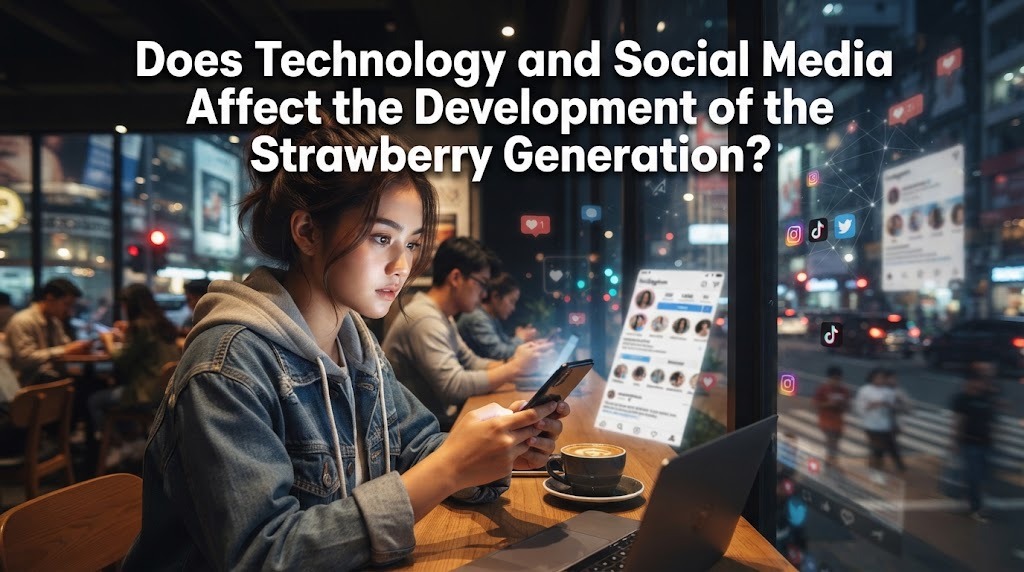
Technology and social media have become important parts of modern life, especially for young people. The Strawberry Generation has grown up in an environment where communication, entertainment, education, and information are increasingly connected to digital platforms. This environment can influence how young people communicate, learn, handle pressure, build relationships, and view themselves.
Technology does not automatically create negative characteristics in young people. Its effects can depend on how technology is used, the type of online environment people experience, family guidance, and individual coping skills. Understanding these influences can provide a more balanced explanation of how digital life may contribute to the development of the Strawberry Generation.
SOCIAL MEDIA CAN INCREASE SOCIAL COMPARISON
Social media allows young people to see other people's achievements, lifestyles, relationships, education, and careers almost continuously. Seeing carefully selected images of success may cause some users to compare their lives with unrealistic standards. Constant comparison can influence self-confidence and create pressure to appear successful.
Young people may begin to feel that they are falling behind when their experiences do not match what they see online. However, social media usually shows only selected moments rather than someone's complete life. Learning to recognize this difference can help reduce unhealthy comparison and create more realistic expectations.
TECHNOLOGY CHANGES HOW YOUNG PEOPLE COMMUNICATE
Digital technology has made communication faster and more convenient. Young people can maintain relationships through messaging applications, video calls, social platforms, and online communities. Technology can help young people stay connected with others even when they are physically far apart.
However, online communication can sometimes replace direct interaction. Written messages may also be misunderstood because they lack facial expressions, tone of voice, and other social cues. Developing strong communication skills therefore requires learning how to communicate effectively both online and offline.
DIGITAL CONTENT CAN INFLUENCE ATTITUDES AND EXPECTATIONS
Young people are exposed to enormous amounts of digital content every day. Videos, influencers, advertisements, entertainment, educational materials, and online discussions can influence opinions about success, appearance, relationships, careers, and lifestyle. Repeated exposure to certain messages can shape expectations about what a successful life should look like.
Not all online content is accurate or healthy. Young people may encounter unrealistic standards, misleading information, or highly edited representations of everyday life. Developing digital literacy can help the Strawberry Generation evaluate information carefully instead of accepting everything presented online.
TECHNOLOGY CAN CREATE BOTH OPPORTUNITIES AND PRESSURE
Technology provides young people with access to online courses, professional networks, creative tools, educational resources, and new career opportunities. Students can learn skills independently, while young professionals can use digital platforms to build portfolios and connect with potential employers. Digital technology can therefore support learning, creativity, and career development.
At the same time, constant access to information can create pressure to remain productive and competitive. Young people may feel that they must continuously learn new skills or follow every technological trend. Finding a healthy balance between digital opportunities and personal wellbeing is therefore important.
SOCIAL MEDIA CAN AFFECT EMOTIONAL WELLBEING
Online interactions can influence how young people feel about themselves. Positive feedback may increase confidence, while criticism, rejection, or negative comments can affect emotional wellbeing. When external approval becomes too important, social media reactions may strongly influence self-perception.
Young people can develop healthier digital habits by setting boundaries around social media use and recognizing when online activity begins to create unnecessary stress. Taking breaks and spending time on offline activities can provide opportunities to recover from constant digital stimulation.
DIGITAL TECHNOLOGY CAN INFLUENCE INDEPENDENCE
Technology allows young people to find information and solve many everyday problems independently. They can learn how to complete tasks, research topics, manage schedules, develop skills, and explore career options without always depending on other people. Access to information can encourage independence when young people learn how to use it responsibly.
However, easy access to information can also create dependence on instant answers. Instead of thinking through a problem, some people may immediately search for a solution. Developing critical thinking and problem-solving skills alongside digital skills can help ensure that technology supports independence rather than replacing independent thinking.
DIGITAL LITERACY IS IMPORTANT FOR THE STRAWBERRY GENERATION
Because technology has such a strong influence on modern life, digital literacy is an important skill for young people. This includes understanding online privacy, evaluating information, recognizing misleading content, communicating responsibly, and managing screen time. Being digitally capable means more than simply knowing how to use applications and devices.
Families, schools, and communities can support young people by teaching responsible technology use. Young people also need opportunities to develop self-control and critical thinking when interacting with digital platforms. With healthy guidance, technology can become a useful tool for personal growth rather than a constant source of pressure.
CONCLUSION
Technology and social media can influence the development of the Strawberry Generation by affecting social comparison, communication, emotional wellbeing, learning, independence, and expectations about success. Digital environments can create challenges, but they can also provide valuable opportunities for education, creativity, relationships, and career development.
The influence of technology ultimately depends on how it is used and how young people respond to it. Healthy digital habits, strong critical thinking, supportive relationships, and balanced technology use can help young people gain the benefits of digital life while reducing unnecessary pressure. Therefore, technology should be viewed as an important influence rather than the sole cause of the characteristics associated with the Strawberry Generation.
Tentang Penulis
Gusti Ayu Tita P
Penulis — Universitas STEKOM
Penulis aktif yang berfokus pada isu-isu akademik, teknologi pendidikan, dan pengembangan sumber daya manusia di lingkungan kampus.



