Educational Holiday Destinations to Explore History and Culture
Gusti Ayu Tita P
1 September 2026
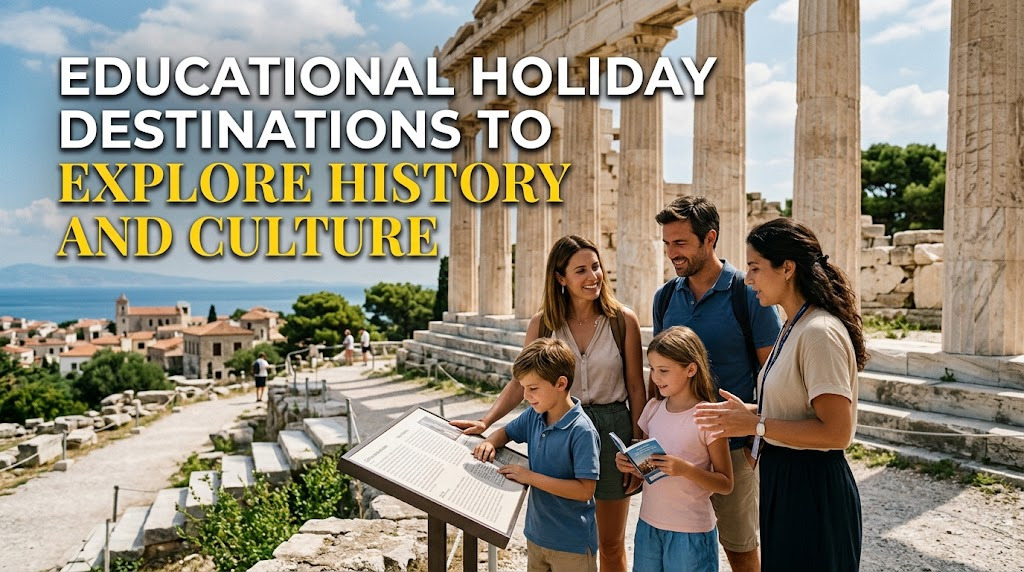
Educational holidays can help children and families understand history and culture through direct experiences. Visiting historical places and cultural attractions allows children to see heritage, traditions, art, and important landmarks in real life. These experiences can make historical and cultural topics more interesting than learning only from books. With the right destination, a family trip can become both enjoyable and educational.
VISIT HISTORY MUSEUMS
History museums are suitable destinations for families who want to learn about the past. Museums often display historical objects, documents, photographs, traditional clothing, artworks, and other collections. These materials can help children understand how people lived and how societies changed over time. Parents can explain the information using simple language that matches the child's age.
Before visiting, families can learn a little about the museum and its main collections. During the visit, children can be encouraged to observe objects that interest them and ask questions. Parents do not need to explain every exhibit because children can explore at their own pace. Museum visits can make history more concrete and easier to understand.
EXPLORE HISTORICAL LANDMARKS
Historical landmarks provide an opportunity to learn about the past while standing in places connected to important events or periods. Examples include ancient buildings, monuments, temples, forts, and heritage areas. Children can observe architecture and learn why a particular location is considered historically important. The experience can make historical information feel more real.
Parents should explain the background of the site before or during the visit. Families also need to respect preservation rules and avoid touching or damaging protected objects. Encourage children to appreciate the site rather than treating it only as a place for photographs. Visiting historical landmarks can strengthen children's understanding of heritage and history.
DISCOVER LOCAL CULTURE
Local cultural destinations can introduce children to traditions and ways of life that may be different from their everyday experiences. Families can visit cultural villages, traditional markets, craft centers, art spaces, or community cultural attractions. Children can learn about traditional food, clothing, music, dance, crafts, and local customs. These experiences can help them understand the diversity of cultural practices.
Parents should encourage respectful behavior when interacting with local communities. Children should learn that unfamiliar traditions should be approached with curiosity and respect. If families participate in cultural activities, they should follow the instructions and customs provided by local organizers. Direct cultural experiences can help children develop appreciation for diversity.
WATCH TRADITIONAL ART PERFORMANCES
Traditional performances can be an enjoyable way to introduce children to cultural heritage. Families may watch traditional dance, music, theater, storytelling, or other local performances. Children can learn that art often carries stories, values, and traditions from one generation to another. Seeing a performance directly can make cultural learning more engaging.
Parents can discuss the meaning or background of a performance after watching it. Ask children which part they found interesting and what they learned from it. If workshops are available, children can participate in suitable activities under proper supervision. Traditional arts can provide both entertainment and cultural education.
LEARN THROUGH LOCAL FOOD AND CRAFTS
Food and traditional crafts are also important parts of cultural heritage. Families can learn about local ingredients, traditional cooking methods, handicrafts, textiles, pottery, or other forms of cultural creativity. Children can discover how certain products are made and why they are meaningful to local communities. These activities provide practical ways to explore culture.
If a destination offers an educational workshop, children may be able to try simple craft or food-related activities that are appropriate for their age. Parents should ensure that activities are safe and follow local guidelines. The focus should be on understanding the cultural value rather than simply producing a souvenir. Food and crafts can make cultural learning more practical and memorable.
CONCLUSION
Educational holiday destinations can help families explore history and culture through museums, historical landmarks, local cultural attractions, traditional performances, food, and crafts. These experiences allow children to learn directly from places, people, and cultural heritage. Parents should encourage curiosity while teaching children to respect historical sites and local traditions. With thoughtful planning, a cultural holiday can provide valuable knowledge while creating meaningful family memories.
Tentang Penulis
Gusti Ayu Tita P
Penulis — Universitas STEKOM
Penulis aktif yang berfokus pada isu-isu akademik, teknologi pendidikan, dan pengembangan sumber daya manusia di lingkungan kampus.